
Kurdish Hopes and Historical Heartbreaks: The Complex Reality of U.S. Alliance in the Iran Conflict
A Vague Mission with High Stakes
As the United States and Israel enter the second week of military operations against Iran, the endgame remains frustratingly unclear. President Trump has offered scattered remarks about his intentions—speaking of “cleaning out” Iran’s theocratic government and demanding nothing less than “unconditional surrender”—yet concrete strategies remain elusive. What has become apparent, however, is that the administration is looking toward regional partners to help achieve whatever the ultimate objective might be. Among the potential allies are Iranian Kurdish groups, particularly those based just across the border in Northern Iraq. On Thursday, Trump expressed enthusiasm about the possibility of Iranian Kurds launching a ground offensive against the besieged Iranian regime, calling such a scenario “wonderful.” For Kurdish opposition groups who have spent decades fighting against Iran’s repressive government, these words represent a tantalizing opportunity—even if history suggests they should approach American promises with considerable caution.
The Democratic Party of Iranian Kurdistan Steps Forward
The Democratic Party of Iranian Kurdistan (KDPI) represents one of the primary Kurdish opposition movements hoping to capitalize on this moment. Representing Iran’s Kurdish ethnic minority—roughly 10% of the country’s population—the KDPI operates from bases in Northern Iraq, where they maintain a lightly-armed force dedicated to opposing the Islamic Republic. Amanj Zabtaee, a member of the KDPI’s leadership committee, confirmed to CBS News that his organization is currently in communication with the U.S. government and sees the ongoing conflict as a chance to help topple the regime they’ve opposed for generations. When pressed on whether the United States had promised material support—weapons, intelligence, or crucially, air cover—Zabtaee declined to answer directly, citing the sensitivity of the matter. “But the reality at the moment is both sides have the same goal, and it is the toppling of the Islamic regime, that is all what I can say now,” he explained, emphasizing the alignment of interests. Whether his coy response indicates actual covert coordination or simply represents wishful thinking designed to attract American attention remains unclear. What is certain is that without substantive U.S. support—particularly air power—any KDPI fighters attempting to cross into Iranian territory would be dangerously exposed to a regime with sophisticated air defense systems, thousands of drones, ballistic missiles, and a large, well-organized military force far more formidable than ISIS or other enemies the Kurds have faced.
A Painful Pattern of Abandonment
For anyone familiar with the history of Kurdish-American relations, Zabtaee’s guarded optimism carries a tragic irony. Time and again over the past half-century, Kurdish forces across the Middle East have answered American calls for assistance, provided critical battlefield support, and then been abandoned when their usefulness diminished or when supporting them became diplomatically inconvenient. The pattern began in the 1970s, when Iraqi Kurdish rebels allied with American and Iranian forces against Baghdad’s government. After achieving certain territorial concessions from Iraq, Iran’s Shah—then an American ally—abruptly withdrew support, leaving the Kurds vulnerable. Henry Kissinger, serving as President Nixon’s foreign policy adviser, coldly summarized the betrayal with a line that would haunt Kurdish-American relations for decades: “Covert action should not be confused with missionary work.” The 1990s brought another betrayal when President George H.W. Bush encouraged Kurdish and Shiite communities in Iraq to rise up against Saddam Hussein following the Gulf War, only to stand by as Hussein’s forces slaughtered tens of thousands in brutal retaliatory campaigns. Most recently, Syrian Kurdish forces in the Syrian Democratic Forces (SDF) became America’s primary ground partner in the long, grinding war against ISIS, suffering thousands of casualties in battles that destroyed the terrorist caliphate. Yet in January of this year, Trump’s special envoy to Syria declared that anti-ISIS alliance had “largely expired,” as the administration pivoted to support Syria’s new government. Within weeks, the Kurds lost 80% of the territory they had controlled at the year’s start, overrun in clashes with forces now backed by their former American partners.
Weighing Risk Against Decades of Resistance
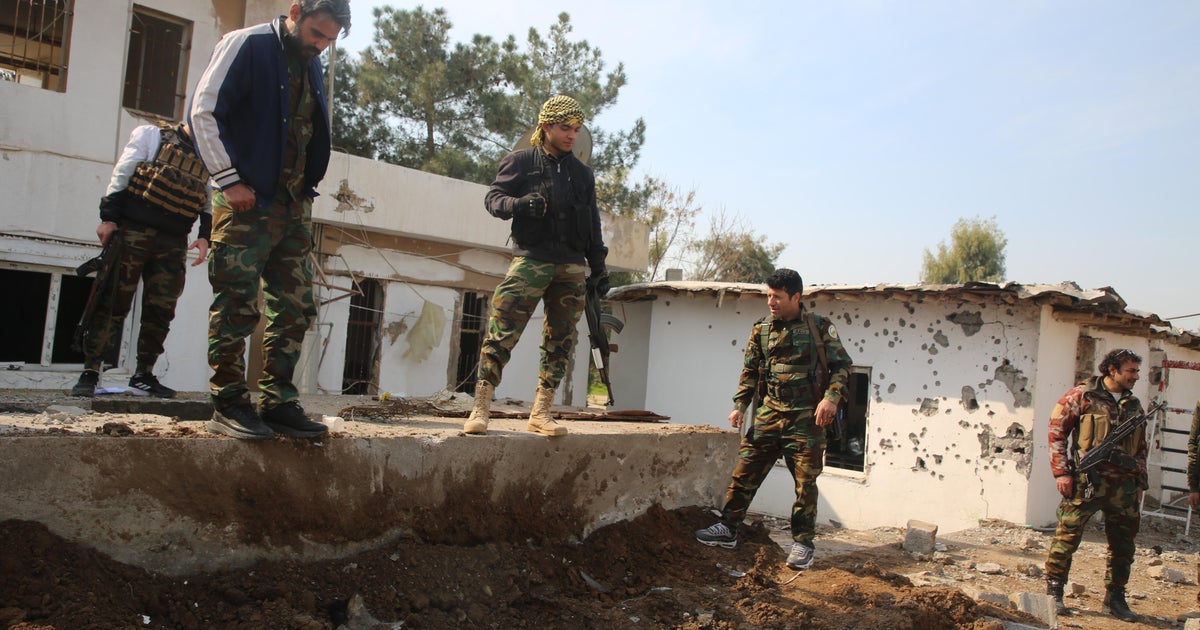
Despite this disheartening track record, Iranian Kurdish groups find themselves facing a calculation that’s difficult to resist. For organizations like the KDPI, opposition to Iran’s Islamic Republic isn’t opportunistic—it’s the defining commitment of their existence, spanning generations of resistance to a government they view as fundamentally oppressive to Kurdish identity, culture, and basic human rights. CBS News reporters who visited the KDPI base in northern Iraq in January, located roughly 30 miles from the Iranian border, found a force that could hardly be called formidable in conventional military terms. Many fighters are young women who fled Iran specifically because of the regime’s severe restrictions on women’s rights and freedoms. Their equipment is light, their numbers limited. Yet their commitment appears genuine and deeply rooted. On Friday, reporters returned to the region to visit another Iranian Kurdish faction, the Khabat Organization of Iranian Kurdistan, just hours after their camp suffered a drone strike. Group members believe they were targeted either by Iran directly or by one of the Iranian-backed militia groups operating in Iraq—a reminder that even before launching any offensive operations, these groups exist under constant threat. Later that same day, the KDPI base itself came under attack from two missiles and three drones, though fortunately no casualties resulted. The attacks underscore the dangerous position these groups occupy and the formidable enemy they face in the Iranian regime.
The Reality Check: Iran Is Not ISIS
When assessing the viability of Kurdish opposition forces as meaningful partners in toppling the Iranian government, the comparison to their successful campaign against ISIS quickly falls apart. ISIS, for all its brutality and initial territorial gains, was essentially a non-state actor with limited air capabilities, no sophisticated air defense systems, and resources dependent on smuggling and captured equipment. Iran, by contrast, is a major regional power with a large, professionally organized military, thousands of drones and precision-guided ballistic missiles, sophisticated intelligence networks both domestically and throughout the region, and decades of experience suppressing internal dissent. The Islamic Revolutionary Guard Corps represents a particularly formidable force, ideologically committed and battle-hardened from conflicts in Syria, Iraq, Yemen, and Lebanon. For lightly-armed Kurdish fighters to mount a meaningful challenge to such a state would require not just American air support but sustained, massive military assistance—the kind of commitment that would represent a significant escalation beyond anything the Trump administration has articulated. Zabtaee himself seems to understand this reality, even as he maintains hope. “For 80 years we have been in the fight with the current and previous dictators,” he told CBS News. “Until now, no country’s air force has defended us, and we are still standing. If something like this can happen, it will be great. But if it doesn’t happen, it doesn’t mean that we will be less committed to our cause.”
Opportunity or Mirage?
The current moment represents what Zabtaee describes as “a great opportunity” when “everything is now possible,” and the party might use this opening to enter Iran and challenge the regime directly. Yet the gap between possibility and probability remains vast, shaped by military realities, historical precedents, and the unclear nature of American commitments. President Trump’s offhand comment that Kurdish involvement would be “wonderful” and that he’d be “all for it” costs him nothing and commits him to nothing concrete. For the Kurdish fighters who might act on such encouragement, the stakes couldn’t be higher—potentially their lives, their communities, and their cause. The tragedy of the situation is that both sides genuinely do share the stated goal of ending the Islamic Republic’s rule in Iran. The Kurdish opposition has maintained this commitment through decades of resistance, exile, and sacrifice. The Trump administration has made regime change its apparent, if vaguely defined, objective in the current conflict. Yet whether this alignment of goals will translate into the kind of substantive, reliable partnership that might actually achieve that shared objective—or whether it will instead become another chapter in the long, painful story of Kurdish hopes raised and then abandoned—remains to be seen. As missiles and drones continue to strike Kurdish positions in northern Iraq, the groups face their decision: wait for support that may never meaningfully arrive, or act on faith that this time might be different, despite all the evidence of history suggesting otherwise.