


Tragedy Strikes Mexican Soccer Field: Mass Shooting Claims 11 Lives
A Community Shattered by Violence
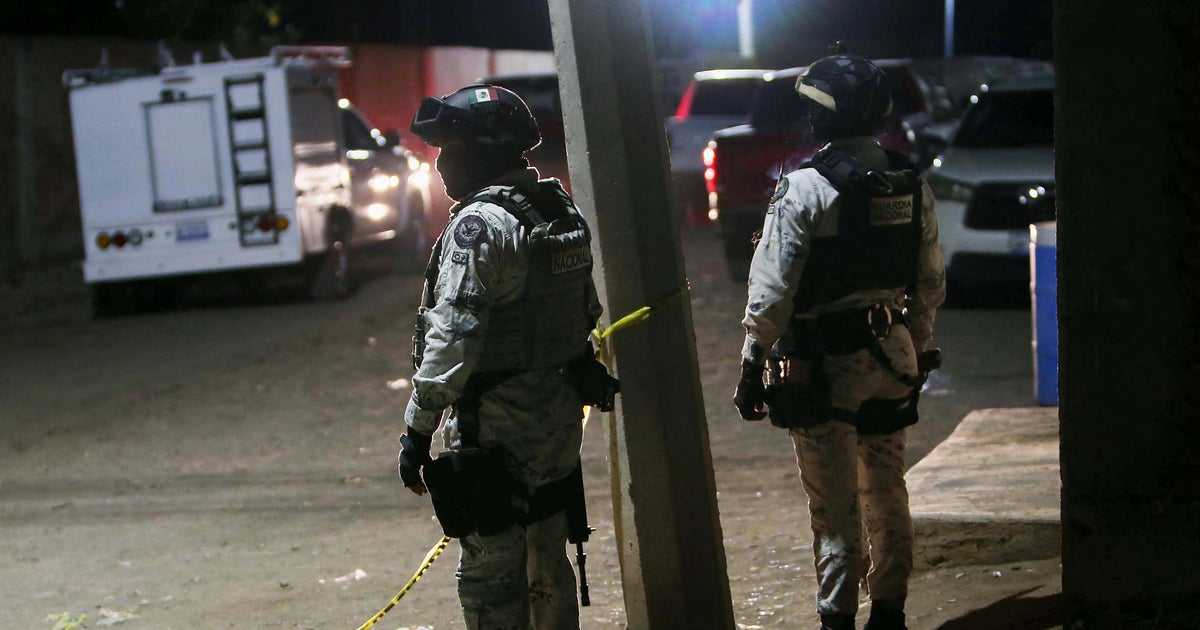
What should have been an ordinary Sunday afternoon of friendly competition turned into a nightmare when gunmen opened fire at a soccer field in Salamanca, a city in central Mexico’s Guanajuato state. The attack left at least 11 people dead and 12 others wounded, shattering the peace of a community gathering. According to Salamanca Mayor Cesar Prieto, the attackers arrived just as a soccer match was ending—a time when players, families, and spectators would have been relaxed and celebrating the game. Ten victims died immediately at the scene, while another succumbed to their injuries at a nearby hospital. Among the wounded were a woman and a child, adding to the heartbreak of what the mayor described as a “regrettable and cowardly” attack. The incident serves as yet another grim reminder of how organized crime violence in Mexico increasingly targets civilian spaces, turning everyday activities into potentially deadly situations.
A City Crying Out for Help
In the aftermath of this devastating attack, Mayor Prieto didn’t mince words about the severity of the situation facing his city. He characterized the soccer field massacre as part of an ongoing “crime wave” that has been plaguing Salamanca, and made a direct appeal to President Claudia Sheinbaum for federal assistance to help control the spiraling violence. The desperation in his plea reflects the reality faced by many local officials in Mexico who find themselves outgunned and overwhelmed by powerful criminal organizations. The Guanajuato state prosecutor’s office quickly announced it was launching an investigation and coordinating with federal authorities to reinforce security measures throughout the area. However, for the families of the victims and the traumatized witnesses, these official responses may feel like too little, too late. The attack wasn’t an isolated incident either—just one day before the soccer field shooting, authorities discovered four bags containing human remains in the same town, painting a picture of a community under siege.
Guanajuato: Mexico’s Most Violent State
The violence in Salamanca is unfortunately representative of a broader crisis across Guanajuato state, which recorded Mexico’s highest homicide total in the previous year. This grim distinction stems largely from an ongoing territorial war between two powerful criminal organizations: the Santa Rosa de Lima gang, a local cartel, and the Jalisco New Generation cartel (CJNG), one of the most powerful and ruthless criminal organizations in all of Latin America. The conflict between these groups has transformed Guanajuato from a relatively peaceful state known for its colonial architecture and cultural heritage into a battleground where innocent civilians regularly find themselves caught in the crossfire. The violence has become so severe that the Trump administration designated the Jalisco cartel as a foreign terrorist organization, placing it in the same category as groups like ISIS and Al-Qaeda. Mayor Prieto acknowledged this power struggle directly when he stated, “Unfortunately, there are criminal groups trying to subjugate authorities, something they are not going to achieve.” His defiant words, however, are tested daily by the brutal reality on the ground, where cartels often seem to operate with impunity.
A Disturbing Pattern of Recent Attacks
The soccer field massacre is just the latest in a series of horrific violent incidents that have plagued Guanajuato in recent months, revealing a pattern of escalating brutality. Last August, prosecutors announced that dismembered human remains found in an abandoned house belonged to 32 victims—a discovery that shocked even hardened investigators. In July, a local government official was gunned down while simply attending an amateur basketball game, demonstrating that not even public servants are safe from the violence. The month before that, in June, 11 people were killed and approximately 20 others injured when gunmen targeted a neighborhood party in Irapuato, another city in Guanajuato. In May alone, investigators made two separate gruesome discoveries: 17 bodies found in an abandoned house in Irapuato, and seven people, including children, killed by gunmen who left behind banners with messages referencing the Santa Rosa de Lima gang. This pattern of attacks targeting community gatherings—soccer games, basketball matches, neighborhood parties—suggests a deliberate strategy by criminal groups to terrorize the civilian population and demonstrate their power over daily life.
The Statistical Disconnect and Hidden Violence
Despite the horrific violence in Guanajuato and other hotspots, the Mexican government reported that the country’s overall murder rate in 2025 was the lowest since 2016, at 17.5 murders per 100,000 inhabitants. However, this statistical improvement has been met with skepticism from analysts and researchers who caution that the official numbers may not fully capture the reality of violence across Mexico. There are several reasons for this disconnect. First, many crimes go unreported in areas where criminal groups have intimidated the population into silence. Second, the practice of “disappearing” victims—rather than leaving bodies to be found—means many murders are never officially counted as homicides. Third, some local authorities, either through corruption or fear, may underreport violence in their jurisdictions. For residents of places like Salamanca, statistical improvements at the national level mean nothing when their children can’t play soccer safely or when community celebrations turn into killing fields. The gap between official statistics and lived experience highlights one of the fundamental challenges in addressing Mexico’s security crisis: acknowledging the true scope of the problem.
A Nation Struggling With an Entrenched Crisis
The attack in Salamanca encapsulates Mexico’s ongoing struggle with organized crime violence that has claimed hundreds of thousands of lives over the past two decades. What began as a “war on drugs” has evolved into something far more complex—a situation where criminal organizations have become powerful enough to challenge state authority, control territory, and terrorize entire communities with apparent impunity. The victims of Sunday’s soccer field massacre weren’t politicians, police officers, or rival gang members—they were ordinary people enjoying a weekend game. This is what makes the violence in places like Guanajuato so particularly tragic and destabilizing. When criminal groups attack civilian gatherings, they’re not just killing individuals; they’re destroying the social fabric that holds communities together, making people afraid to gather, celebrate, or engage in the everyday activities that make life worth living.
For President Sheinbaum, who took office promising to address the security crisis, incidents like the Salamanca massacre represent both a challenge and a test. Mayor Prieto’s plea for federal help reflects the reality that local authorities simply don’t have the resources or capacity to confront well-armed, well-financed criminal organizations on their own. Yet federal interventions have historically had mixed results, sometimes tamping down violence temporarily only to see it flare up again once attention shifts elsewhere. The long-term solution requires not just security measures but addressing the root causes: poverty, lack of opportunity, corruption, and the insatiable demand for drugs from the United States that fuels the entire criminal enterprise. Until these fundamental issues are addressed, communities like Salamanca will continue to bury their dead and wonder when the next attack will come, unable to enjoy even something as simple and universal as a Sunday soccer match without fear.