


Iran’s Supreme Leader Warns U.S. Military Action Would Trigger Regional War
Escalating Tensions in the Middle East
The fragile peace in the Middle East faces a critical test as Iran’s Supreme Leader Ayatollah Ali Khamenei issued his most direct warning yet to the United States. Speaking to supporters in Tehran, the 86-year-old spiritual leader made it crystal clear that any American military strike against Iran would ignite a devastating “regional war” throughout the entire area. This stern warning comes at a particularly tense moment, with President Donald Trump openly threatening military action against the Islamic Republic in response to Tehran’s brutal suppression of nationwide protests. The situation has become even more precarious with the USS Abraham Lincoln aircraft carrier and its accompanying American warships positioned in the Arabian Sea, deployed specifically by Trump following Iran’s violent crackdown on demonstrators. While the president has repeatedly suggested that Iran wants to negotiate and has mentioned resolving Tehran’s nuclear program as a key objective, the uncertainty about whether he’ll actually authorize military force hangs heavy over the region like a dark cloud.
The Supreme Leader’s Defiant Stance
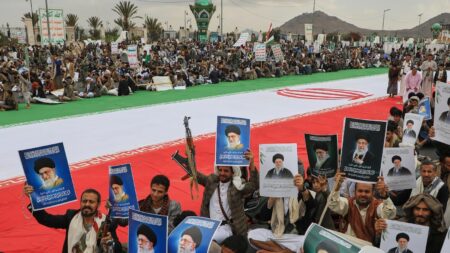
Khamenei’s comments came during Iran’s commemoration of the 1979 Islamic Revolution, a moment of national pride for the country’s leadership. In his address, he painted a picture of American greed, claiming the United States covets Iran’s valuable oil, natural gas, and mineral resources, wanting to “seize this country, just as they controlled it before.” His message was unmistakably defiant: while Iran has no intention of attacking anyone first, any nation showing aggression would receive a devastating response from the Iranian people. When asked about these threats, President Trump offered a characteristically confident response, pointing out that America has positioned its most powerful ships in the region, just a couple of days away from Iran. He expressed hope for reaching a deal but left open the possibility of testing whether Khamenei’s warnings hold water. The supreme leader also took a harder line on the recent protests, describing them not as legitimate expressions of dissent but as “a coup” designed to destabilize the country by attacking sensitive government centers, police stations, Revolutionary Guard facilities, banks, and even mosques.
The Human Cost of the Crackdown
The scale of Iran’s crackdown on protesters has shocked human rights observers worldwide. According to the U.S.-based Human Rights Activists New Agency, which relies on contacts inside Iran to gather information, more than 49,500 people have been arrested since the demonstrations began on December 28. Even more disturbing, the organization reports that at least 6,713 people have been killed, with the vast majority being peaceful protesters. These staggering figures cannot be independently verified by international media because Iranian authorities have cut the country’s internet connection to the outside world, creating an information blackout. Iran’s government tells a vastly different story, claiming as of January 21 that only 3,117 people died, with 2,427 being civilians and security forces, while labeling the remainder as “terrorists.” This pattern of undercounting casualties isn’t new for Iran’s government, which has historically minimized or failed to report deaths during periods of unrest. Regardless of which numbers are closer to the truth, this death toll surpasses any other protest movement or period of unrest Iran has experienced in decades, echoing the chaos and violence that surrounded the 1979 revolution itself.
Military Posturing in Strategic Waters
Adding another dangerous element to this already volatile situation, Iran had scheduled live-fire military exercises in the Strait of Hormuz for Sunday and Monday. This narrow waterway serves as the gateway to the Persian Gulf and represents one of the world’s most critical shipping lanes, with approximately one-fifth of all globally traded oil passing through its waters. The strategic importance of this location cannot be overstated, making any military activity there a potential flashpoint for wider conflict. The U.S. military’s Central Command didn’t take these drills lightly, issuing stern warnings against threatening American warships or aircraft during the exercises or disrupting commercial shipping traffic. The timing of these exercises, coming right alongside Khamenei’s warnings and Trump’s military threats, seems designed to demonstrate Iran’s willingness to fight if pushed. The demonstrations that sparked this crisis initially focused on economic grievances, particularly the collapse of Iran’s rial currency, but quickly evolved into a direct challenge to Khamenei’s authority and the entire system of governance in the Islamic Republic.
Diplomatic Fallout and International Relations
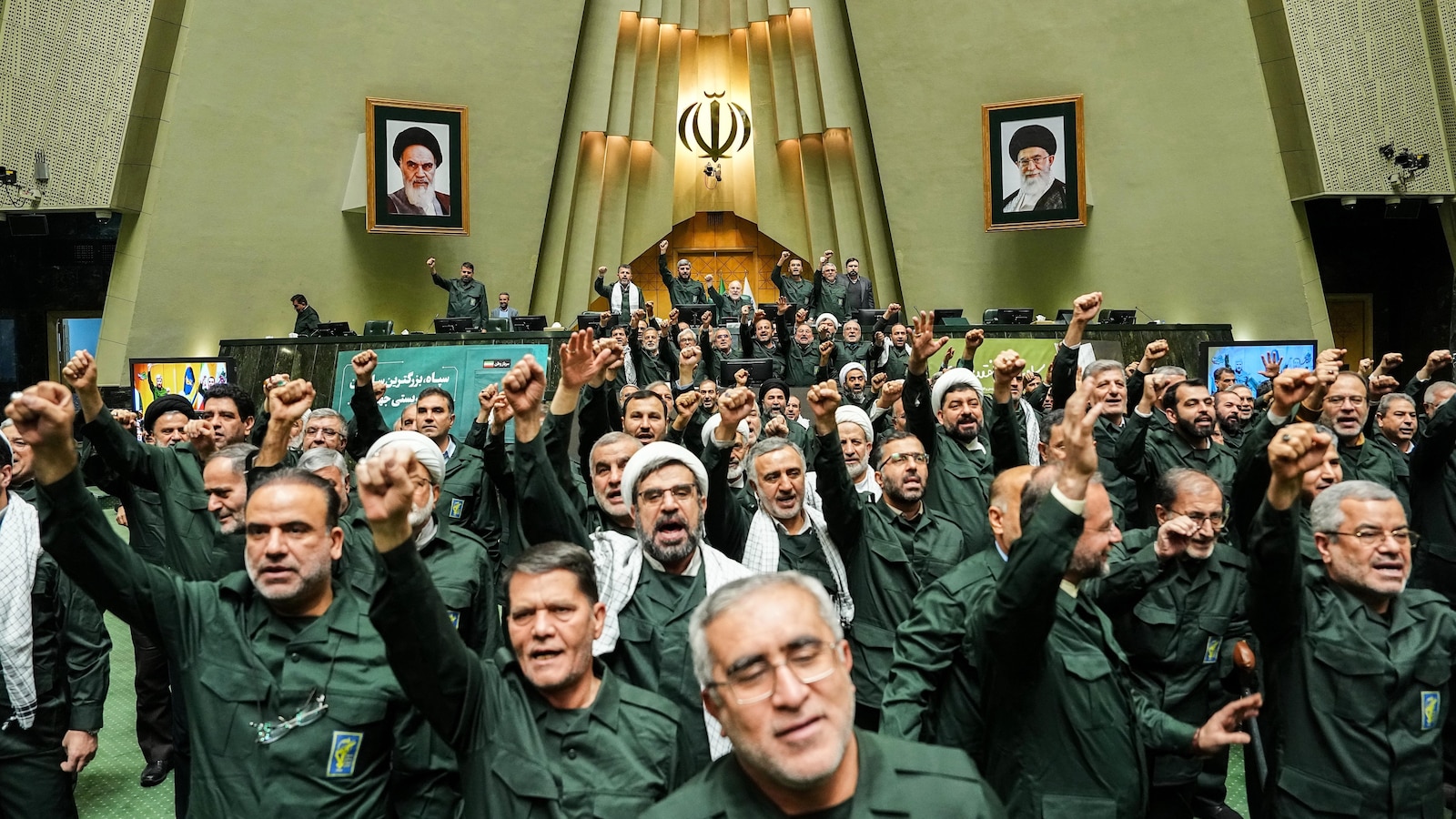
The crisis has also strained Iran’s relationships with Europe. Iran’s parliament speaker, Mohammad Bagher Qalibaf, announced that the Islamic Republic now considers all European Union militaries to be terrorist organizations. This dramatic declaration came as retaliation for the EU’s decision to label Iran’s Revolutionary Guard a terror group because of its role in violently suppressing protesters. Qalibaf, himself a former Guard commander, made this announcement while he and fellow lawmakers wore Revolutionary Guard uniforms in a show of solidarity. The designation is largely symbolic but reflects the deepening divide between Iran and Western nations. Qalibaf accused Europeans of “shooting themselves in the foot” and blindly following American orders against their own interests, arguing that the Revolutionary Guard has actually prevented terrorism from spreading to Europe. The parliamentary session concluded with lawmakers chanting “Death to America!” and “Death to Israel!” The Revolutionary Guard, which controls Iran’s ballistic missile program and maintains extensive economic interests throughout the country, answers directly to Khamenei, making it one of the most powerful institutions in Iran and a key pillar of the supreme leader’s authority.
Red Lines and Nuclear Questions
President Trump has drawn two clear red lines that would trigger American military action: the killing of peaceful protesters or mass executions of detained demonstrators. Given that sedition charges in Iran can carry the death penalty, and tens of thousands remain in custody, the possibility of mass executions remains a genuine concern. Trump has also increasingly focused on Iran’s nuclear program, which became a direct issue of conflict when Israel launched a 12-day war with Iran last June. During that conflict, the United States bombed three Iranian nuclear facilities, and recent satellite imagery suggests Iran may be attempting to hide activity at two of those sites as it works to salvage what remains. When pressed by reporters, Trump sidestepped questions about whether Tehran would feel emboldened if America backed down from military strikes, acknowledging that “some people think that, some people don’t.” He emphasized that Iran should negotiate a “satisfactory” deal to prevent the country from developing nuclear weapons, though he admitted uncertainty about whether they would actually do so, while noting that Iran is “seriously talking to us.” This diplomatic dance continues even as military forces remain on high alert, leaving the world watching anxiously to see whether negotiations can prevent what could become a catastrophic regional conflict with global implications for energy markets, international security, and human lives throughout the Middle East.