


Ukraine’s Dark Winter: Life Under Russia’s Relentless Energy Attacks
The Nightly Symphony of War
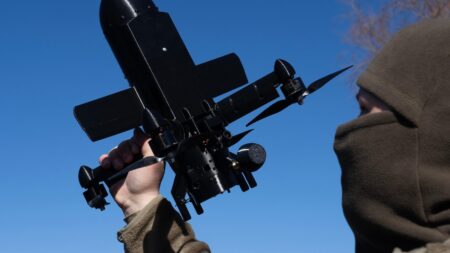
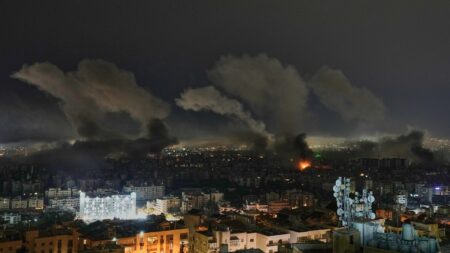
For residents of Ukraine’s major cities, the sounds of war have become an unwelcome but familiar part of daily life as the country approaches nearly four years under Russia’s full-scale invasion. Each evening follows a predictable, terrifying pattern: smartphones buzz with air raid alerts, followed by the ominous drone of Russian attack drones overhead. The night air fills with the sharp crackle of machine gun fire from mobile defense teams trying to shoot down incoming threats, the piercing whistle of ballistic missiles, and the powerful roar of interceptor missiles launched to stop them. This winter has added a new element to what Ivan Stupak, a former Security Service of Ukraine officer, calls this “modern symphony” – the constant hum of thousands of generators struggling to keep homes and businesses functioning as Russia intensifies its campaign to destroy Ukraine’s power grid.
The human cost of this strategy is staggering. Major cities regularly plunge into darkness through rolling blackouts that can affect hundreds of thousands, sometimes millions of people simultaneously. These outages come during the harshest conditions imaginable – heavy snowfall and temperatures plummeting well below freezing. Ed Ivashchuk, who fled the occupied city of Melitopol and now lives in Kyiv’s Darnytskyi district, describes the experience in visceral terms: “It’s a horrible feeling to go to bed wearing warm clothes, covered with several blankets, and still feel cold. You wake up in the morning with pain in your lungs, as if pneumonia is starting.” While Russia has targeted Ukrainian energy infrastructure during every winter since the invasion began in February 2022, this winter’s assault has proven qualitatively different – larger in scale, more sustained, and devastatingly effective according to Ukrainian officials. The strategy, as Stupak notes, has become “more aggressive and precise.”
A City in Crisis
The strain on Ukraine’s capital has reached critical levels. In early January, Kyiv Mayor Vitali Klitschko took the extraordinary step of urging residents to temporarily evacuate the city if possible. The response was dramatic – approximately 600,000 people left, representing about 20% of Kyiv’s official pre-war population of just under 3 million. Ukrainian emergency repair teams work heroically under fire and around the clock, but their efforts cannot keep pace with the destruction. Rolling blackouts in bitter cold have become the grim new reality for Ukrainians nationwide. On a single night in late January, Russian strikes left an estimated 2.5 million people without power. Maxim Timchenko, CEO of DTEK, Ukraine’s largest private energy company, didn’t mince words when speaking to Reuters, describing the national situation as “close to a humanitarian catastrophe.”
The international community has taken notice of the crisis. In a rare diplomatic development, the Kremlin confirmed that President Donald Trump personally requested Russian President Vladimir Putin to pause strikes on Kyiv until late January “to create favorable conditions for negotiations.” Presidential Press Secretary Dmitry Peskov later confirmed Russia agreed to this temporary pause on attacks against the capital, though notably did not extend this commitment to other parts of the country. For Ukrainians living through this winter – whether in Kyiv or elsewhere – the consensus is clear: this has been the hardest winter of the war. The power outages create cascading problems far beyond simple inconvenience. Hot water disappears, electric stoves and appliances fail or become damaged, internet access cuts out, and families are forced to light their homes with candles, returning to conditions more reminiscent of the 19th century than the 21st.
The Deadly Toll of Darkness
Nastia Sherstiuk, also displaced from Melitopol and now living in Kyiv’s Dniprovskyi district, observes that Russian strikes seem deliberately timed to “exploit” the coldest nights for maximum impact. Beyond the discomfort and hardship, the outages create genuinely life-threatening situations. Sherstiuk recounts tragic cases of people, often elderly, dying from carbon monoxide poisoning after attempting to heat their homes with gas stoves. In one particularly heartbreaking incident, an entire family died from poisoning caused by a generator they had installed on their balcony, desperately trying to keep warm. When asked whether these conditions undermine morale, Sherstiuk’s response captures the psychological warfare at play: “It does not break our will to resist, but it exhausts it – slowly, systematically and deeply. That is likely exactly what the enemy is counting on.”
The scale of Russia’s January offensive was staggering. According to Ukrainian air force data, Russia launched 4,577 long-range drones and missiles into Ukraine during the month. Ukrainian defenders managed to shoot down or suppress approximately 83% of the drones and 51% of the missiles – an impressive defensive effort, but one that still allowed hundreds of weapons to reach their targets. Some of January’s most devastating strikes were deliberately coordinated with the coldest weather. On the night of January 19, Russia launched 373 munitions while temperatures dropped to 14°F in Odessa, 12°F in Kyiv and Kharkiv, just under 9°F in Kryvyi Rih, and a brutal 1°F in Lviv. Ukraine is not merely defending – the country’s military wages its own long-range strike campaign into Russia, targeting energy production facilities, oil refineries, transport infrastructure, and power plants. Russia’s Defense Ministry claims it intercepted 3,676 Ukrainian drones during January, though neither side provides fully verifiable detailed data about the scale and specific targets of their attacks.
The Human Rights Catastrophe
Russia’s Defense Ministry typically characterizes its large-scale attacks as strikes against “Ukrainian military industry enterprises, energy and transport infrastructure facilities” used by the military, along with other military supply and personnel sites. Ukrainian officials tell a different story – they accuse Moscow of intentionally targeting civilian energy infrastructure in a calculated campaign to freeze the population into submission. President Volodymyr Zelenskyy has been blunt in describing Russia’s strategy: “Russia’s main targets right now are our energy sector, critical infrastructure and residential buildings. Every massive attack by Russia can become devastating.” In a social media post that captured the desperation of the moment, Zelenskyy wrote: “Everyone sees how Russia tries to freeze Ukrainians – our people – to death at -20°C” (about -4°F). The situation became so dire that on January 14, Zelenskyy declared a national state of emergency.
The civilian death toll tells a sobering story. The United Nations’ Human Rights Monitoring Mission in Ukraine reported in January that 2025 was the deadliest year for Ukrainian civilians since 2022, when the full-scale invasion began. The mission specifically cited “a massive increase in the use of long-range weapons by the Russian armed forces” as a key factor driving this tragic trend. Drones and missiles alone inflicted 35% of all civilian casualties throughout 2025 – killing 682 people and injuring 4,443 others. This represented a 65% increase in casualties compared to 2024. These aren’t just statistics; they represent parents, grandparents, children, and neighbors whose lives were cut short or forever altered by weapons designed to terrorize civilian populations into submission.
Survival Through Solidarity
In response to this humanitarian crisis, generators have transitioned from convenience to absolute necessity, their emergency power helping bridge the gaps torn in the grid by relentless aerial bombardment. European nations have mobilized rapidly, sending hundreds of generators to Ukraine in recent weeks to power critical facilities like hospitals and emergency shelters. Western partners are also providing new equipment, spare parts, and crucial funding to support the repair of infrastructure destroyed or damaged by Russian strikes. In a remarkable gesture, Lithuania shipped the components of an entire thermal power plant to Ukraine – a facility the European Commission says is capable of providing electricity for 1 million people.
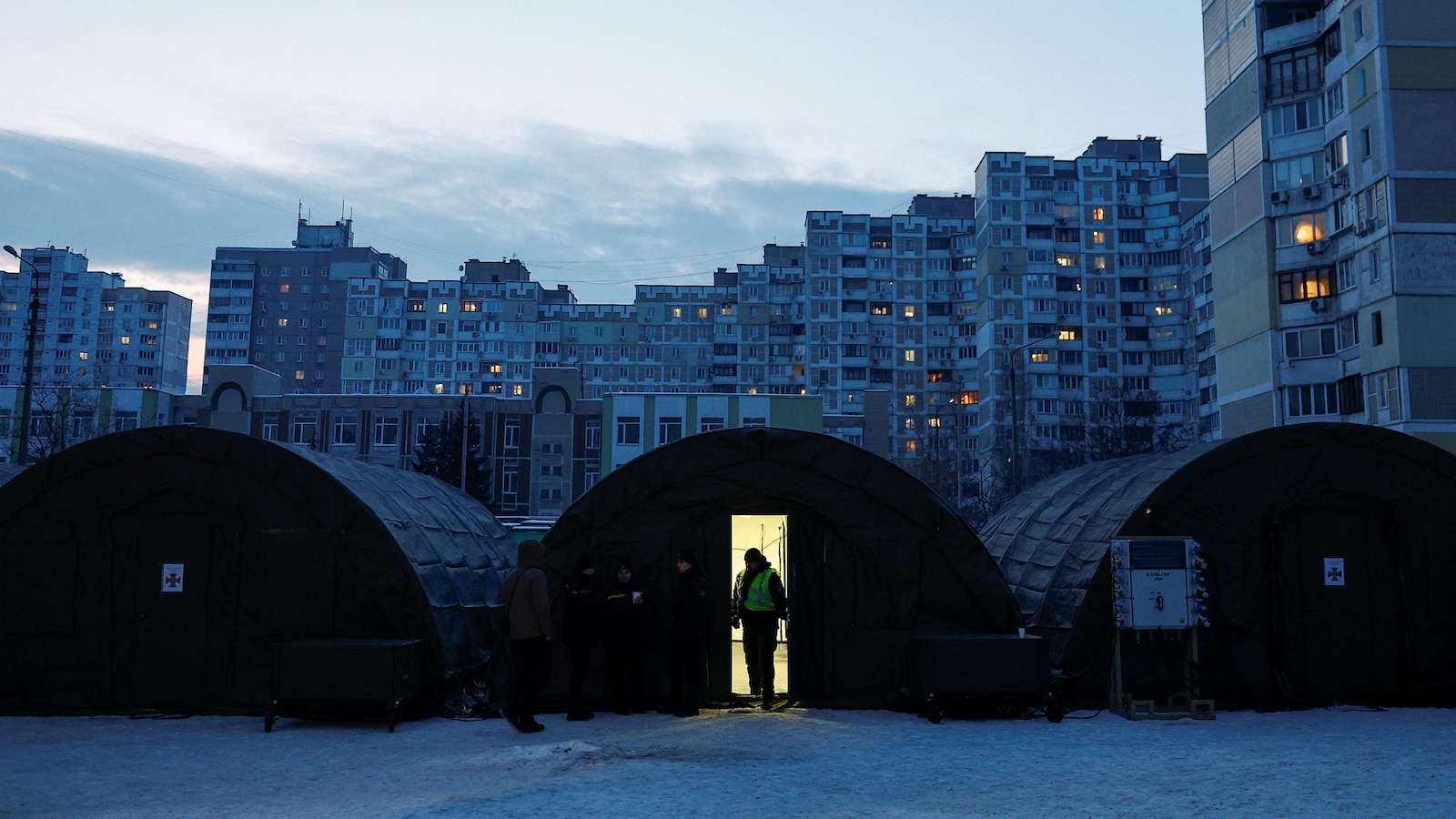
Across Ukrainian cities, so-called “invincibility points” have emerged as lifelines for the population – places where people can escape the cold, charge their devices, and receive support. Prime Minister Yulia Svyrydenko reports that some 10,600 such points are now operational nationwide. The U.S.-based Nova Ukraine NGO is among the organizations supplementing these state-run facilities. As Olena Drozd, Nova Ukraine’s infrastructure lead, explains: “It may sound very basic, but when it is around -18°C outside and there is no heating in your apartment, the ability to come somewhere, drink a cup of hot tea and warm up can become – quite literally – a matter of survival.” Months of intermittent electricity have forced Ukrainians to develop new survival strategies and unexpected psychological resilience. Kateryna Haiduk, a 34-year-old from Kryvyi Rih in central Ukraine, maintains perspective: “Of course, the lack of light causes some discomfort, but it is not the worst thing in life. It is surprising when the schedule says that the light will be turned off, but it is not turned off.”
Living in Limbo
For many Ukrainians, life has been reduced to its most basic elements. Viktoria Bondarenko, 32, also from Kryvyi Rih, describes how existence has contracted to essential concerns: “My life has narrowed to very basic things: where to charge my phone, how to stay warm, how to plan my day around power outages. It feels like I’m constantly on standby.” She continues, “The hardest part isn’t any one specific moment, but the feeling that normal life has disappeared. You can’t just come home and warm up, turn on the lights, and relax. Even at home, you continue to survive.” Maksim Anishchenko, displaced with his family from the now-occupied port city of Mariupol to Kryvyi Rih, expresses surprise at his own adaptation: “I’m surprised at how I learned to survive almost automatically – my body and mind are looking for a way out, but emotionally it is still very difficult.” The psychological toll extends to entire families, creating a perpetual state of anxiety. “You live in a constant state of waiting,” he says. “At such moments, you begin to appreciate even small moments of light and warmth, because they already seem like a luxury.”
Natalia Lukashuk, another Kryvyi Rih resident, captures the exhausting nature of this existence: “Without light, any little thing takes many times more strength. You are constantly balancing between ‘I have to’ and ‘I can’t anymore.'” The elderly face particularly acute vulnerabilities. Iryna Mykhailivna, 83, explains that non-functioning elevators in her apartment building have essentially confined her to her home. When cell phone service also fails, her fears multiply: “I’m afraid I won’t be able to contact my relatives or call an ambulance.” Halyna Natiatullina, another pensioner displaced from her home, speaks to the loss of security that a home once provided: “There used to be a house where I could warm up and hide, but now I don’t have that feeling. My personal life has come down to simply waiting for the day to pass peacefully, without anxiety and bad news.”
Despite their own suffering, many civilians maintain awareness that conditions are far worse at the front lines, where Ukrainian troops battle in freezing trenches to stem Russia’s slow, bloody advance. “When I think about how cold it is in the trenches, I cry,” says Mykhailivna. Liudmyla Kostetska, both a mother and a soldier’s wife, reflects on how the war has fundamentally changed her people: “We have become tougher, less naive, but not weaker. It has taken away all the romance of ideas about ‘heroic survival.’ Now, we are simply holding on.” This simple phrase – “simply holding on” – perhaps best captures the reality of Ukraine’s fourth winter at war: a population stripped of illusions, tested beyond what seemed endurable, yet still refusing to break despite Russia’s calculated campaign to freeze them into submission.