


Oksana Masters: A Champion’s Journey of Resilience and Triumph
Breaking Records and Making History in Milan
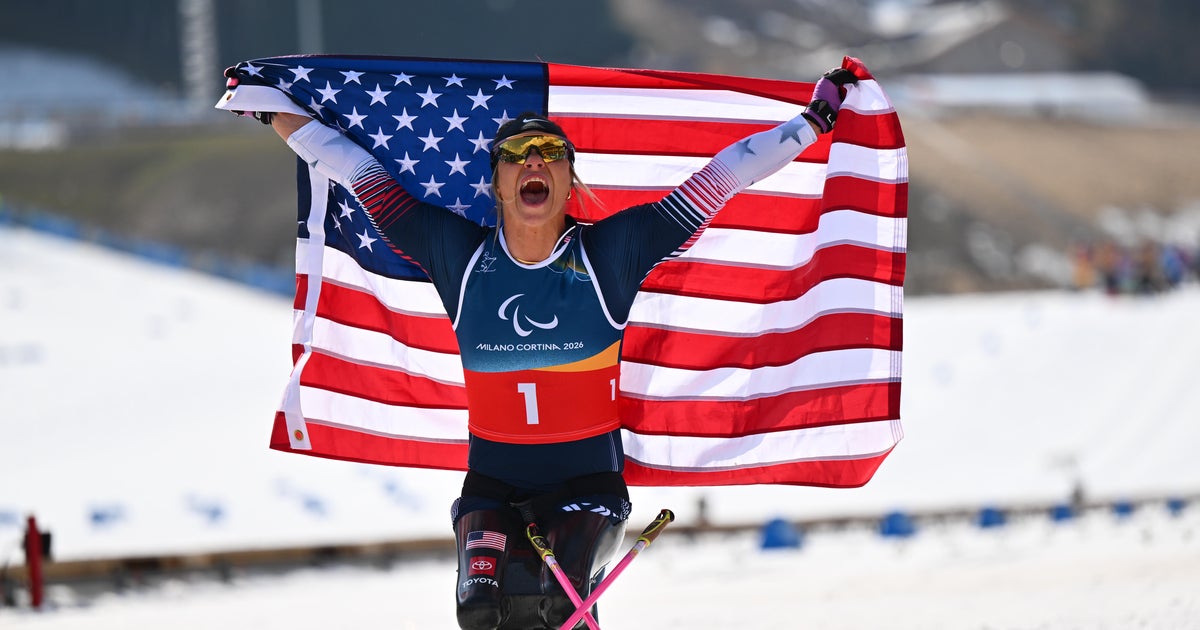
Oksana Masters has cemented her legacy as the most decorated U.S. Winter Paralympian in history, and her joy is absolutely infectious. After her latest triumphant performance at the 2026 Milan Winter Paralympics, she couldn’t contain her happiness. “My cheeks are hurting from smiling,” she told CBS News, her voice brimming with genuine emotion. “I feel like I’m on top of the world. I am shocked.” This wasn’t just another competition for Masters—it was a moment of pure vindication and celebration. On March 7, she claimed her 20th Paralympic medal by winning gold in the women’s sprint sitting discipline in Para biathlon. But she didn’t stop there. Masters went on to capture two more gold medals—her 21st and 22nd overall—in Para cross-country skiing events, bringing her career gold medal count to an impressive twelve. With one race still remaining at the 2026 Winter Games, Masters has already written another glorious chapter in her remarkable athletic story, proving once again that her determination and skill are unmatched on the world stage.
Overcoming Physical Setbacks Through Mental Strength
What makes Masters’ recent success even more extraordinary is the context in which it occurred. Her season leading up to the Milan Paralympics was anything but smooth. She faced a series of serious health challenges that would have sidelined many athletes permanently. Masters underwent surgery, battled a bone infection, and suffered a concussion—each obstacle presenting its own set of physical and mental challenges. Yet she persevered, drawing on an inner strength forged long before she ever became an athlete. When asked how she managed to overcome these setbacks, Masters didn’t point to advanced training techniques or cutting-edge sports medicine. Instead, she credited her childhood experiences. Growing up as an orphan in Ukraine gave her a perspective and resilience that most people can’t imagine. Those early years of uncertainty and struggle taught her that survival requires an unwavering spirit and a refusal to surrender, lessons that have translated directly into her athletic career. This mindset has become her greatest competitive advantage—not just her physical abilities, but her mental fortitude and her deep appreciation for every opportunity she receives.
A Childhood That Shaped a Champion
Masters’ early life story is both heartbreaking and inspiring, providing the foundation for her incredible mental toughness. Born in Ukraine, she spent her early childhood in an orphanage, facing challenges that no child should have to endure. When she was seven years old, an American couple adopted her, giving her a new life and new opportunities in the United States. However, the effects of her birth country’s tragic history followed her. Masters was born with birth defects caused by radiation exposure from the Chernobyl nuclear disaster, which occurred just years before her birth. The long-term consequences of this exposure eventually necessitated the amputation of both her legs. Rather than viewing these experiences as limitations, Masters has transformed them into sources of strength. “I know that life isn’t guaranteed, and so I don’t take anything for granted,” she explained to CBS News. This profound understanding of life’s fragility and preciousness has given her a perspective that fuels her competitive drive. She reflected on how her personal journey parallels her athletic one: “I didn’t make my first Paralympic Games in 2008 when I wanted to. I know what it’s like to not make it, to make it, to win gold or walk away from a Paralympic Games with no medals. I think that stems from not ever giving up, when I was a little girl in Ukraine, to now.”
The Unique Joy of Winter Sports
Now competing in her eighth Paralympic Games, Masters has become a veteran of both summer and winter competitions since beginning her Paralympic journey in 2012. When asked about her preference between the two seasons, she laughed at the impossibility of choosing. Summer Paralympics offer their own appeal—”better tan lines and rowing,” she joked—but there’s something special about winter sports that keeps her coming back. Specifically, she’s drawn to the dynamic, ever-changing nature of cross-country skiing. Unlike many sports where conditions remain relatively constant, cross-country skiing presents a new challenge with every lap, every race, and every course. “You’ll never have the same course twice or the same lap twice,” Masters explained with evident enthusiasm. “When I ski at the start of the race, one lap, the second lap is different. So I’m constantly adjusting and finding those fast lines, the fast snow. And I’m not settling.” This constant need for adaptation appeals to something fundamental in Masters’ character—her refusal to become complacent and her drive to continuously push beyond her comfort zone. For an athlete who has built her life around overcoming obstacles and adapting to new challenges, the unpredictable nature of winter sports provides the perfect arena to showcase her skills. It’s this aspect of winter competition that keeps her engaged and excited, even after years of elite-level performance.
Being a Role Model and Showing the Real Journey
As one of the most accomplished Paralympic athletes in U.S. history, Masters has naturally become an icon and role model, particularly for younger teammates who look up to her achievements. But she doesn’t take this responsibility lightly, and she’s intentional about what message she wants to convey. Rather than presenting a polished image of constant success, Masters feels fortunate to be able to “show both sides of an athlete and the journey” and demonstrate that there “isn’t a perfect timeline” to achieving greatness. She understands that social media and sports coverage often highlight only the victories, creating unrealistic expectations for aspiring athletes. Masters wants young competitors to see the complete picture—the setbacks, the injuries, the disappointments, and the moments of doubt that are all part of an athlete’s life. “I feel like it’s just an absolute honor to be able to show parts of my journey, the ups and downs, because I think it’s very important to see that gold medalists or first-timers that it doesn’t have to be smooth sailing, and it often isn’t, and it’s okay,” she said. Her message is simple but powerful: “Just don’t give up on yourself and your dream.” This authenticity has made her not just a champion, but a genuine inspiration to people who face their own challenges, athletic or otherwise.
The Inspiration That Drives Her Forward
Despite all her accomplishments and the admiration she receives from others, Masters remains grounded, attributing her success to the person who has been her constant supporter since childhood. When asked about her own inspiration, she didn’t hesitate. “My mom is my number one reason of why I’m here and why I keep pushing myself,” Masters shared. The woman who adopted her from that Ukrainian orphanage and gave her a chance at a better life continues to be her driving force. Masters competes not just for herself, but to show her mother what became possible because of her love and support. She also sees a broader purpose in her achievements—proving to herself and to society what’s truly possible when people refuse to be defined by their circumstances or limitations. As the 2026 Paralympics continue, the United States sits in second place in the medal count with twelve medals, behind China’s fourteen. But for Oksana Masters, the numbers are secondary to the journey itself. With one race still to go in Milan, she’s already accomplished something far more important than adding to her medal collection—she’s shown the world what resilience, determination, and an unbreakable spirit can achieve. Her story reminds us all that our greatest limitations are often the ones we place on ourselves, and that the challenges we face early in life don’t have to define our future. Instead, they can become the foundation for something extraordinary.