



North Korea Fires Ballistic Missiles Amid Rising Regional Tensions
A Calculated Show of Force
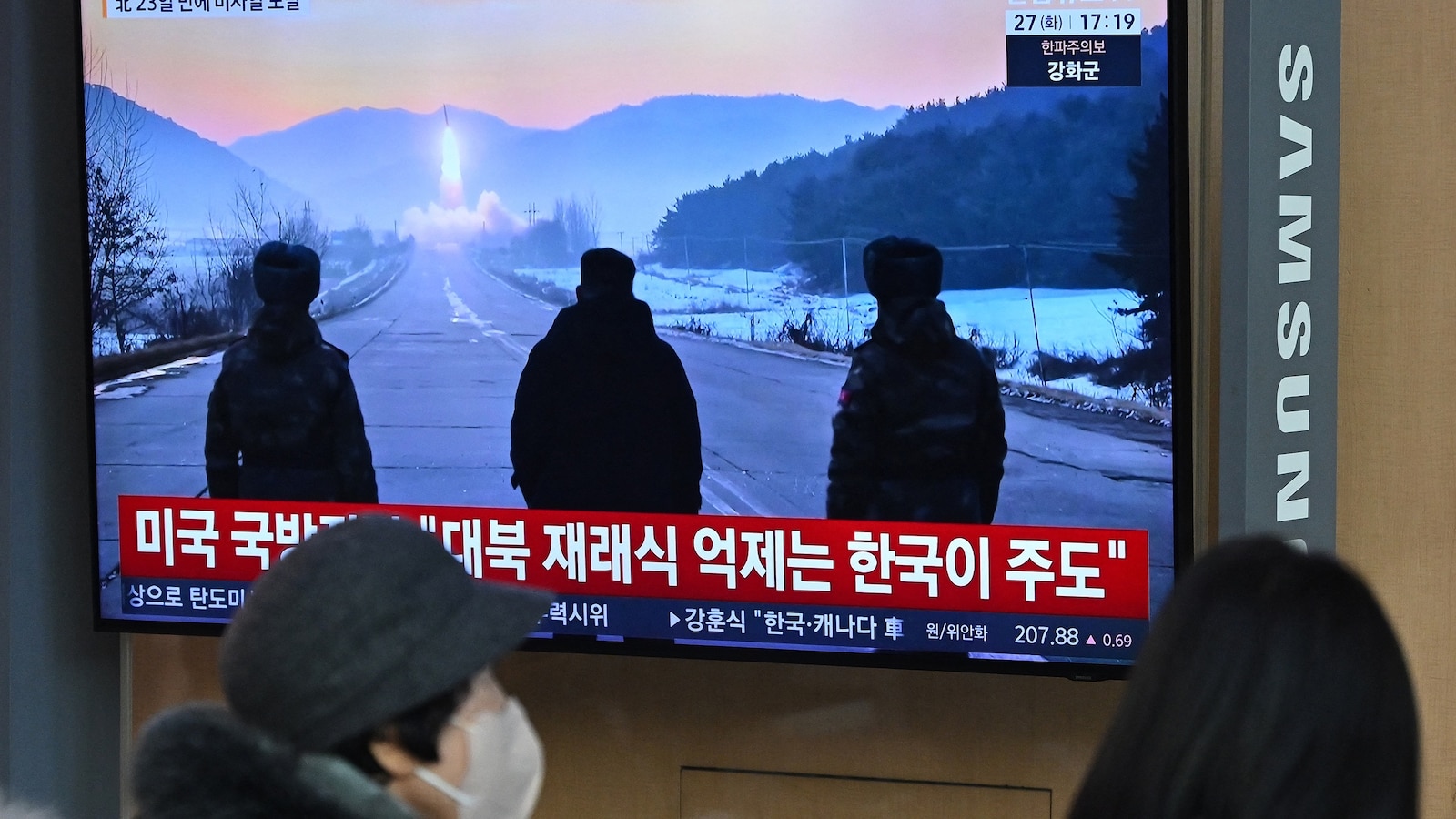
On a tense Tuesday afternoon, North Korea reminded the world of its continued military ambitions by launching two short-range ballistic missiles toward the Sea of Japan. The timing of this provocative act wasn’t coincidental—it came just hours after Elbridge Colby, the U.S. under secretary of defense for policy, concluded his diplomatic visit to South Korea and touched down in Japan. According to officials from both South Korea and Japan, the missiles were fired from the Pyongyang area around 4 p.m. local time, traveling approximately 350 kilometers (about 217 miles) before plunging into the waters that separate the Korean Peninsula from Japan. This launch represents yet another violation of United Nations Security Council resolutions and has sparked immediate condemnation from neighboring countries and their allies. The missile test serves as a stark reminder that despite international sanctions and diplomatic efforts, North Korea continues to advance its weapons capabilities and isn’t afraid to flex its military muscle when it feels the need to send a political message.
Heightened Tensions Over Alleged Drone Incursions
The relationship between North and South Korea has been particularly strained in recent months, with Pyongyang accusing Seoul of violating its airspace with unmanned drones on two separate occasions—once in January and again last September. These allegations have created a new flashpoint in the already fragile relationship between the two nations, which technically remain at war since the Korean War armistice in 1953 never resulted in a formal peace treaty. North Korea has used these alleged incursions as justification for heightened military readiness and aggressive rhetoric, claiming its sovereignty has been violated. Whether these drone flights actually occurred remains a matter of dispute, but what’s clear is that Pyongyang has seized upon these incidents to justify its continued military provocations. The timing of Tuesday’s missile launch, coming amid these ongoing accusations and immediately following a high-level U.S. defense official’s visit to the region, suggests North Korea is trying to demonstrate its displeasure with what it perceives as hostile actions by South Korea and its American ally.
International Response and Condemnation
The reaction from Japan was swift and unequivocal. The Japanese Ministry of Defense issued a formal statement declaring that the missile launches constituted “a serious issue concerning the safety of the Japanese people.” Japan lodged a strong official protest with North Korea and condemned the action in the strongest possible terms. This response reflects the very real anxiety felt by Japanese citizens who live within range of North Korean missiles and who have experienced the unsettling sound of air raid sirens during previous tests. South Korea’s Joint Chiefs of Staff confirmed that the nation’s intelligence authorities had tracked the launch in real time and immediately shared critical information with both Japan and the United States, demonstrating the close security cooperation between these allies. In their statement, South Korean military officials emphasized that they maintain “a robust South Korea–U.S. combined defense posture” and assured their citizens that they are “closely monitoring various developments by North Korea and maintaining the capabilities and readiness to respond overwhelmingly to any provocation.” This language, while diplomatic, carries an implicit warning to Pyongyang that any escalation would be met with a formidable response.
Technical Details and Safety Concerns
According to the assessment by Japanese defense officials, both missiles appeared to land in the Sea of Japan relatively close to the North Korean coast, rather than traveling deeper into international waters or approaching Japanese territory more directly. This detail is significant because it suggests North Korea may have been testing shorter-range systems or deliberately limiting the range to avoid an even more severe international response. The Japanese government took immediate precautions by providing safety information to all aircraft and ships operating in the affected area, though fortunately, no damage or injuries were reported. The fact that these were short-range ballistic missiles, rather than the intercontinental ballistic missiles that North Korea has tested in the past, indicates this may have been more about sending a political signal than demonstrating long-range strike capabilities. Nevertheless, even short-range missiles represent a serious threat to South Korea and Japan, both of which host significant U.S. military installations and personnel. The technical success of the launch—with both missiles traveling their intended distance and apparently following their programmed flight paths—demonstrates that North Korea’s missile program continues to function effectively despite years of international sanctions designed to limit access to critical components and technology.
The Broader Geopolitical Context
This latest provocation unfolds against a complex geopolitical backdrop in Northeast Asia. The visit by Under Secretary Colby to South Korea and Japan was part of ongoing efforts to strengthen security cooperation among the United States and its regional allies in response to multiple challenges, including North Korea’s weapons programs and China’s growing military assertiveness. By launching missiles just hours after Colby’s departure from Seoul, North Korea seems to be sending a deliberate message that it won’t be intimidated by strengthened U.S.-South Korea-Japan security ties. The Kim Jong Un regime has historically used missile tests and other provocative actions to accomplish multiple objectives simultaneously: demonstrating military capabilities to domestic audiences, protesting actions by perceived adversaries, attempting to extract concessions in future negotiations, and reminding the world that North Korea cannot be ignored. The pattern of provocations tends to increase during periods when North Korea feels particularly isolated or threatened, or conversely, when it believes international attention has shifted elsewhere and it needs to force its way back into the spotlight. Recent developments, including South Korea’s strengthened alliance with the United States and improving relations between South Korea and Japan, likely contribute to Pyongyang’s sense that it needs to assert itself more forcefully.
Looking Ahead: An Uncertain Future
The international community now faces the familiar challenge of how to respond effectively to North Korea’s latest provocation. Traditional tools—diplomatic condemnations, United Nations resolutions, and economic sanctions—have proven insufficient to fundamentally change North Korea’s behavior over the past several decades. The country has become adept at evading sanctions through illicit networks and has demonstrated a willingness to endure significant economic hardship rather than abandon its weapons programs, which the leadership views as essential to regime survival. Meanwhile, ordinary North Korean citizens continue to suffer under one of the world’s most repressive governments, with limited access to food, healthcare, and basic freedoms. The missile launch serves as yet another reminder that the North Korean challenge remains unresolved and potentially growing more dangerous as the country’s weapons become more sophisticated. For the people of South Korea and Japan, who must live with the constant threat of North Korean aggression, these tests are more than abstract geopolitical events—they represent a very real danger that could, in a worst-case scenario, lead to catastrophic conflict. As tensions continue to simmer on the Korean Peninsula, the hope remains that diplomatic channels can eventually produce a sustainable solution, though Tuesday’s missile launch suggests that path remains as difficult as ever to navigate.