


Japan Battles Deadly Winter Storm: A Nation Buried Under Record Snowfall
Unprecedented Arctic Blast Paralyzes Northern Regions
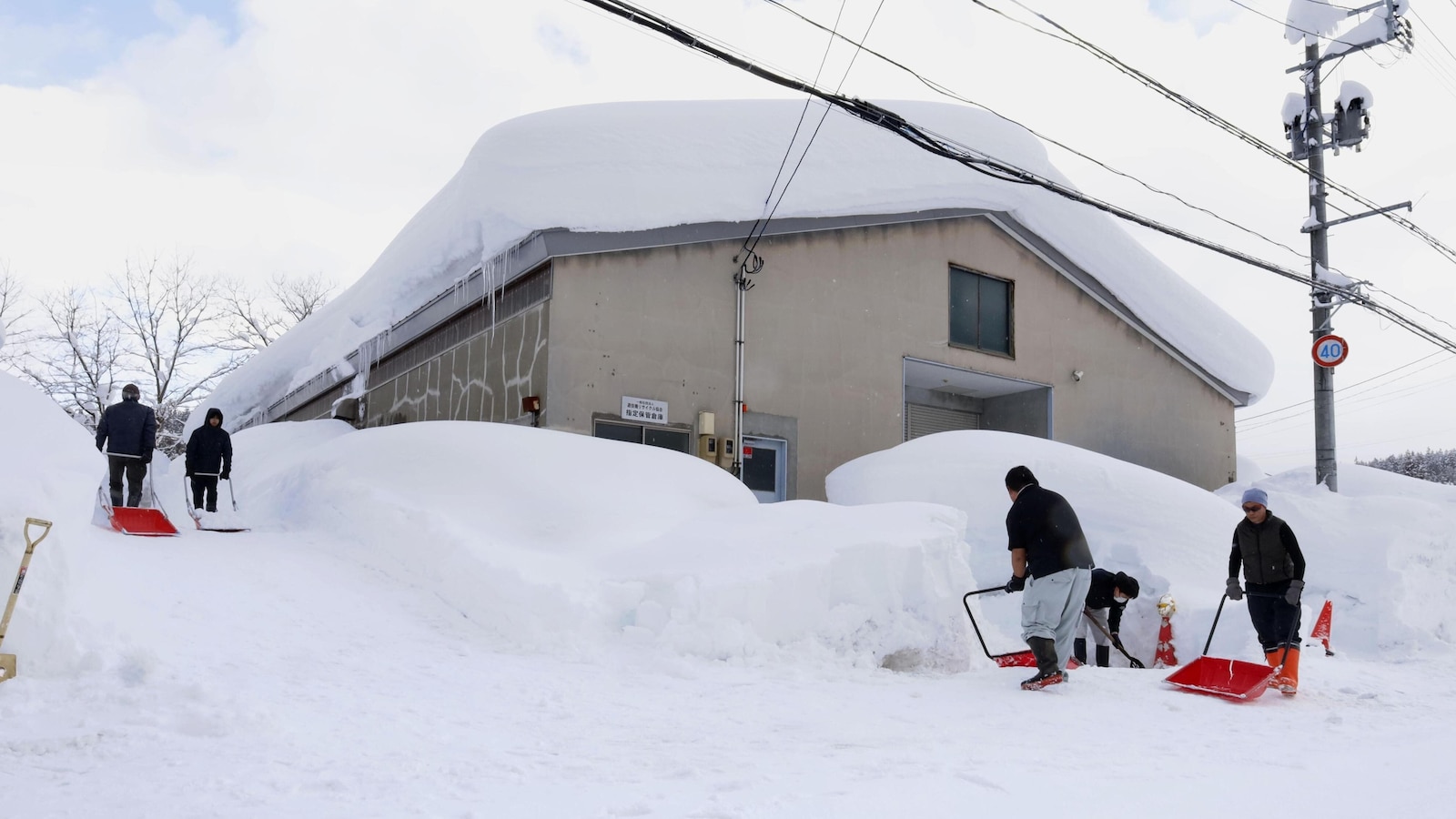
Japan is grappling with one of its most severe winter weather events in recent memory, as heavy snowfall continues to blanket the northern regions of the country. What began as a typical winter storm two weeks ago has evolved into a dangerous and deadly weather crisis that has now spread across fifteen prefectures throughout the nation. The culprit behind this extreme weather phenomenon is an Arctic cold air mass that has stubbornly settled over the Japanese archipelago, refusing to move on and continuously dumping snow on communities below. In the hardest-hit areas, snow accumulation has reached a staggering two meters—that’s approximately six and a half feet of snow piling up on homes, streets, and infrastructure. This isn’t just an inconvenience; it’s a life-threatening situation that has transformed ordinary neighborhoods into snow-covered landscapes where normal daily activities have ground to a complete halt. The sheer volume of snow has overwhelmed local governments and emergency services, creating a cascade of problems that touch every aspect of daily life for millions of Japanese residents.
Transportation Networks Collapse Under Weight of Snow
The impact on Japan’s renowned transportation infrastructure has been particularly dramatic and concerning. In Aomori prefecture, one of the regions bearing the brunt of the storm, more than 1,700 homes found themselves plunged into darkness without electricity as power lines succumbed to the weight of accumulated snow and ice. Perhaps even more shocking for a nation known for its punctual and reliable public transit system, most train lines have stopped running completely, including the famous bullet trains—the high-speed rail network that serves as the backbone of Japan’s intercity transportation system. This disruption represents not just an inconvenience but a significant blow to the country’s connectivity and economic activity. The roads, typically busy with daily traffic, have become impassable corridors of white, with snow piled so high that vehicles cannot navigate through. This transportation paralysis has created serious concerns for emergency response capabilities, as ambulances and fire trucks struggle to reach people in need. Governor Soichiro Miyashita of Aomori prefecture addressed these concerns at a press conference on Wednesday, acknowledging the severity of the situation and outlining contingency plans that officials are developing to ensure emergency services can still function despite the impossible road conditions.
Creative Solutions as Emergency Services Adapt
The dedication of emergency responders in the face of this crisis demonstrates the resilience and ingenuity of Japan’s public service workers. Governor Miyashita revealed that when emergency vehicles simply couldn’t reach their destinations through the snow-blocked roads, responders didn’t give up—they adapted. Emergency personnel have been parking their vehicles as close as they can get to emergency locations, then grabbing stretchers and making their way on foot through the deep snow to reach people who need help. This extraordinary effort shows both the severity of the conditions and the commitment of medical and rescue professionals who refuse to let the weather prevent them from saving lives. The governor also made pointed comments about snow removal efforts, specifically calling on the city of Aomori to accelerate its clearing of main roads, suggesting that the city has fallen behind other municipalities in keeping critical arteries open. Beyond the immediate emergency response concerns, the snowstorm has forced the closure of schools throughout Aomori, affecting thousands of children who cannot safely travel to their classes. This educational disruption adds another layer of difficulty for families already dealing with power outages, blocked roads, and the constant physical labor of trying to keep their properties clear of snow.
Tragic Human Toll Continues to Mount
The human cost of this extreme weather event has been devastating, with the death toll climbing to at least thirty-five people nationwide, accompanied by hundreds of injuries. The tragic irony is that most of these deaths and injuries didn’t occur from exposure to the cold or traffic accidents, but from falls suffered by people simply trying to protect their homes from the snow. The typical victim is someone who climbed onto their roof to shovel off the dangerous accumulation before the weight could cause structural damage—a necessary task that has turned deadly time and again. Niigata prefecture, a region traditionally known for its rice cultivation in the northern part of Japan, has been particularly hard hit with twelve snow-related fatalities. One heartbreaking case involved a man discovered collapsed on his roof in Uonuma city on January 21st, having apparently succumbed while performing this dangerous but necessary work. In nearby Nagaoka city, a seventy-year-old resident is believed to have died after falling from his roof during snow removal efforts. These deaths paint a picture of ordinary people facing an extraordinary situation, making difficult choices between risking structural damage to their homes or risking their lives to prevent it. The injury statistics are equally sobering: 393 people have been hurt nationwide, with 126 of those being classified as serious injuries. Niigata alone accounts for forty-two of the serious injuries, reflecting how severely that particular region has been affected by the ongoing storm.
Government Warnings: The Danger Isn’t Over Yet
Adding to the concerns about the immediate snowfall, Japan’s chief government spokesperson, Minoru Kihara, issued a sobering warning that may seem counterintuitive: warmer weather ahead could actually bring new dangers. While most people would welcome a break from the cold and snow, Kihara explained that as temperatures rise and the massive snow accumulations begin to melt, communities will face new threats in the form of landslides and dangerously slippery surfaces. The warming and melting process can destabilize slopes heavy with snow, potentially sending tons of ice and snow crashing down on homes and roads below. The melting snow can also create treacherous conditions underfoot, potentially leading to even more of the falls that have already claimed so many lives and caused so many injuries. This warning underscores that the crisis is far from over, even as the initial snowfall eventually ends. Fourteen homes have already been damaged by the storm—three in Niigata and eight in Aomori prefecture—and that number could rise as the snow load tests the structural integrity of buildings designed for typical winter conditions, not the extreme accumulations currently weighing them down. Weather forecasters are predicting more heavy snowfall for the coming weekend in northern Japan, meaning affected communities will have little time to recover before the next wave hits.
A Nation’s Resilience Tested by Nature’s Fury
This severe weather event serves as a powerful reminder that even technologically advanced nations with world-class infrastructure can find themselves at the mercy of nature’s extremes. Japan, despite its experience with natural disasters ranging from earthquakes to typhoons, is facing a winter storm that has tested the limits of its preparedness and response capabilities. The contrast between Japan’s ultra-modern bullet train network—normally a symbol of precision and reliability—sitting idle under mounds of snow, and emergency medical workers trudging through snowdrifts on foot with stretchers, illustrates how extreme weather can humble even the most sophisticated systems. As climate patterns continue to shift globally, events like this Arctic air mass settling over Japan may become more common, forcing nations to rethink their infrastructure and emergency response protocols. For now, the focus remains on getting through this immediate crisis: keeping people safe, restoring power to those without electricity, clearing roads for emergency access, and preparing for whatever weather comes next. The resilience being shown by ordinary Japanese citizens, emergency responders, and local officials provides hope that communities will weather this storm, though not without significant hardship and tragic loss. As the world watches northern Japan battle through these dangerous conditions, the story unfolds as both a natural disaster and a testament to human determination in the face of nature’s overwhelming force.