


The Royal Family Crisis: Norway’s Crown Prince Stepson Faces Serious Criminal Charges
An Arrest That Shook the Norwegian Monarchy
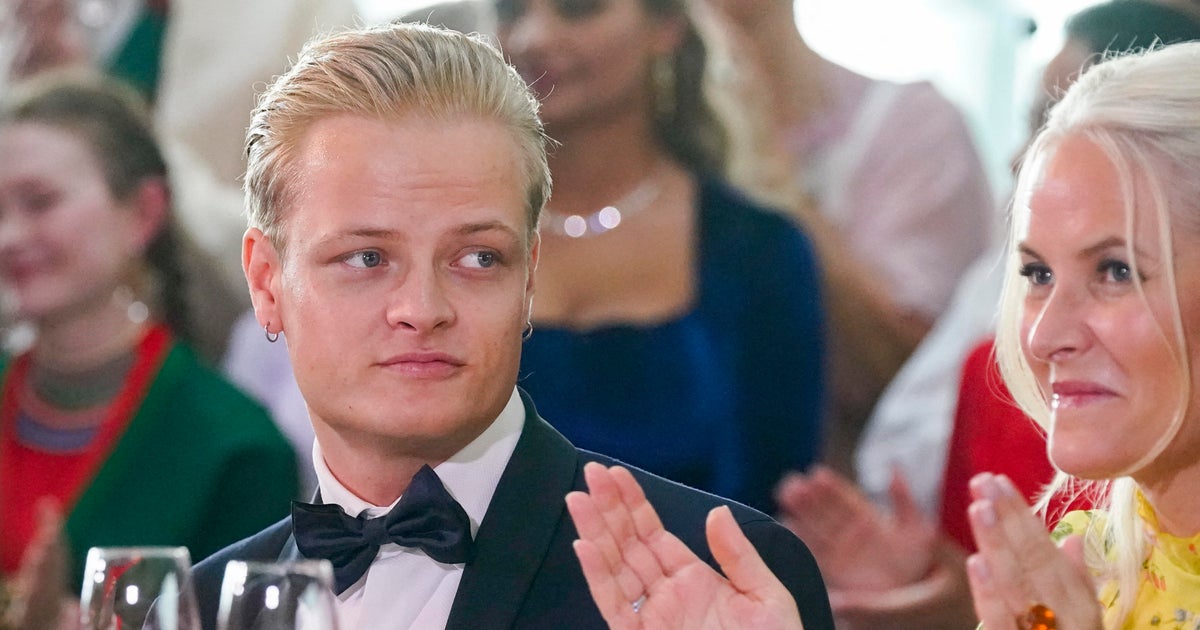
The Norwegian royal family found itself at the center of a deeply troubling scandal when Marius Borg Høiby, the eldest son of Crown Princess Mette-Marit, was arrested Sunday evening just hours before his trial was set to begin. The 27-year-old was taken into custody on fresh allegations that include assault, threatening someone with a knife, and violating a restraining order that had been put in place to protect one of his alleged victims. Police made the dramatic decision to arrest him despite his pending court appearance, citing serious concerns that he might commit additional crimes if left free. They’ve requested that he be held in detention for four weeks while the legal proceedings move forward. This arrest adds another layer of complexity to an already explosive case that has captured the attention of Norway and damaged the carefully maintained image of one of Europe’s most beloved royal families.
The timing of the arrest couldn’t have been worse for the royal household. Høiby was scheduled to appear in Oslo’s district court on Tuesday morning to face an indictment containing 38 separate criminal counts spanning several years. The charges paint a disturbing picture of alleged violence and criminal behavior, including rape, physical abuse against former romantic partners, transporting nearly eight pounds of marijuana, making death threats, and various traffic violations. These aren’t minor infractions or youthful mistakes—they represent a pattern of alleged serious criminal conduct that has put the royal family in an unprecedented and deeply uncomfortable position. While Høiby holds no official royal title and performs no duties on behalf of the monarchy, his close connection to the crown princess and his stepfather, Crown Prince Haakon, who is the heir to Norway’s throne, means that his actions inevitably reflect on the institution his family represents.
The Disturbing Details of the Allegations
The indictment against Marius Borg Høiby contains allegations that span more than six years, from 2018 through November 2024, creating a timeline of alleged misconduct that prosecutors claim shows a pattern of violence and abuse. Among the most serious charges are four separate allegations of rape occurring during this period. Additionally, the charges include claims that he subjected a former girlfriend to ongoing violence and threats between the summer of 2022 and the fall of 2023. Another relationship allegedly involved two separate incidents of violence, and prosecutors claim he violated restraining orders that were meant to keep him away from his alleged victims. The breadth and severity of these allegations have shocked a nation that generally holds its royal family in high regard, and the details that have emerged have raised difficult questions about whether warning signs were missed or ignored.
Høiby’s legal team has been clear in their response to the charges, stating that their client categorically denies all allegations of sexual abuse. They’ve also indicated that he disputes most, though notably not all, of the violence-related charges. This carefully worded statement suggests that while he may acknowledge some level of wrongdoing in certain incidents, he fundamentally contests the prosecution’s version of events regarding the most serious allegations. The young man has been under intense scrutiny since 2024, when he was first arrested on various allegations that set off a chain of events culminating in this comprehensive indictment. For months, Norwegians have watched as more details emerged and additional charges were filed, each revelation adding to the mounting pressure on both Høiby and his royal family members who have tried to navigate the delicate balance between supporting a family member and maintaining the dignity and reputation of the monarchy.
The Royal Family’s Difficult Position
Crown Prince Haakon and Crown Princess Mette-Marit find themselves in an almost impossible situation—caught between their natural instincts as parents and stepparents and their responsibilities as senior members of Norway’s royal family. Last week, Haakon made the difficult announcement that neither he nor Mette-Marit would be attending the trial proceedings, a decision that speaks volumes about the gravity of the situation and their determination to maintain appropriate boundaries. He emphasized that the royal house would not be commenting on the case as it makes its way through the courts, a stance that reflects both respect for the legal process and an acknowledgment that this is a matter for the justice system to resolve. The crown prince was careful to point out that Høiby is not officially part of the royal house—he’s Mette-Marit’s son from a relationship that preceded her marriage to Haakon, and he holds no title, performs no royal duties, and receives no public funding for royal activities.
Haakon stressed that as a Norwegian citizen, Høiby has the same legal rights and responsibilities as anyone else in the country, and that he trusts the courts to conduct proceedings that are orderly, proper, and fair to all parties involved. This statement, while measured and appropriate, must have been extraordinarily difficult for a stepfather who has helped raise this young man since childhood. The royal family’s popularity in Norway has historically been strong and stable, with citizens generally holding positive views of the monarchy and its role in Norwegian society. However, this scandal has undeniably cast a shadow over the institution, raising uncomfortable questions and forcing many Norwegians to grapple with the reality that even those in privileged positions can be accused of serious wrongdoing. The careful distance the senior royals are maintaining from the trial may be legally and politically necessary, but it also highlights the profound sadness and difficulty of the situation they face.
The Jeffrey Epstein Connection Compounds the Crisis
As if the timing of Høiby’s arrest and trial weren’t challenging enough for the Norwegian royal family, Crown Princess Mette-Marit found herself facing renewed scrutiny for an entirely separate scandal that emerged at almost exactly the same time. The latest release of documents from the Jeffrey Epstein files contained several hundred mentions of the crown princess, bringing unwanted attention to her past connections with the convicted sex offender and financier who died in prison in 2019. While Mette-Marit had already acknowledged and apologized in 2019 for having had contact with Epstein, the newly released documents provided additional details that painted a more complete picture of the nature of those contacts. Email exchanges revealed in the document dump showed that in early 2013, Mette-Marit borrowed a property owned by Epstein in Palm Beach, Florida, for several days, arrangements that were made through a mutual acquaintance.
The royal house confirmed the accuracy of these reports, and Mette-Marit issued a statement taking responsibility for what she characterized as serious errors in judgment. She acknowledged that she should have investigated Epstein’s background more thoroughly before having any contact with him, and that she failed to recognize sooner the kind of person he truly was. Her statement was notably direct and personal, using words like “embarrassing” to describe her involvement and expressing deep regret for the association. She also made a point of expressing sympathy and solidarity with the victims of Epstein’s horrific abuse, acknowledging the suffering they endured. For a crown princess already dealing with her son’s upcoming trial on serious criminal charges, this resurfacing of her Epstein connection created a second wave of negative publicity at the worst possible moment, compounding the challenges facing the Norwegian royal family.
What This Means for Norway’s Monarchy and Its Future
The combination of Marius Borg Høiby’s arrest and trial on serious criminal charges and the renewed attention to Crown Princess Mette-Marit’s past association with Jeffrey Epstein represents perhaps the most significant crisis the Norwegian royal family has faced in modern times. While other European royal families have weathered various scandals over the years, Norway’s monarchy has generally maintained a reputation for being relatively scandal-free and down-to-earth, with members who are accessible to ordinary citizens and who take their constitutional role seriously without the pomp and circumstance associated with some other royal houses. This current situation threatens that carefully cultivated image and raises questions about whether the monarchy will suffer lasting damage to its reputation and standing among the Norwegian people.
The coming weeks and months will be crucial in determining how this crisis affects the institution in the long term. The trial itself will likely bring additional uncomfortable details into the public sphere, and the media attention—both in Norway and internationally—will be intense. For Crown Princess Mette-Marit, the challenge will be supporting her son through whatever consequences he faces while also continuing to fulfill her royal duties and rebuild public trust after the Epstein revelations. For Crown Prince Haakon, who will someday be king, maintaining the appropriate balance between family loyalty and institutional responsibility will be essential. And for the Norwegian people, who generally support their constitutional monarchy but also value fairness, accountability, and justice, watching how this situation unfolds may influence their views on the institution itself. What remains clear is that no amount of privilege or royal connection can or should shield anyone from facing justice when serious allegations are made—a principle that the royal family itself has acknowledged in its careful statements about Høiby’s status as an ordinary citizen subject to the same laws as everyone else.