


Cautious Hope Amid Ukraine’s Endless Winter: Trump’s Call for Temporary Halt to Russian Strikes
A Familiar Morning of Uncertainty
For Ukrainians, Friday morning began like so many others over the past four years of Russia’s brutal invasion—with uncertainty, cautious optimism, and the weary task of deciphering whether promises from distant capitals would translate into actual relief on the ground. This time, the source of tentative hope came from Washington, where President Donald Trump announced during a Thursday evening cabinet meeting that he had “personally asked President Putin not to fire into Kyiv and the various towns for a week, and he agreed to do that.” As dawn broke over Ukraine’s war-scarred landscape, citizens and officials alike tried to assess whether this proclamation would prove meaningful or merely symbolic. The initial signs suggested at least some degree of compliance: while Ukraine’s Air Force reported that Russia had launched over 100 drones targeting front-line regions Friday morning, the capital city of Kyiv itself was notably spared from attack. For a population endured nearly four years of relentless aerial bombardment, even a single morning without sirens wailing over the capital represented a small but significant reprieve from the constant terror that has defined daily life under Russian aggression.
The Devastating Toll of Russia’s Energy War
The context for Trump’s intervention reveals the dire humanitarian crisis facing ordinary Ukrainians as winter tightens its grip on the country. Repeated Russian attacks throughout January specifically targeted Kyiv and other major Ukrainian cities, with particular focus on critical energy infrastructure. According to UkrEnergo, Ukraine’s national power grid operator, these systematic strikes have left a staggering 80% of the country struggling with prolonged power outages. This calculated assault on civilian infrastructure has proven devastatingly effective as a weapon of war, particularly given that temperatures across Ukraine remain stubbornly below freezing. President Trump acknowledged this humanitarian dimension when explaining his request to Putin, telling reporters that he had specifically asked the Russian leader to stop attacking Ukrainian towns and cities “because of the cold, extreme cold.” The forecast for the coming week in Kyiv paints an even grimmer picture, with temperatures expected to plunge as low as -9 degrees Fahrenheit. Mayor Vitali Klitschko reported earlier in the week that 15% of residential buildings in the capital were without heat—a life-threatening situation when combined with sub-zero temperatures and the constant threat of additional infrastructure attacks.
Trump’s Characterization and Ukraine’s Cautious Response
President Trump characterized the apparent agreement as “a very, very good thing,” expressing satisfaction that Ukrainian civilians might receive temporary relief from missile attacks during this particularly harsh winter period. “We’re very happy that they did it, because on top of everything else, that’s not what they need, is missiles coming into their towns and cities,” Trump told reporters, adding that Ukrainian officials “almost didn’t believe it, but they were very happy about it, because they are struggling badly.” While Trump’s comments suggested a clear agreement with Putin, the actual nature and scope of any understanding remained frustratingly vague. Neither Ukrainian nor Russian officials confirmed any formal agreement between the countries to halt strikes over the next week. Ukrainian President Volodymyr Zelenskyy adopted a carefully measured tone in his Thursday night response, expressing gratitude for the American initiative while avoiding any suggestion that a binding agreement was in place. “If Russia does not strike us, we will take corresponding steps,” Zelenskyy told reporters, leaving open the question of exactly what reciprocal actions Ukraine might undertake if Russian attacks actually ceased for a sustained period.
The Murky Details and Diplomatic Complexities
The lack of clarity surrounding the supposed agreement highlights the challenges of conducting high-stakes diplomacy through public statements rather than formal negotiations. Kremlin spokesman Dmitry Peskov offered some additional detail on Friday, confirming that President Trump had indeed asked Putin “to refrain from striking Kyiv” until February 1st. This timeline suggests the conversation between the two leaders may have occurred several days before Trump’s public announcement, given that his Thursday statement referenced a one-week commitment. Trump himself did not specify when he had spoken with Putin or provide further details about the exact timeframe discussed. This ambiguity creates potential problems for Ukraine, as it remains unclear whether the proposed pause covers only Kyiv, all Ukrainian cities, energy infrastructure specifically, or broader military operations. The diplomatic initiative comes as representatives from Russia, Ukraine, and the United States are scheduled to meet Sunday in Abu Dhabi for another round of trilateral negotiations, though Zelenskyy indicated that the date or location could still change. These talks represent the latest in a series of attempts to find diplomatic pathways toward de-escalation, following earlier negotiations held in Saudi Arabia last year.
Ukraine’s Principled But Pragmatic Position
President Zelenskyy has consistently emphasized Ukraine’s openness to genuine de-escalation efforts while maintaining that his country will not make unilateral concessions that compromise its security or sovereignty. In his Thursday night remarks, he reiterated this position while acknowledging the potential value of Trump’s intervention, however uncertain its practical effects might prove. “At this stage, this is an initiative of the American side and personally of the President of the United States,” Zelenskyy explained. “We can regard it as an opportunity rather than an agreement. Whether it will work or not, and what exactly will work, I cannot say at this point. There is no ceasefire. There is no official agreement on a ceasefire, as is typically reached during negotiations.” His careful language underscored the Ukrainian government’s awareness that pronouncements from major powers, however well-intentioned, don’t always translate into changed behavior on the battlefield. Zelenskyy’s mention of “corresponding steps” Ukraine might take in response to a genuine halt in Russian strikes suggests Ukraine is prepared to reciprocate de-escalation gestures, consistent with principles Ukrainian officials have articulated throughout the conflict—but only if Russia actually follows through on commitments rather than exploiting pauses to reposition forces or prepare new offensives.
Living Through War’s Endless Winter
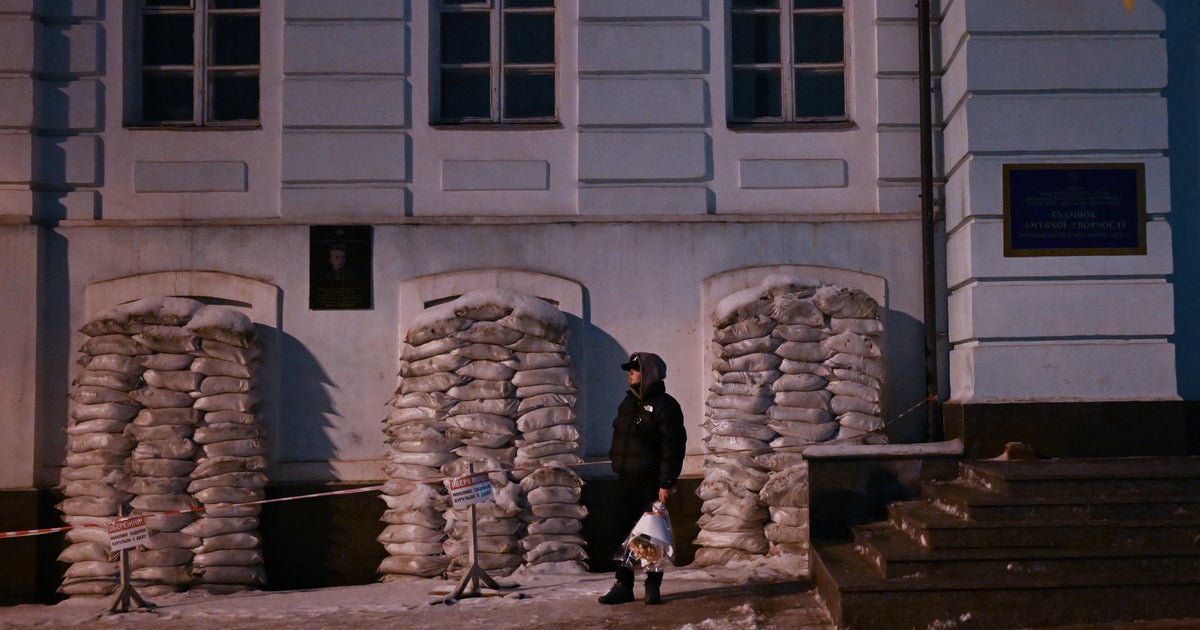
For ordinary Ukrainians, the diplomatic maneuvering in distant capitals remains somewhat abstract compared to the immediate realities of survival during wartime winter. The image of a man holding flowers next to a Kyiv building with darkened windows—protected by sandbags against potential Russian airstrikes—captures the surreal juxtaposition of normal human life and relentless violence that has characterized Ukraine’s experience since Russia’s February 2022 invasion. Four years into this full-scale war, Ukrainians have developed a practiced wariness toward promises and proclamations, having learned through bitter experience that hope must be tempered by realism. The fact that 80% of the country faces prolonged power outages while temperatures plunge to dangerous lows represents not just a humanitarian crisis but a deliberate strategy of suffering inflicted on civilians to break Ukrainian resistance. Yet Ukraine has proven remarkably resilient, with civil society, local governments, and international support networks working to maintain basic services and human dignity despite systematic attacks on infrastructure. Whether Trump’s intervention with Putin represents a genuine turning point, a temporary tactical pause, or merely diplomatic theater remains to be seen. What is certain is that Ukrainians will continue adapting, resisting, and hoping—not for rescue from abroad, but for the support and solidarity that enables them to determine their own future on their own terms, free from Russian aggression and terror.