



Scientists Discover “Miracle” Heat-Resistant Corals in Remote Pacific Lagoon
A Groundbreaking Discovery in French Polynesia
In the crystal-clear waters surrounding Tatakoto, a remote island in French Polynesia’s Tuamotu Archipelago, marine scientists believe they’ve stumbled upon something extraordinary—a discovery that could fundamentally change how we approach coral reef conservation worldwide. A team of dedicated marine biologists, led by Dr. Laetitia Hédouin from France’s National Scientific Research Center (CRNS), has been studying a remarkable population of corals that appear to possess an almost superhero-like ability: they can survive and even thrive in water temperatures that would normally kill their cousins elsewhere in the ocean. These “super corals,” as researchers have begun calling them, live inside a semi-enclosed underwater lagoon where conditions are far more extreme than the open Pacific waters that surround the island. What makes this discovery particularly exciting is its timing—as climate change continues to devastate coral reefs across the globe, these heat-resistant corals might represent a lifeline for ocean ecosystems that are hanging by a thread. Dr. Hédouin describes the finding as “almost like a miracle,” and it’s not hard to understand her enthusiasm when you consider what these corals are enduring and somehow surviving.
Extreme Conditions That Would Normally Spell Disaster
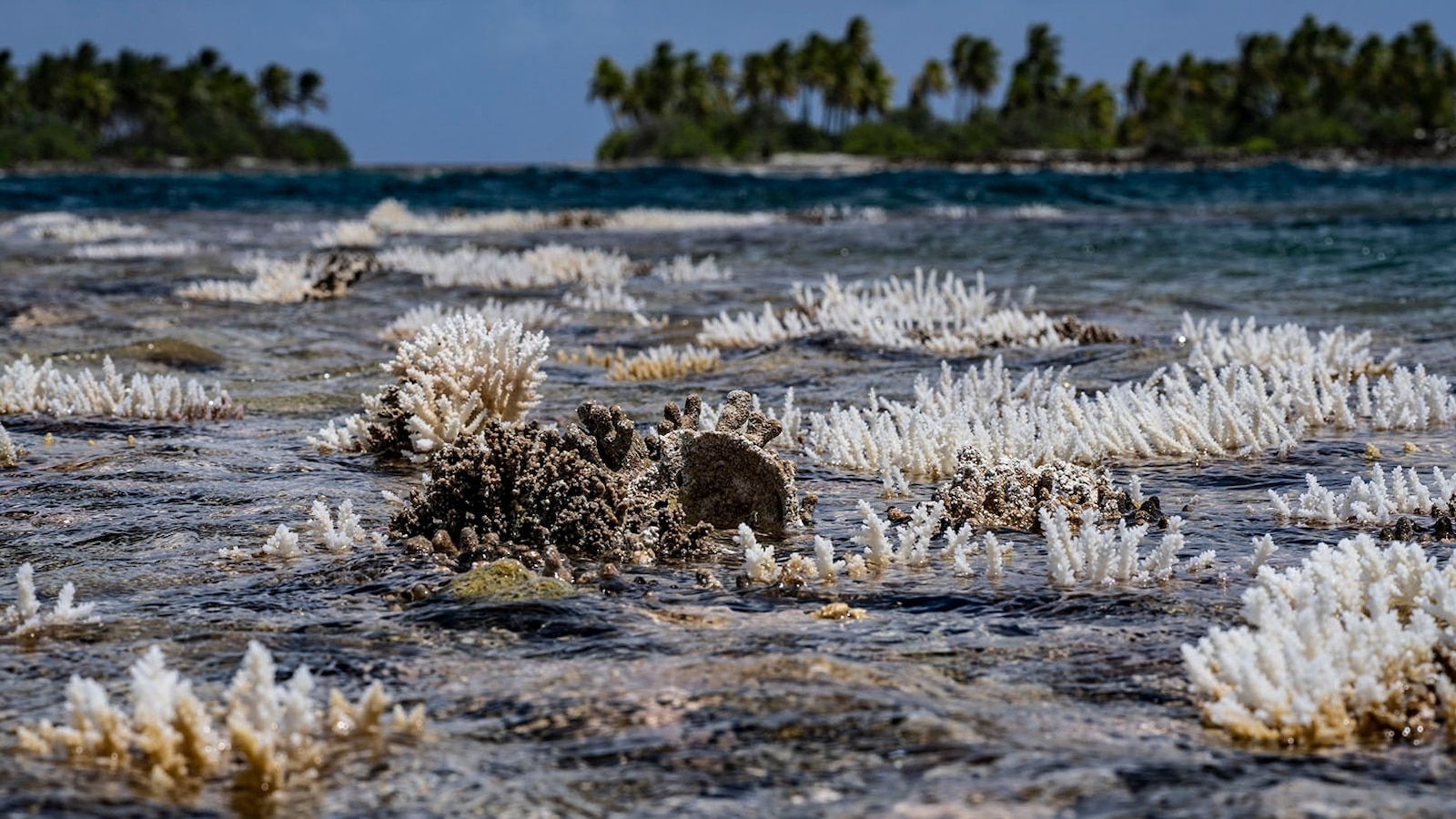
The environment these corals call home is nothing short of hostile by normal coral standards. During March, the warmest month of the year in this part of the world, water temperatures inside the Tatakoto lagoon can soar to a scorching 95°F (35°C)—that’s about 7 to 9 degrees Fahrenheit (4 to 5 degrees Celsius) hotter than the surrounding ocean waters. To put this in perspective, most coral species begin experiencing serious stress when water temperatures rise just a few degrees above normal. When corals face extreme heat, they undergo a process called bleaching, which is essentially a stress response that sees them expel the colorful algae living in their tissues. These algae aren’t just decorative—they’re crucial partners that provide corals with food through photosynthesis and give them their vibrant colors. Without them, corals turn ghostly white and become extremely vulnerable, often dying if conditions don’t improve quickly. This phenomenon has become increasingly common worldwide as our changing climate pushes ocean temperatures higher year after year. Yet somehow, against all odds, the corals in this particular lagoon have found a way to not just survive but actually flourish in conditions that would prove fatal to most of their relatives elsewhere in the world’s oceans.
Four Years of Intensive Research and a Recent Test
Dr. Hédouin and her colleagues, working in partnership with the marine research nonprofit 1ocean.org, have spent the past four years carefully studying these extraordinary organisms, trying to unlock the secrets of their survival. Their research involves measuring the corals’ metabolism, comparing their biological responses to those of corals living in more typical conditions, and analyzing what makes them so different from their less heat-tolerant counterparts. While the research is ongoing, Dr. Hédouin has already expressed confidence that these corals have developed some kind of specialized “biological mechanism” that allows them to withstand the extreme heat. This hypothesis was put to a real-world test last year when French Polynesia experienced what Hédouin described as a “super long and super strong” marine heat wave—the kind of event that has become more frequent and severe as our planet warms. This heat wave devastated coral reefs throughout French Polynesia, causing widespread bleaching in areas where water temperatures were actually lower than those in the Tatakoto lagoon. Yet incredibly, the corals in the lagoon survived what should have been a death sentence, reinforcing the researchers’ belief that they’re dealing with something truly special—a population of corals that has adapted to conditions that mirror what many scientists fear the future holds for our warming oceans.
The Big Question: Can These Corals Save Other Reefs?
The ultimate goal of this research extends far beyond simply understanding these remarkable corals—scientists want to know if they can be used to help restore dying reefs around the world. The central question driving the mission is whether these heat-resistant corals can not only survive being transplanted to new environments but also thrive and reproduce there, potentially passing on their heat resistance to future generations. To answer this question, Hédouin and her team have begun an ambitious experiment: they’ve taken cuttings from the heat-resistant corals in the Tatakoto lagoon and planted them in another area of the archipelago where water temperatures are more typical—that is, cooler than what the corals are accustomed to. This process, known as “assisted migration,” is essentially helping nature adapt to changing conditions by moving resilient organisms to places where they might not naturally spread on their own. If the experiment succeeds—if the transplanted corals can adapt to their new, cooler home and maintain their heat resistance—then Tatakoto could become what researchers are calling a “biological treasure chest,” a source of climate-resilient corals that could be used to repopulate and restore damaged reefs across the globe. The implications are enormous: instead of watching helplessly as warming waters kill off coral reefs that support countless marine species and protect coastlines from storms, we might be able to fight back by cultivating and spreading these super-resilient varieties.
Global Support and the Race Against Time
The significance of this research hasn’t gone unnoticed by the international community. UNESCO, the United Nations agency responsible for ocean research, has thrown its support behind the mission, describing the Tatakoto corals as “remarkable specimens” with potentially world-changing implications. The organization believes that the work being done in French Polynesia could pave the way for developing entirely new strategies to repopulate coral reefs worldwide—a desperately needed development as climate change continues to accelerate. The urgency of this work cannot be overstated. Coral reefs, often called the “rainforests of the sea,” support an estimated 25% of all marine species despite covering less than 1% of the ocean floor. They provide food and livelihoods for hundreds of millions of people, protect coastlines from erosion and storm damage, and contribute billions of dollars to the global economy through fishing and tourism. Yet we’ve already lost roughly half of the world’s coral reefs, and many scientists warn that we could lose most of the rest by mid-century if current trends continue. The discovery of naturally heat-resistant corals offers a glimmer of hope in what has been an otherwise bleak picture, suggesting that nature might already have some of the solutions we need—if we’re smart enough to recognize them and act quickly enough to put them to use.
Documenting Hope for Future Generations
The entire project is being meticulously documented through photographs and film by Alexis Rosenfeld, a French underwater photographer and founder of 1ocean.org. For Rosenfeld, the Tatakoto lagoon represents more than just a scientific curiosity—it’s a powerful symbol of hope and a reminder of humanity’s potential to work with nature rather than against it. Through his stunning visual documentation, Rosenfeld aims to build public awareness about the fragile ecosystems in our oceans and seas, helping people around the world understand both the threats these environments face and the innovative solutions scientists are developing to protect them. His work captures the beauty and resilience of these remarkable corals, translating complex scientific concepts into images that can inspire action and support for conservation efforts. As climate change continues to reshape our planet in profound and often frightening ways, stories like this one offer a reminder that all hope is not lost—that even in the face of seemingly insurmountable challenges, nature’s incredible adaptability, combined with human ingenuity and dedication, might yet find ways forward. The heat-resistant corals of Tatakoto may prove to be one of nature’s greatest gifts at precisely the moment when we need it most, offering not just a chance to save coral reefs but a broader lesson about resilience, adaptation, and the importance of protecting the biological diversity that might hold keys to survival in a rapidly changing world.