

Minneapolis Police Chief Speaks Out: A City Under Strain
Federal Immigration Operations Create Crisis in Minnesota’s Largest City
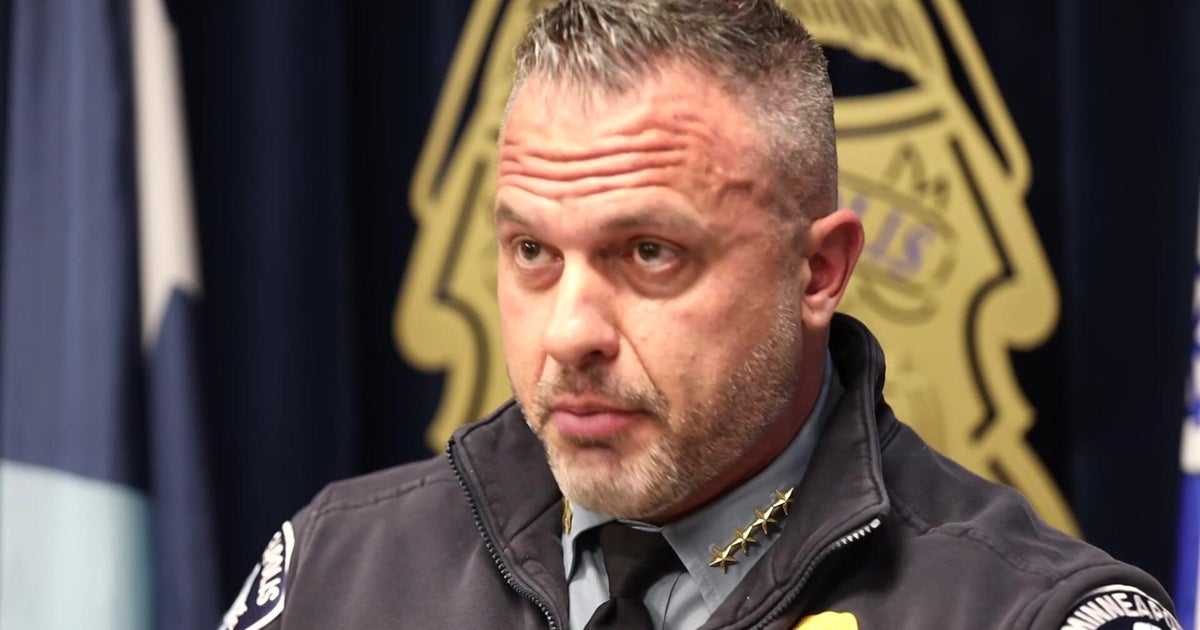
Minneapolis Police Chief Brian O’Hara appeared on “Face the Nation” to discuss a rapidly deteriorating situation in his city, where federal immigration enforcement operations have led to multiple shootings, including the death of a local resident named Pretti. In a revealing interview with Margaret Brennan, Chief O’Hara painted a picture of a city stretched to its breaking point, caught between aggressive federal law enforcement tactics and an understaffed local police force trying to maintain order while protecting constitutional rights. The conversation highlighted deep tensions between federal and local authorities, confusion over jurisdiction and proper procedure, and fundamental questions about how immigration enforcement should be conducted in American cities.
The immediate crisis centers on the fatal shooting of Pretti, a Minneapolis resident who appears to have been documenting federal immigration operations when he was killed by Border Patrol agents. According to Chief O’Hara, Pretti was exercising both his First Amendment right to record law enforcement activity and his Second Amendment right to legally carry a firearm in public—both constitutionally protected activities in Minnesota. However, federal officials, including Homeland Security Secretary Noem and Border Patrol Chief Bovino, have suggested that Pretti posed a threat to federal officers, claiming he was armed with a handgun and multiple magazines of ammunition. The chief expressed deep frustration that federal authorities have provided virtually no information to local law enforcement about what actually happened, breaking with standard protocol for officer-involved shootings and preventing proper investigation of the incident.
Investigation Blocked and Evidence Potentially Compromised
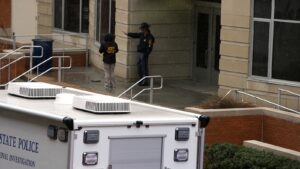
Perhaps most troubling in Chief O’Hara’s account is his description of how the investigation has been handled—or rather, how it hasn’t been handled according to Minnesota’s established procedures. When Minneapolis police initially responded to the scene, their watch commander wasn’t given even basic information typically shared after a law enforcement shooting, such as whether there might be additional victims requiring assistance. Chief O’Hara then requested that the Minnesota Bureau of Criminal Apprehension, the state agency responsible for investigating use-of-force incidents, conduct an independent investigation. However, BCA investigators were repeatedly blocked from accessing the scene by federal authorities. By the time they were finally allowed access, the scene had been “contaminated,” potentially compromising crucial evidence that could help determine exactly what happened during those fatal moments.
The chief made it clear that publicly available videos of the incident “speak for themselves,” suggesting they don’t support the federal narrative of Pretti as a threat. When pressed on whether there’s any evidence that Pretti assaulted federal officers as claimed, O’Hara pointed out that he’s seen the same videos available to the public and finds the federal claims “deeply concerning.” He also noted that federal officials are accusing him of withholding information about Pretti having multiple ammunition magazines, but countered that he cannot share information that federal authorities refuse to provide to local law enforcement in the first place. This breakdown in communication and cooperation between federal and local agencies represents a fundamental failure in how American law enforcement is supposed to function, especially in situations involving the use of deadly force.
A Pattern of Violence and Constitutional Questions
The shooting of Pretti isn’t an isolated incident but the third shooting by federal immigration agents in Minneapolis in less than three weeks, and the second resulting in the death of an American citizen. Chief O’Hara drew a stark contrast: his 600-officer police department went the entire previous year recovering 900 guns from the streets and arresting hundreds of violent offenders without shooting anyone, yet federal agents have now been involved in three shootings in less than a month. This pattern has created enormous public outrage and raised serious questions about the tactics being employed by immigration enforcement agencies. The chief emphasized that the problem isn’t immigration enforcement itself—ICE has operated in Minnesota for as long as the agency has existed—but rather the manner in which current operations are being conducted, which he described as “very obviously not safe” and generating widespread fear in the community.
The constitutional dimensions of the case are particularly significant. Federal officials, including the president, Homeland Security secretary, and FBI director, have all suggested that Pretti’s possession of a firearm and ammunition magazines at a protest was inherently suspicious or threatening. The FBI director even stated, “You cannot bring a firearm loaded with multiple magazines to any sort of protest.” However, Chief O’Hara firmly contradicted this characterization, explaining that Minnesota law explicitly allows licensed individuals to carry concealed firearms at protests with no restrictions. Pretti was not a convicted felon, held a valid permit to carry, and appeared to have violated no Minnesota gun laws. The chief emphasized that the only relevant legal question would be whether Pretti used the weapon for an unlawful purpose—and he has seen no evidence suggesting that occurred. This disconnect between federal officials’ statements and actual Minnesota law raises troubling questions about whether constitutional rights are being respected during these enforcement operations.
A Police Department at the Breaking Point
Beyond the immediate crisis, Chief O’Hara described a police department and city stretched far beyond sustainable limits. The Minneapolis Police Department has only 600 officers remaining after the department was decimated following the destruction during the 2020 protests after George Floyd’s death. These officers are now trying to police a major city while simultaneously managing the chaos created by the presence of nearly 3,000 federal immigration agents conducting aggressive enforcement operations. About a dozen Minneapolis officers have been injured responding to the resulting unrest. The chief had to order an emergency recall of all officers and request mutual aid from county, state, and surrounding jurisdictions, as well as activation of the National Guard, just to maintain order during the protests following Pretti’s death. While those emergency resources have since been released and the city is back to relying solely on its own officers, Chief O’Hara made clear this situation is “absolutely not sustainable.”
The chief expressed deep disappointment and frustration with statements from the vice president and other federal officials questioning whether local police have been doing their jobs or suggesting they’ve been ordered to “stand down” when immigration authorities request assistance. He defended his officers passionately, noting they respond every time there’s a threat to life or public safety, regardless of whether it involves ICE operations or community members. The reality, he explained, is simple mathematics: there are only 600 local police officers trying to manage chaos created by thousands of federal agents, while also fulfilling all their regular duties protecting a major city. Federal criticisms of sanctuary city policies ring hollow to O’Hara, who pointed out that Minneapolis police don’t operate jails (that’s the county level) or prisons (the state level), so they’re simply complying with laws that have been in place for decades and have nothing to do with current enforcement tactics.
Collateral Damage to Federal-Local Cooperation
Perhaps one of the most concerning long-term consequences described by Chief O’Hara is the destruction of carefully built partnerships between local and federal law enforcement. Before this crisis, Minneapolis police had worked closely with FBI agents, federal prosecutors, and other federal agencies to address violent crime, gang activity, and fentanyl trafficking—work that produced “incredible results over the last few years.” CBS reporting revealed that at least ten people from the Minneapolis U.S. Attorney’s Office had resigned, and an FBI agent resigned after being told to stop investigating the officer who shot another victim, Renee Good, in a previous incident. Chief O’Hara described it as “so upsetting” to see so many dedicated federal agents who live in Minnesota being disparaged and walking away from their positions, noting that this exodus is “destroying the foundation of addressing violent crime in Minnesota” that had been so carefully constructed.
The situation in Minneapolis represents a microcosm of larger tensions playing out across America regarding immigration enforcement, federal-state relations, constitutional rights, and the proper role of law enforcement in a democratic society. A city still recovering from previous trauma and operating with a severely reduced police force finds itself trying to manage an influx of federal agents using tactics that local officials consider dangerous and counterproductive. The death of residents exercising constitutional rights, the blocking of independent investigations, the breakdown of inter-agency cooperation, and the exhaustion of local resources have created what Chief O’Hara described as an unsustainable crisis. His appeal on national television was essentially a plea for sanity—for people “on both sides to come together and just figure this thing out” before more lives are lost and more damage is done to the civic fabric of his city. As Minneapolis continues to navigate this crisis with its limited resources and exhausted officers, the rest of the nation watches to see whether federal and local authorities can find a way forward that respects both the rule of law and the constitutional rights of American citizens.