


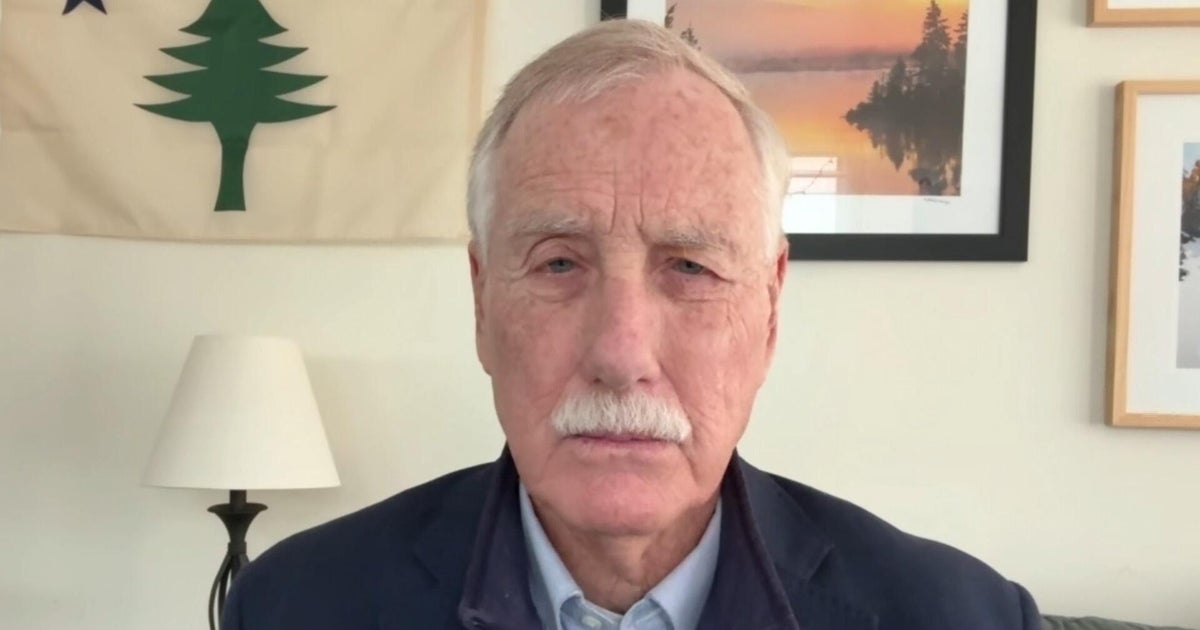

Senator Angus King Speaks Out: ICE Operations in Maine Spark Constitutional Concerns
Growing Tensions Over Federal Immigration Enforcement
In a revealing interview on “Face the Nation,” Independent Senator Angus King of Maine pulled back the curtain on what he describes as troubling federal immigration enforcement tactics unfolding in his state. The conversation with host Margaret Brennan highlighted the growing divide between state officials and the Trump administration over Immigration and Customs Enforcement (ICE) operations. Senator King specifically addressed “Operation Catch of the Day,” a federal initiative that ICE officials claim targets approximately 1,400 criminal aliens who have supposedly terrorized communities throughout Maine, with particular focus on Somali immigrants and other groups. However, King’s account paints a dramatically different picture from the federal government’s narrative, raising serious questions about who is really being targeted and whether constitutional rights are being respected in the process.
The senator expressed deep skepticism about the Department of Homeland Security’s claims that they’re only pursuing the “worst of the worst” criminals. According to King, DHS has established a website listing only 13 people in Maine as dangerous criminals, yet they acknowledge arresting approximately 100 individuals. This mathematical discrepancy led King to ask a pointed question: who are the other 87 people being detained? His concern is that the “worst of the worst” designation is merely a pretext for much broader enforcement actions that are sweeping up asylum seekers, people with green cards, and individuals currently in the legal immigration process. Perhaps most striking was King’s example of a recruit for the local sheriff’s office—someone being trained to work as a guard at the county jail—who was stopped and detained despite having absolutely no criminal record. These cases suggest a pattern of enforcement that goes far beyond targeting dangerous criminals.
The Real Terror: Community Impact of Aggressive Enforcement
Senator King forcefully challenged the administration’s narrative by flipping the script on who is actually being terrorized. Rather than communities living in fear of criminal immigrants, King argues that Maine residents are now living in fear of ICE itself. The senator painted a vivid picture of life in Portland, Maine, where the federal enforcement operations have created an atmosphere of pervasive anxiety. Parents are afraid to send their children to school, worried that they might return home to find their families separated. Workers are too frightened to show up to their jobs, causing businesses to suffer from absent employees who are essential to their operations. In an especially poignant detail, King described how families are now delivering food to friends and neighbors who are too scared to leave their homes, essentially living under a form of self-imposed house arrest.
This climate of fear, according to King, represents a fundamental shift in how immigration enforcement is being conducted. He contrasted current operations with the Obama administration’s record, noting that President Obama oversaw approximately 2.7 million removals during his time in office—far more than the roughly 600,000 removals that have occurred recently—yet without the dramatic shows of force that characterize current operations. King emphasized that during the Obama years, there were no reports of masked, heavily armed agents conducting raids, no incidents comparable to what has been witnessed in Minnesota and other locations in recent weeks. The senator found it particularly disturbing that ICE agents are now operating with their faces covered, noting that in his experience, “the people wearing masks are the bad guys.” This observation speaks to a deeper concern about accountability and the militarization of what should be civil law enforcement operations.
Constitutional Questions and the Path Forward
The manner in which these operations are being conducted raises fundamental constitutional questions that Senator King believes cannot be ignored. He specifically cited the Fourth Amendment, which protects Americans against unreasonable searches and seizures, noting reports of ICE agents entering homes without warrants. This represents what King called “a blatant violation of the Fourth Amendment,” with federal agents “acting outside the Constitution” and “ignoring our laws.” The senator also expressed concern about agents telling people they cannot photograph enforcement actions and intimidating protesters—tactics he believes are designed not to enforce immigration law but to intimidate the American people more broadly. King characterized what he’s witnessing as “bush league policing,” borrowing the phrase from a Cumberland County sheriff whose recruit was taken into custody.
When asked about the path forward, particularly regarding Maine’s upcoming sanctuary law that will prohibit local law enforcement from working with federal authorities on immigration enforcement by this summer, King acknowledged that the fundamental question isn’t whether laws should be enforced or whether dangerous criminals should be removed. Instead, the crucial issue is how enforcement is conducted. The senator stressed that it is entirely possible to enforce immigration laws and remove individuals with criminal records without “ransacking our cities and terrorizing our residents.” His research into the Obama administration’s approach demonstrated that effective immigration enforcement doesn’t require the overwhelming shows of force, masked agents, bulletproof vests, and heavily armed tactical teams that have become the hallmark of current operations. Maine Governor Janet Mills has already requested a meeting with President Trump to ask for the withdrawal of agents from the state, though the powers available to state governments appear extremely limited given the federal nature of immigration enforcement.
Budget Battles and Potential Government Shutdown
The controversy over ICE operations has now spilled over into the congressional appropriations process, potentially threatening a government shutdown. Senate Democratic Leader Chuck Schumer has announced that Democrats will not vote for appropriations bills if Department of Homeland Security funding is included without changes to how enforcement is being conducted. Senator King, who has historically worked to avoid shutdowns and helped negotiate solutions to past funding crises, finds himself in an unexpected position. Despite his general opposition to government shutdowns, King stated unequivocally that he cannot vote for a bill that includes ICE funding “under the circumstances” of what’s happening in his state and what the nation witnessed in Minneapolis.
However, King also outlined what he sees as a straightforward path to avoiding a shutdown altogether. He noted that House Minority Leader John Thune could separate the appropriations bills, as was done in the House, allowing the five other appropriation bills to come to the floor for a vote. King believes these would pass overwhelmingly, funding 96% of the federal government. Then Congress could take up the DHS appropriations bill separately, creating space for what King called “an honest negotiation” that would put “some guardrails on what’s going on, some accountability.” This approach would allow lawmakers to address the specific concerns about ICE operations without holding the entire government hostage or leaving critical agencies unfunded. King’s frustration was evident when he described his attempts to get answers from DHS, only to be told he must submit questions in writing and wait a week or two for written responses—a bureaucratic runaround he finds unacceptable for a senator trying to represent his constituents.
The Legitimacy Question: Is ICE Real Law Enforcement?
A contentious rhetorical debate has emerged around whether ICE should even be considered legitimate law enforcement. Arizona’s state attorney general declared that “ICE is not real law enforcement,” while Minnesota’s governor urged people to stop referring to ICE personnel as law enforcement officers. When pressed on this question, Senator King gave a carefully calibrated response, saying he would “technically” consider them law enforcement but immediately pivoted to what he sees as the more important issue: the quality and constitutionality of their policing. By invoking the Cumberland County sheriff’s characterization of ICE tactics as “bush league policing,” King made clear that even if ICE has legal authority, the manner in which they’re exercising that authority falls well short of professional standards.
The senator’s concerns extend beyond tactical decisions to broader questions about the role of federal law enforcement in a democratic society. King described what he’s witnessing as “an attempt to intimidate the American people,” pointing to the use of masked agents, overwhelming shows of force, prohibitions on photography, and the intimidation of protesters. These tactics, in King’s view, are fundamentally un-American, representing a departure from how law enforcement traditionally operates in the United States. The lack of transparency—agents covering their faces, preventing documentation of their activities—undermines the accountability that should be a cornerstone of any law enforcement operation. King’s invocation of the Fourth Amendment and his emphasis on constitutional violations suggest that his opposition isn’t merely political or tactical but rooted in deep concerns about the erosion of civil liberties and constitutional protections that have historically constrained government power.
Conclusion: A Nation at a Crossroads
Senator Angus King’s interview reveals a nation wrestling with fundamental questions about immigration, law enforcement, constitutional rights, and the proper balance between security and liberty. His account from Maine suggests that what’s happening isn’t primarily about removing dangerous criminals but rather about demonstrating federal power in ways that are creating fear and disruption in communities across the country. The discrepancy between the 13 people DHS lists as dangerous in Maine and the 100 people they’ve arrested tells a story about mission creep and the expansion of enforcement beyond stated objectives. The experiences of asylum seekers with green cards, people in legal processes, and even a sheriff’s recruit being detained despite no criminal record all point to an operation that has lost its focus—if removing dangerous criminals was ever truly the primary goal.
The path forward remains uncertain, with Governor Mills seeking direct intervention from President Trump, Senator King demanding accountability and transparency from DHS, and congressional Democrats threatening to force a government shutdown rather than fund operations they see as unconstitutional and un-American. King’s proposal to separate DHS funding from other appropriations offers a potential compromise, but it would require both sides to engage in the kind of honest negotiation that has become increasingly rare in polarized Washington. What’s clear from King’s testimony is that the current approach is unsustainable, creating constitutional crises, terrorizing communities, and undermining the very rule of law that immigration enforcement is supposedly designed to uphold. Whether through negotiation, legislation, or judicial intervention, the tension between federal immigration enforcement and constitutional protections will need to be resolved in the coming months.