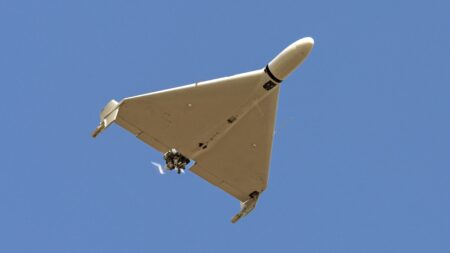




Britain Arms Up Against Mysterious Drone Threats Near Military Bases
A Dramatic Surge in Unauthorized Drone Activity
The skies above British military installations have become increasingly crowded with unwelcome visitors. In a troubling development that has caught the attention of defense officials across Europe, the United Kingdom experienced a dramatic surge in unauthorized drone incidents near its military facilities. According to the British Ministry of Defense, reported encounters with unidentified drones more than doubled in just one year, jumping from 126 incidents in 2024 to a staggering 266 incidents in 2025. This alarming increase has prompted the U.K. government to take decisive action, proposing significant changes to existing laws that currently restrict how military personnel can respond to these airborne intruders. Under current regulations, when soldiers spot a suspicious drone hovering near a sensitive military installation, they must contact local police rather than taking direct action themselves—a protocol that defense officials now consider inadequate given the evolving nature of modern security threats. The proposed changes would fundamentally alter this approach, empowering authorized military personnel to neutralize threatening drones on their own authority, without waiting for civilian law enforcement to arrive on the scene.
Empowering the Military to Respond Directly
Defense Secretary John Healey hasn’t minced words about the seriousness of the situation or the necessity of the proposed legal changes. In announcing the new measures, he emphasized that “the doubling of rogue drones near military sites in the U.K. in the last year underlines the increasing and changing nature of the threats we face.” The Armed Forces Bill he’s championing would grant military personnel sweeping new authority to “take out and shoot down threatening drones near bases,” representing a significant shift in how Britain approaches base security. This isn’t just about airborne drones, either—the legislation covers the full spectrum of unmanned vehicles that could pose a threat, including sea drones and land-based robotic systems. The proposal reflects a broader recognition that modern warfare and security challenges have evolved far beyond traditional threats. Drones, once primarily the domain of hobbyists and photographers, have become sophisticated tools of surveillance, sabotage, and potentially even attack. The ministry’s announcement makes clear that waiting for police assistance when a potential threat is hovering overhead is simply too slow for the fast-paced realities of contemporary security challenges.
A Pattern Across Europe Pointing to Hybrid Warfare
While British officials have been somewhat circumspect about directly naming potential adversaries, the pattern of mysterious drone activity extends far beyond the United Kingdom’s borders. Across Europe, NATO member nations have reported similar incidents, with unidentified drones appearing near military installations and critical civilian infrastructure—occurrences that are happening hundreds of miles from the ongoing conflict in Ukraine, where drones have become indispensable weapons for both sides. Lithuania has been notably direct in its assessment, characterizing these incidents as part of an escalating campaign of Russian “hybrid warfare” conducted in retaliation for European support of Ukraine. This type of warfare doesn’t involve direct military confrontation but instead employs tactics like cyber attacks, disinformation campaigns, and exactly this sort of provocation—sending mysterious unmanned aircraft near sensitive facilities to probe defenses, gather intelligence, and create anxiety. For its part, Russia has categorically denied any involvement in the European drone incidents, dismissing such accusations as merely “Russiaphobia.” Regardless of who’s responsible, the incidents have been serious enough to disrupt civilian air travel on multiple occasions. Belgium found itself dealing with repeated intrusions near airports and military bases, including facilities where U.S. nuclear weapons are reportedly stored—about as sensitive a target as can be imagined. The situation became severe enough that Belgium’s main international airport in Brussels and a major cargo airport near Liege were forced to temporarily cease operations. Denmark faced similar disruptions, with its second-largest airport halting flights due to drone incursions, accompanied by sightings near NATO military installations within the country.
Britain Steps Up as a Regional Security Partner
Interestingly, even as the United Kingdom grapples with protecting its own military installations, it has simultaneously emerged as a valuable partner helping other European nations respond to their own drone challenges. When Belgium experienced its spate of troubling incidents in November, British authorities dispatched specialized anti-drone equipment and personnel to assist. This collaborative approach reflects the interconnected nature of European security—a threat to one NATO nation’s installations is ultimately a concern for all alliance members. The British response also demonstrates a level of expertise and preparedness that other nations are eager to access. By sharing resources and knowledge across borders, NATO allies are developing a more coordinated approach to what is clearly a shared challenge rather than isolated incidents. This cooperation extends beyond just lending equipment; it involves sharing intelligence about the nature of the threats, the tactics being employed by those operating the drones, and the most effective countermeasures. As these mysterious drone flights continue, the value of such partnerships only increases, allowing nations to learn from each other’s experiences and avoid duplicating efforts as they develop defensive capabilities.
Massive Investment in Counter-Drone Technology
Recognizing that new legal authority for personnel must be backed by technological capability, the British government has dramatically increased its financial commitment to counter-drone systems. Since taking office about eighteen months ago, the current government has quadrupled spending on Counter Uncrewed Aerial Systems, allocating over £200 million (approximately $274 million) in the current year alone. This substantial investment reflects how seriously officials are taking the drone threat and their determination to make counter-drone technology a “key deliverable” in Britain’s defense strategy. The money is being channeled into multiple approaches, creating layers of defense around military installations. Some funds are purchasing new drones specifically tasked with guarding military bases—fighting fire with fire, as it were, by using friendly unmanned systems to intercept hostile ones. Other investments are going toward advanced video surveillance systems that can detect and track small, fast-moving objects in the airspace around sensitive facilities. Additionally, the ministry is deploying integrated threat monitoring systems that combine various detection methods to create a comprehensive security picture, allowing operators to identify potential threats earlier and respond more effectively.
Breakthrough Weapons and Future Defense Capabilities
Perhaps most impressively, British defense researchers have achieved a significant breakthrough in developing weapons specifically designed to counter coordinated drone attacks. In a successful field test conducted at a military weapons range in Wales last spring, British soldiers demonstrated the capability to track, target, and defeat swarms of drones using an entirely new type of weapon system. The “RapidDestroyer,” a Radiofrequency Directed Energy Weapon developed by a consortium led by the British division of French defense giant Thales, represents a cutting-edge approach to the drone threat. Unlike conventional weapons that fire projectiles, directed energy weapons use focused electromagnetic radiation to disable electronic systems, making them particularly well-suited to countering the computer-controlled systems that keep drones aloft. The test, which the government described as “the largest counter-drone swarm exercise the British Army have conducted to date,” specifically focused on defending against “swarm attacks”—scenarios where adversaries launch multiple drones simultaneously to overwhelm defenses. This capability is crucial because a single drone might be a nuisance or a limited threat, but dozens or hundreds working in coordination could potentially breach even sophisticated defenses through sheer numbers. The successful test of the RapidDestroyer suggests that British forces are developing the technological edge needed to counter even these most challenging drone scenarios, providing a template that could be adopted by allies facing similar threats across Europe and beyond.