


Deadly Avalanche Claims Two Lives in Italian Alps
Tragedy Strikes Popular Skiing Destination
A devastating avalanche swept through the Italian Alps on Saturday, leaving two skiers dead and five others injured in what has become yet another sobering reminder of the mountains’ unpredictable power. The tragedy unfolded in the Trentino-Alto Adige region, a popular destination for winter sports enthusiasts, when a wall of snow, ice, and rocks came crashing down on a group of skiers enjoying what should have been a routine day on the slopes. Mountain rescue services sprang into action around midday after receiving urgent alerts that approximately a dozen skiers had been caught in the avalanche’s devastating path. The incident occurred on the slopes of Hohe Ferse, a mountain reaching 8,757 feet, at an altitude of approximately 7,874 feet near the town of Ratschings, just a stone’s throw from the Austrian border.
Massive Rescue Operation Deployed
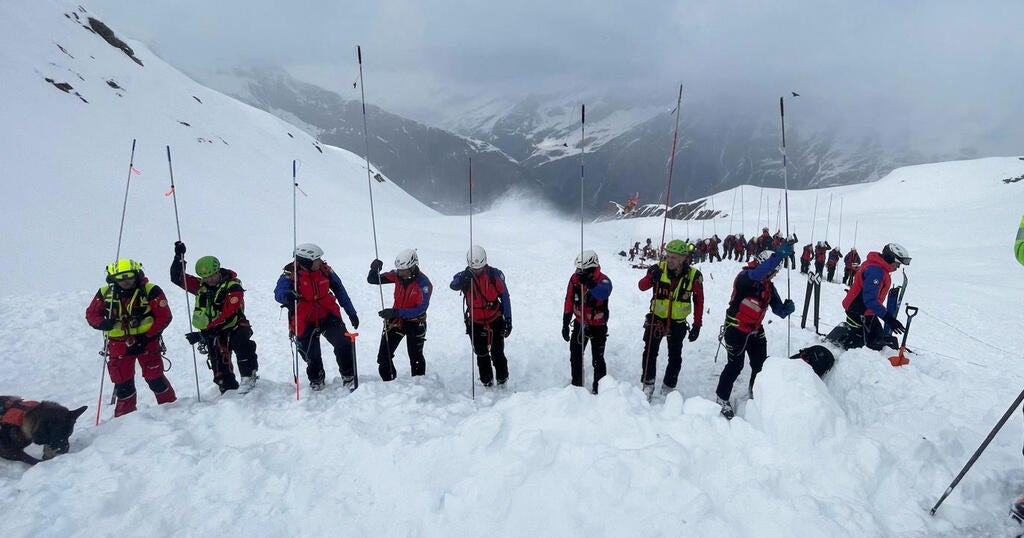
The response to the disaster was swift and comprehensive, demonstrating the well-coordinated emergency systems that exist in these mountainous regions. Six helicopters were immediately dispatched to the scene, their rotors cutting through the mountain air as they raced against time to reach the victims. Local hospitals throughout the area were placed on high alert, preparing their emergency departments for potential casualties. The search-and-rescue effort quickly grew into a major operation, with dozens of rescue personnel combing through the debris field left by the avalanche. Firefighters and law enforcement officers joined the mountain rescue teams, working together in challenging conditions to locate and extract those who had been buried or injured. The Italian Alpine and National Alpine and Speleological Rescue Corps of Trentino coordinated the complex operation, drawing on their expertise and specialized equipment to navigate the dangerous terrain where the avalanche had struck.
A Mountain Claimed Lives, But Some Were Spared
While the avalanche proved fatal for two skiers and injured five others, the tragedy could have been far worse. At the time the avalanche occurred, a total of 25 skiers were on that section of the mountainside. Fortunately, most of these winter sports enthusiasts managed to escape the worst of the slide, either by being outside its primary path or by reaching safety before the full force of the avalanche reached them. This stroke of fortune likely prevented what could have been a catastrophe of much larger proportions. However, for those caught directly in the avalanche’s path, the experience was terrifying and, for two families, ultimately heartbreaking. The injured were evacuated by helicopter to nearby medical facilities, where they received treatment for injuries sustained during the incident. The precise nature of their injuries has not been disclosed, but avalanche victims typically suffer from trauma, hypothermia, and in severe cases, asphyxiation from being buried under snow.
A Region Already Mourning Previous Losses
This weekend’s tragedy was not an isolated incident for the Trentino-Alto Adige region. Just days before this avalanche claimed two lives, another slide in the same area killed a Polish man who had been skiing in these mountains. The back-to-back fatalities have cast a shadow over what is usually a vibrant winter sports season, raising questions about mountain safety and avalanche preparedness. What makes these incidents particularly troubling is that they occurred despite what seemed to be relatively favorable conditions. The avalanche warning issued for the region on Saturday had assessed the danger level as somewhere between low and moderate – not the high-risk conditions that typically keep experienced skiers off dangerous slopes. This assessment suggests that even when conditions appear relatively safe, the mountains can harbor hidden dangers that materialize with little warning.
Europe’s Deadly Winter Season
The Italian Alps tragedy is part of a disturbing pattern that has emerged across European mountain ranges this winter season. The continent has experienced a particularly deadly series of avalanches, claiming numerous lives in multiple countries. Just last month, western Austria witnessed a string of avalanches that killed at least five people, including an American visitor who had traveled to the Alps to experience their legendary skiing. The Austrian Alps have been especially hard-hit this season, with three separate avalanches in January alone claiming the lives of eight skiers, according to authorities. These incidents have occurred across different regions, suggesting widespread conditions conducive to avalanche formation. France, too, has not been spared from this winter’s tragic toll. Six skiers lost their lives after being caught in avalanches at various Alpine resorts throughout the country, turning dream vacations into nightmares for the families involved. These incidents span different locations and times, indicating that the avalanche risk has been persistently elevated across the entire Alpine region this winter.
Understanding the Risks and Moving Forward
The series of avalanches across Europe this winter serves as a stark reminder that mountain environments, while beautiful and exhilarating, demand respect and careful risk assessment. Avalanches are complex natural phenomena influenced by numerous factors including snowpack structure, weather patterns, temperature fluctuations, and terrain features. Even with modern forecasting techniques and warning systems, predicting exactly when and where an avalanche will occur remains challenging. The fact that Saturday’s avalanche occurred during a period of low to moderate risk underscores how difficult it can be to anticipate these events with absolute certainty. For the skiing community and mountain rescue services, each tragedy reinforces the importance of avalanche education, proper equipment, and conservative decision-making in the backcountry. Skiers are encouraged to check avalanche forecasts, carry appropriate safety equipment including beacons, probes, and shovels, and ideally ski with partners who are trained in avalanche rescue techniques. As climate patterns continue to change, some experts worry that avalanche behavior may become even less predictable, with unusual temperature swings and precipitation patterns affecting snowpack stability in new ways. For now, the communities affected by Saturday’s avalanche in the Italian Alps are mourning their losses while also expressing gratitude for the skilled rescue personnel who responded so quickly and professionally. The tragedy serves as a somber reminder that the mountains, for all their beauty and the joy they bring to winter sports enthusiasts, will always command our deepest respect and most careful attention.