

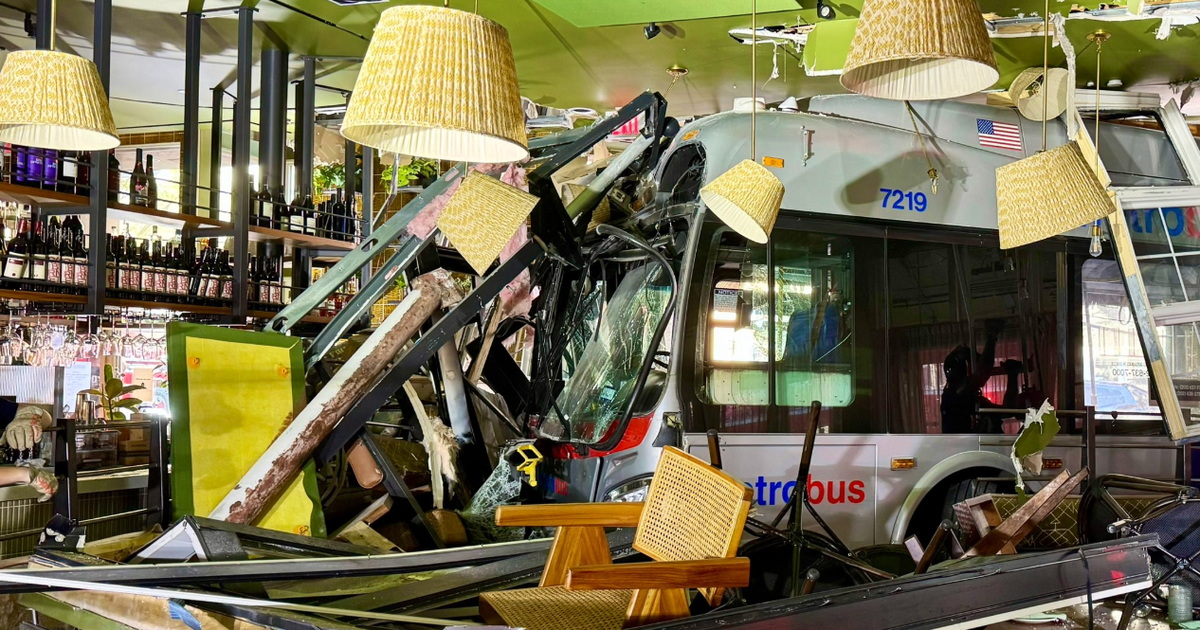

Bus Crashes Into Washington D.C. Restaurant After Vehicle Collision: What We Know
The Morning Incident That Shook Downtown Washington
A typical Friday morning in Washington, D.C. turned chaotic when a public transit bus collided with another vehicle before crashing through the front of a popular Balkan restaurant in the downtown area. The dramatic accident, which occurred at the intersection of 7th Street and Q Street Northwest, sent three women to the hospital and left a gaping hole in the facade of Ambar restaurant. First responders from the D.C. Fire and Emergency Medical Services Department received the emergency call around 7:13 a.m. on April 4th and rushed to the scene to find the front end of a Metro bus buried inside the restaurant’s entrance, surrounded by scattered debris and shattered glass. What could have been a devastating tragedy was mercifully mitigated by timing—the restaurant was closed and empty at the time of impact, with staff scheduled to arrive just over two hours later to prepare for the 9:20 a.m. brunch service. The incident serves as a stark reminder of how quickly ordinary commutes can turn dangerous and how the timing of such accidents can mean the difference between property damage and potential loss of life.
The Collision and Its Immediate Aftermath
While investigators continue to piece together exactly what led to this frightening collision, what is known is that the Metro bus, part of Washington D.C.’s public transit system, struck another vehicle before losing control and careening into the restaurant. Photos from the scene show the extent of the damage: the front portion of the bus completely embedded in the restaurant’s entrance, surrounded by chunks of concrete, broken glass, and building materials. Another image captured at the scene shows a dark-colored van with severe damage concentrated on the rear driver’s side, suggesting this vehicle bore the brunt of the initial collision. The force of the impact was substantial enough to send the bus through the restaurant’s exterior wall, creating a scene that looked more like something from an action movie than a typical morning in the nation’s capital. Video footage from the scene shows first responders working methodically to break up concrete at the restaurant’s entrance—a necessary step to facilitate the eventual removal of the bus from the building. The complexity of the extraction process meant that crews would be working at the site for an extended period, requiring street closures and significant coordination between multiple city agencies.
Victims and Medical Response
In the immediate aftermath of the crash, emergency medical personnel quickly assessed the situation and found four patients who needed evaluation. Of these, three adult women were transported to a local hospital, though thankfully all three suffered only minor injuries given the severity of the collision. Metro Transit Police confirmed that the bus driver was among those injured, also sustaining minor injuries in the crash. Photographs from the scene show at least one person being wheeled toward an ambulance on a stretcher, capturing the urgent but controlled response of the city’s emergency medical services. The relatively minor nature of the injuries represents a fortunate outcome in what could easily have been a much more serious incident. Had the bus been full of morning commuters, or had the restaurant been open and serving customers, the casualty count could have been significantly higher. The D.C. Fire and Emergency Medical Services Department handled the medical response with their characteristic professionalism, ensuring that all potentially injured parties received prompt attention and that the scene was secured for both the victims and the ongoing investigation that would follow.
The Restaurant and Its Lucky Escape
Ambar, the restaurant that became an unwilling participant in this morning’s drama, is a well-regarded establishment specializing in Balkan cuisine with multiple locations across the region. The restaurant operates four locations in total: two in Washington, D.C., one in Virginia, and one in Chicago, Illinois. The location that bore the brunt of this accident sits at 7th Street and Q Street Northwest, in a bustling area of downtown D.C. that typically sees heavy foot and vehicle traffic throughout the day. The fact that the restaurant was closed at the time of the crash—empty of both staff and customers—represents an extraordinary stroke of luck. With the restaurant scheduled to open for brunch service at 9:20 a.m., it’s likely that had the accident occurred just two to three hours later, there could have been dozens of diners and staff members in the direct path of the incoming bus. Restaurant staff arriving later in the morning would have been confronted with a shocking scene: their workplace violated by several tons of public transit vehicle, debris scattered throughout what would have been their dining room, and their day’s business plans completely upended. For a restaurant business, particularly one recovering from the challenges of recent years, such an incident represents not just physical damage but potentially weeks or months of lost revenue while repairs are completed and structural integrity is restored.
Emergency Response and Building Safety Assessment
Following the crash, D.C. Fire and Emergency Medical Services Department personnel conducted a thorough search of the building as a precautionary measure, ensuring that no one had been inside the restaurant at the time of impact and that no additional hazards were present. The team also moved quickly to secure the building’s utilities—shutting off gas, electricity, and water lines to prevent secondary disasters such as fires, explosions, or flooding that could compound the damage. The department reported that crews continued working at the scene to develop a plan for safely extracting the bus from inside the building, a delicate operation that required careful consideration of the structure’s integrity. The challenge of removing a vehicle as large and heavy as a city bus from inside a building cannot be understated; it requires specialized equipment, engineering assessment, and careful coordination to ensure that the removal process doesn’t cause the building to collapse or sustain additional damage. An initial structural evaluation of the building provided some positive news: no significant structural issues were identified in the preliminary assessment. However, the department noted that a more thorough evaluation would be conducted once the bus was successfully removed from the building, as the vehicle’s presence was making it difficult to fully assess all potentially compromised structural elements. This comprehensive approach to building safety reflects the serious nature of such incidents and the city’s commitment to ensuring that buildings are safe before allowing anyone back inside.
Investigation and Unanswered Questions
As of now, the exact sequence of events that led to this collision remains under investigation by both the D.C. Fire and Emergency Medical Services Department and local police authorities. The critical question—what caused the initial collision between the bus and the other vehicle—has yet to be answered publicly. Investigators will likely examine multiple factors including whether mechanical failure, driver error, road conditions, or other variables played a role in the accident. They’ll review any available traffic camera footage, interview witnesses including the bus driver and the occupants of the damaged van, and examine the vehicles themselves for evidence of mechanical problems or other contributing factors. The bus driver’s perspective will be particularly important, as they would have had the clearest view of the moments leading up to the collision. Similarly, understanding what happened with the other vehicle—whether it stopped suddenly, changed lanes unexpectedly, or experienced its own mechanical issues—will be crucial to determining fault and preventing similar incidents in the future. For the Washington, D.C. public transit system, this incident will likely prompt a review of safety protocols, driver training procedures, and vehicle maintenance records. For the broader community, the crash serves as a reminder of the potential dangers present in urban environments where large vehicles navigate busy streets alongside pedestrian traffic and businesses. As the investigation continues and more information becomes available, the full story of how this Friday morning commute went so dramatically wrong will eventually emerge, hopefully providing lessons that can help prevent similar incidents in the future.