


The Killing of Ali Larijani: A Critical Loss for Iran’s Leadership
A Major Figure Falls in the Ongoing Conflict
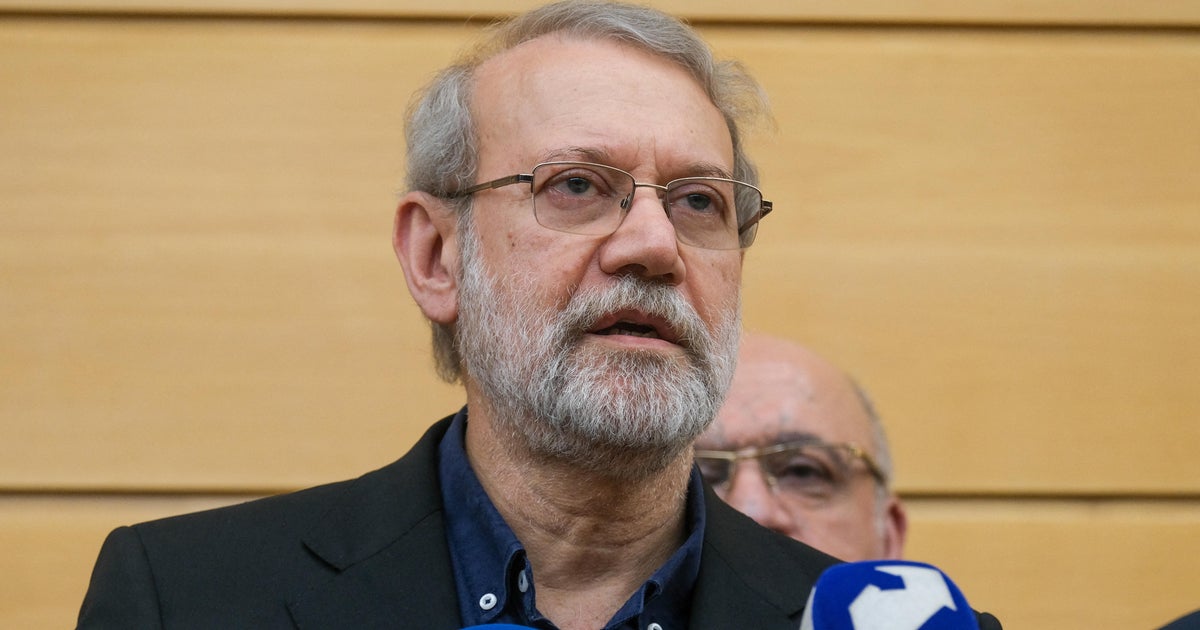
In a significant escalation of the conflict between Israel and Iran, one of the Islamic Republic’s most senior and influential officials has been killed. Israeli Defense Minister Israel Katz announced Tuesday that Ali Larijani, the head of Iran’s Supreme National Security Council, was “eliminated” in overnight strikes. The announcement marks a pivotal moment in the ongoing tensions, though Iranian authorities have not yet confirmed his death. Larijani’s killing represents more than just another casualty in this conflict—it removes a figure who stood at the very center of Iran’s power structure during one of the most critical periods in the nation’s history. His death comes at a time when Iran has already lost much of its top leadership, including Supreme Leader Ali Khamenei, making Larijani one of the few remaining senior officials who understood the intricate workings of the regime from the inside. Just days before his reported death, Larijani appeared publicly at a demonstration for al-Quds Day, an annual event supporting Palestinians, walking defiantly through crowds in Tehran even as the conflict raged. It was a characteristic display of resolve from a man who had warned President Trump only a week earlier that the Iranian people “do not fear your empty threats; even those greater than you have failed to erase them.”
Understanding Larijani’s Unique Role in Iranian Power
Ali Larijani was far from an ordinary government official—he was a rare breed in Iranian politics, someone who combined deep ideological commitment with pragmatic negotiating skills. His career trajectory tells the story of a man who understood power from multiple angles. Starting as a Revolutionary Guards officer, he went on to control state broadcasting, served as Iran’s chief nuclear negotiator during critical international discussions, and held the position of parliament speaker for more than a decade. His return to the core of power as secretary of the Supreme National Security Council placed him at the critical intersection where military strategy, intelligence operations, and political decision-making converged. This position gave him unique insight and influence over how Iran conducted itself both in war and diplomacy. What made Larijani especially valuable was his background. He came from one of Iran’s most powerful clerical families, which in the theocracy meant he had both revolutionary credentials and deep roots in the religious establishment. This dual identity allowed him to navigate the complex world of Iranian politics where religious authority and political power are inseparably intertwined. In the months leading up to the current war, Larijani had become increasingly central to Iran’s strategy, at times effectively running the country’s day-to-day operations as external and internal pressures mounted on the regime.
The Immediate and Long-Term Impact of His Death
While the operational impact of Larijani’s death might be limited in the immediate term—Iran’s military and security apparatus is designed to continue functioning even when leaders fall—the political and strategic implications are profound. In the short run, Iranian forces will continue fighting according to established plans and command structures. The Revolutionary Guards and other security organizations have succession plans and institutional memory that don’t depend on any single individual. However, politically, Larijani’s death could significantly harden attitudes within Tehran’s leadership circles. It reinforces the narrative that many Iranian officials already believe: that this conflict isn’t just about territory or influence, but rather an existential fight aimed at systematically dismantling the Islamic Republic’s entire leadership structure. This perception could make compromise more difficult and escalation more likely, as remaining leaders may feel they have nothing to lose. The longer-term impact may be even more significant. Larijani was one of the few remaining insiders who could help shape what diplomats call an “off-ramp”—a way to de-escalate or end the conflict that allows all sides to step back without losing face. Figures like Larijani are essential not just for fighting wars, but for ending them. They understand the internal politics of their own system well enough to know what compromises might be acceptable, while also being trusted enough by external parties to engage in serious negotiation.
A Rare Bridge Between War and Diplomacy
What made Larijani particularly valuable—and difficult to replace—was his ability to operate effectively in two worlds that often don’t overlap. He could function within Iran’s security state, understanding military capabilities and constraints, while simultaneously engaging in external negotiation and diplomacy. This dual capacity is extraordinarily rare in any government, but especially in a system as compartmentalized and security-conscious as Iran’s. Larijani played a key role in shaping Iran’s nuclear posture over the years, participating in negotiations that at times brought the country closer to agreements with the West and at other times saw talks collapse. Even as tensions with the United States escalated in recent years, he was involved in quiet efforts to keep channels of communication open with Washington. These back-channel communications, though often invisible to the public, are crucial for preventing misunderstandings that could lead to unintended escalation. Beyond formal diplomacy, Larijani managed what might be called the political layer of the current war. He was one of the few figures who could shape public messaging, signal intentions to external audiences, and maintain lines of communication with various parties even as fighting continued—all while remaining fully trusted by Iran’s security establishment. This combination of external engagement and internal credibility is exceptionally difficult to replicate. Larijani also understood something that many hardliners don’t: where escalation needs to stop. He knew how to push Iranian interests forward aggressively while recognizing the limits beyond which further escalation would become counterproductive or catastrophic. This understanding made him one of the few figures in Tehran capable of managing both sides of a crisis simultaneously—prosecuting a conflict while keeping future diplomatic options open.
The Loss of Institutional Memory and Political Wisdom
Larijani’s death carries another significant implication for Iran’s new leadership structure. Mojtaba Khamenei, who has become the new Supreme Leader following his father’s death, loses one of the few men who intimately understood how his father actually exercised power. The elder Khamenei’s leadership style, his decision-making processes, his priorities, and his methods of balancing competing factions within the regime were known to only a small circle of trusted advisors. Larijani was part of that inner circle, having worked closely with the late Supreme Leader for years. This kind of institutional knowledge and political wisdom cannot be easily transferred or replaced. New leaders, even when they inherit positions of authority, often lack the subtle understanding of how power actually works—the unwritten rules, the personal relationships, the historical precedents that guide decision-making in crisis moments. Without advisors like Larijani who carry this knowledge, new leaders are more likely to make mistakes or misjudgments. That said, the Islamic Republic’s system was specifically designed to survive the loss of individual leaders, even important ones like Larijani. The regime’s structure is built on institutions and collective decision-making processes that continue functioning even when particular individuals are killed or removed. Power doesn’t disappear when a leader dies; instead, it shifts to others within the system while the fundamental structure remains intact. This resilience has allowed the Islamic Republic to survive numerous challenges over more than four decades, including wars, sanctions, assassinations, and internal unrest. Nevertheless, while the system may absorb Larijani’s death without collapsing, it does so at a cost—losing capabilities, expertise, and the nuanced judgment that comes from decades of experience at the highest levels of power.
Larijani’s Final Messages and the Broader Campaign
In his final public statements, Larijani spoke with characteristic bluntness about the conflict. He framed the war as an existential struggle for Iran and the broader resistance movement, directly challenging Muslim countries around the world by asking them, “Which side are you on?” His criticism targeted what he saw as their silence in the face of ongoing violence, suggesting that neutrality in such a moment was itself a form of complicity. At the same time, Larijani insisted that Iran was not seeking domination over its neighbors—a message aimed at Arab countries that have historically feared Iranian regional ambitions. His death is part of a broader Israeli campaign that has systematically targeted Iranian leadership. The Israeli military also announced the killing of Gen. Gholam Reza Soleimani, commander of the Basij paramilitary force, which has been responsible for suppressing domestic dissent within Iran. According to Israeli statements, Soleimani led operations that employed severe violence and widespread arrests against civilian protesters during anti-government demonstrations that swept Iran earlier this year. The Trump administration indicated that operations against Iran have killed 49 of “the most senior Iranian regime leaders.” Last week, the United States offered rewards of up to $10 million, along with potential relocation opportunities, for information on the whereabouts of ten senior Iranian leaders—Larijani had been among them. This systematic targeting of Iran’s leadership represents a strategy aimed not just at military degradation but at political decapitation, removing the experienced officials who provide continuity, wisdom, and strategic direction to the regime. Whether this approach will achieve its intended goals or instead harden Iranian resistance and make conflict resolution more difficult remains to be seen, but Larijani’s death certainly marks a significant moment in this ongoing confrontation.