


Austria’s Vanishing Ice: A Stark Warning from the Alps
The Dramatic Decline of Austria’s Glaciers
Austria is witnessing an environmental crisis unfolding in slow motion across its majestic Alpine landscape. Recent monitoring data released by the Austrian Alpine Club has revealed a sobering reality: an overwhelming 94 out of Austria’s 96 glaciers have retreated significantly over the past two years. This isn’t just a statistic on paper—it’s a visible transformation of the country’s natural heritage that has been taking shape before scientists’ eyes. The average glacier has pulled back more than 20 meters, roughly the length of two city buses parked end to end. However, the situation is far more dire in certain regions. Two glaciers in particular—the Alpeiner Ferner in western Tyrol and the Stubacher Sonnblickkees in eastern Salzburg—have suffered catastrophic losses, each retreating more than 100 meters. That’s longer than a football field, a distance that would have taken decades to accumulate in previous eras but has vanished in just two years. The Austrian Alpine Club didn’t mince words in characterizing these findings, describing the situation as a “dramatic development” that starkly illustrates the accelerating impact of climate change on one of Europe’s most iconic landscapes.
The Pasterze: Austria’s Largest Glacier in Peril
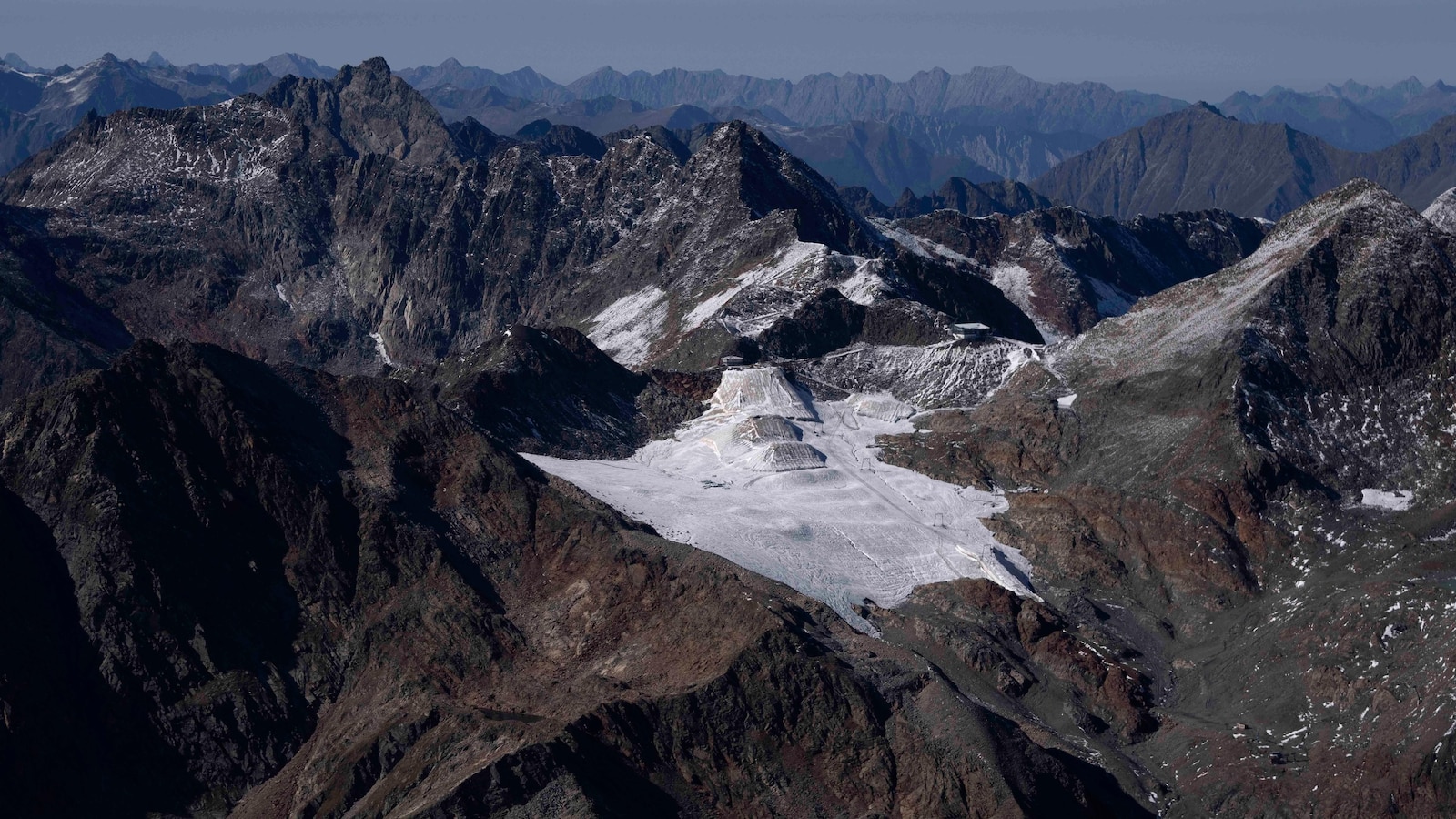
Perhaps most symbolically devastating is what’s happening to the Pasterze, Austria’s largest and most famous glacier. This massive river of ice, which has served as a crown jewel of the Austrian Alps and a major tourist attraction for generations, is literally falling apart. The glacier’s tongue—the lower section that extends down the valley—is disintegrating in a way that makes the abstract concept of climate change heartbreakingly concrete and visible to anyone who visits. The Austrian Alpine Club emphasized that at the Pasterze, “the consequences of climate change” are no longer predictions in scientific papers or computer models; they’re tangible realities that can be witnessed with the naked eye. The report covering 2024 and 2025 grimly confirms what researchers have been documenting for years: Austrian glaciers aren’t just retreating at their edges—they’re shrinking comprehensively in length, area, and volume. It’s a three-dimensional collapse that represents not just a change in the landscape, but a fundamental transformation of Austria’s environment. This long-term trend shows no signs of reversing, and each new measurement reveals that the pace of change may actually be accelerating rather than slowing down.
The Perfect Storm: Weather Conditions Accelerating the Melt
The rapid retreat of Austria’s glaciers isn’t happening in a vacuum—it’s the result of a confluence of weather conditions that have created what scientists might call a perfect storm for ice loss. Poor weather patterns, ironically characterized by what would normally be considered “good” weather in everyday terms, have proven catastrophic for glacier health. Most critically, the region has experienced significantly below-average snowfall, meaning glaciers haven’t received the fresh snow accumulation they need during winter months to replenish what melts during summer. Snow is a glacier’s lifeblood—it’s how these massive ice formations grow and maintain their size. Without adequate snowfall, glaciers enter a deficit, losing more ice than they gain. Compounding this problem are persistently warm temperatures that have extended melting seasons and intensified the rate of ice loss. Last June was particularly devastating, with temperatures soaring nearly 5 degrees Celsius (9 degrees Fahrenheit) above historical averages. That might not sound extreme to those unfamiliar with glacier dynamics, but for ice formations that exist in a delicate thermal balance, such temperature anomalies are catastrophic. When you combine inadequate snow accumulation with exceptionally warm conditions, you create an environment where glaciers don’t just stop growing—they actively waste away at accelerated rates.
Far-Reaching Consequences Beyond the Mountains
The retreat of Alpine glaciers carries implications that extend far beyond the aesthetic loss of picturesque mountain landscapes. These massive ice formations are integral to the environmental, economic, and social fabric of Alpine nations, and their disappearance will create ripple effects throughout society. Glaciers serve as natural water towers, storing precipitation as ice during cold periods and releasing it as meltwater during warmer seasons. This regulation of water flow is critical for drinking water supplies for millions of people in downstream communities. As glaciers shrink, this buffering capacity diminishes, potentially leading to water shortages during dry periods and increased flood risk during periods of rapid melting. The impact on power generation is equally significant—many Alpine regions depend on hydroelectric power, which relies on consistent water flow that glaciers help maintain. Agriculture, too, faces uncertainty as irrigation systems that have depended on glacier-fed rivers for generations may need to be completely reimagined. Infrastructure built with certain water levels and patterns in mind may become obsolete or dangerous. Even the tourism and recreation industries that form economic backbones of Alpine communities face an uncertain future as the landscapes that attract visitors fundamentally change. Skiing, mountaineering, and scenic tourism all depend on the Alpine environment maintaining certain characteristics that are now in flux.
A Continental Crisis: Austria Is Not Alone
Austria’s glacier crisis is part of a larger continental and global pattern that underscores the universal nature of climate change impacts. Neighboring Switzerland, which holds the distinction of hosting more glaciers than any other European country, has been documenting similar alarming trends in recent years. Swiss glaciers have experienced record-breaking melting seasons, with some losing several percentage points of their total volume in single years. This parallel experience across the Alpine region suggests that the factors driving glacier retreat are operating at scales beyond local weather variations—they’re manifestations of broader climate system changes affecting the entire region. The pattern extends well beyond Europe, too. Glaciers in the Himalayas, the Andes, North America’s Rocky Mountains, and even the polar regions are experiencing similar retreats, forming a global mosaic of ice loss that speaks to the planetary scale of climate change. Scientists have documented glacier retreat on every continent where glaciers exist, with only the rarest exceptions showing stability or growth (and those exceptions are typically explained by very localized conditions). The 135 years of glacier measurements in Austria provide valuable long-term context, and within that historical record, the current retreat ranks as the eighth-largest on record, despite being somewhat less severe than the previous two years. This historical perspective reveals that what we’re witnessing isn’t a temporary fluctuation but an accelerating trend.
A Wake-Up Call That Demands Action
Austrian Alpine Club vice president Nicole Slupetzky captured the urgency of the situation with stark honesty: “The glaciers are melting—and with every new report, the urgency grows.” Her assessment represents a shift in the conversation from whether glaciers can be saved to how society can best prepare for and mitigate the consequences of their loss. “It’s no longer a question of whether we can still save the glaciers in their old form,” Slupetzky explained, “it’s about mitigating the consequences for ourselves.” This pragmatic, though sobering, perspective reflects the reality that some degree of glacier loss is now inevitable given the momentum already built into the climate system, even if dramatic emission reductions were implemented immediately. The Austrian Alpine Club emphasized that these changes in the Alps should function as a “wake-up call” for both policymakers crafting climate and adaptation strategies and for the general public in terms of individual behaviors and choices. The visible, undeniable nature of glacier retreat makes it one of the most powerful communicators of climate change impacts—these aren’t abstract projections but observable transformations of familiar landscapes. For Austria and its Alpine neighbors, the message from the mountains is clear: the climate crisis isn’t a distant threat—it’s a present reality reshaping the landscape, and the time for meaningful response is not in some future planning cycle but right now. The glaciers are sending humanity an urgent message, written in the language of retreating ice and disappearing snow—the question is whether that message will be heard and heeded before the consequences become even more severe.