


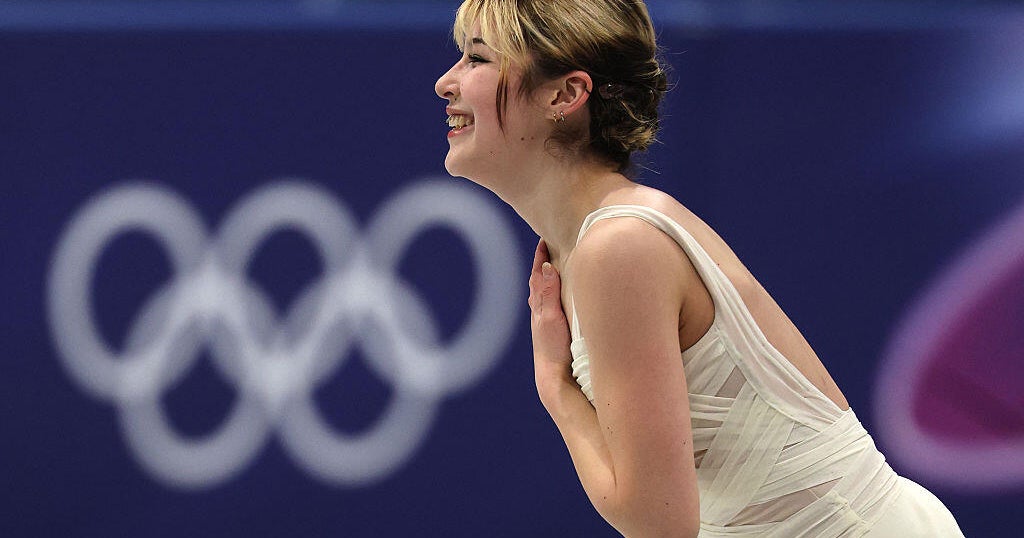

Alysa Liu Leads American Hopes as Team USA Faces Setback in Olympic Figure Skating
The Return of a Champion
The 2026 Milan Cortina Olympics has brought unexpected drama to the women’s figure skating competition, with 20-year-old Alysa Liu emerging as Team USA’s brightest hope for a podium finish after her teammates stumbled in the short program. Liu, the reigning world champion who famously retired four years ago only to make a stunning comeback, delivered a performance that captured both technical brilliance and artistic maturity. Her routine featured the most difficult combination attempted by any woman in Tuesday night’s competition—a triple lutz-triple loop that showcased her fearless approach to the sport. The performance earned her 76.59 points, placing her tantalizingly close to the leaders and just two points behind Japan’s Ami Nakai, who topped the standings with 78.71 points. Between them sits another Japanese skating powerhouse, Kaori Sakamoto, with 77.23 points, setting up what promises to be an intense battle for Olympic glory.
A Different Perspective, A Changed Athlete
What makes Liu’s return to Olympic competition even more remarkable is the transformation she’s undergone—not just as a skater, but as a person. Speaking after her performance, Liu reflected on how dramatically different this Olympic experience feels compared to her past competitions. The presence of family and friends, the absence of COVID-19 restrictions that plagued previous events, and her newfound confidence in her programs and presentation have all contributed to a sense of joy that was palpable in her skating. “I can’t even describe how different it is,” Liu shared with genuine emotion. Her comments revealed an athlete who has found a deeper connection to her sport, one that extends beyond the technical elements and score sheets. She spoke enthusiastically about loving her programs, being proud to showcase them, and even expressed affection for her competition dresses—small details that might seem trivial but speak volumes about an athlete who has found peace with herself and her craft. This mental and emotional maturity, combined with her undeniable technical skills, makes Liu a formidable contender as the competition moves into the critical free skate portion.
Levito’s Disappointing Start
Unfortunately, the story for the rest of the American team didn’t unfold as hoped. Isabeau Levito, at just 18 years old the youngest member of the U.S. figure skating squad at these Games, found herself facing an uphill battle after the short program. The technical panel dinged her for under-rotating her triple loop, a costly error in a sport where fractions of points can mean the difference between a medal and finishing off the podium. Adding to her troubles, judges downgraded her step sequence—typically one of her strongest elements and an area where she usually accumulates valuable points against her competitors. These combined setbacks left her languishing in eighth place after the short program, a position that makes reaching the podium in Thursday night’s free skate a very long shot indeed. For a young skater competing in her first Olympics, the pressure and disappointment must be immense, though there’s still an opportunity to salvage a respectable finish with a strong free skate performance.
Glenn’s Heartbreaking Mistake
Perhaps the most heartbreaking moment of the evening belonged to Amber Glenn, the 26-year-old three-time reigning U.S. champion who entered the competition with high expectations and significant historical importance. Glenn had been skating brilliantly through most of her program, landing a massive opening triple axel—a 3 1/2-revolution jump that only she and Japan’s Nakai attempted in the entire women’s field. She maintained that momentum with a clean triple flip-triple toe loop combination, putting herself firmly in contention for a top position. But then disaster struck on what should have been a routine triple loop. Something went wrong in Glenn’s approach to the jump, and in a split-second decision, she bailed out, executing only a double loop instead. In the unforgiving world of Olympic figure skating, this downgrade rendered the element invalid, earning her exactly zero points. Those lost points—estimated at seven or eight—represented the razor-thin margin that separated Glenn from being a genuine medal contender and finding herself facing an nearly impossible climb back into podium position. The emotional weight of the mistake was evident as she stepped off the ice, telling her coach Damon Allen through barely contained tears, “I had it.” His response—”It’s not over”—offered encouragement, but both athlete and coach knew how difficult the road ahead had become.
A Night of Contrasts for Glenn
The evening’s disappointment stood in stark contrast to how the day had begun for Glenn, who had received an unexpected and thrilling message from none other than Madonna, the “Queen of Pop” herself. Glenn’s free skate program is set to Madonna’s iconic song “Like A Prayer,” and when Madonna saw a clip of the performance, she sent a personal video message telling the American skater, “Go get that gold.” For an athlete who had already made history in multiple ways, this celebrity endorsement must have felt like a fairy tale moment. At 26, Glenn is the oldest U.S. women’s singles skater to compete in an Olympics in 98 years, according to U.S. Figure Skating records—a testament to both the typically young age of elite women’s figure skaters and Glenn’s remarkable longevity in a physically demanding sport. Beyond her age, Glenn has also broken barriers as the first openly LGBTQ woman to represent the United States in Olympic figure skating, a role she has embraced with grace and authenticity. She already has one gold medal from these Games, earned during the team event on the opening weekend, as does Liu. But individual Olympic glory now appears to be slipping from her grasp, barring a miraculous free skate and major mistakes from her competitors.
The Weight of History and the Road Ahead
As the competition moves toward the free skate scheduled for Thursday, February 19, at 1 p.m. ET, Alysa Liu finds herself carrying not just American hopes but the weight of two decades of history. The last U.S. woman to claim Olympic gold in figure skating was Sarah Hughes, who shocked the world with her come-from-behind victory in 2002. The last American woman to medal at all was Sasha Cohen, who took home silver in 2006—twenty years ago. This drought stands in stark contrast to America’s historical dominance in women’s figure skating, making the pressure on Liu all the more intense. However, if anyone seems equipped to handle that pressure, it’s the mature, confident version of Alysa Liu who took the ice Tuesday night. Her performance suggested an athlete who has made peace with her past, embraced her present, and isn’t afraid of her future. With just two points separating her from the lead and her most difficult technical elements still ahead in the free skate, Liu has positioned herself perfectly to make a serious run at the podium. Whether she can deliver under the brightest spotlight in figure skating remains to be seen, but one thing is certain: the “Blade Angels,” as the American team has been nicknamed, will be watching and hoping that Liu can end their long medal drought and bring home the hardware that has eluded American women’s figure skating for far too long.