


Senate Rejects Voter Photo ID Amendment Despite Democratic Claims of Support
The United States Senate found itself embroiled in a contentious debate this week over voting requirements, as lawmakers voted down an amendment that would have mandated photo identification for all voters casting ballots in federal elections. The proposal, which failed to reach the necessary 60-vote threshold needed for advancement, was defeated by a vote of 53 to 47 on Thursday. This vote has reignited the ongoing national conversation about election security, voter access, and the delicate balance between preventing fraud and ensuring that all eligible Americans can exercise their constitutional right to vote. The defeat of this amendment came despite recent statements from Senate Minority Leader Chuck Schumer suggesting that Democrats were open to photo ID requirements, creating confusion and accusations of political maneuvering on both sides of the aisle.
The Context: A Marathon Debate Over Election Reform
The vote on the voter ID amendment occurred during the second week of an extended Senate debate over the SAVE America Act, a comprehensive elections bill that has become a lightning rod for partisan disagreement. This broader legislation would require Americans to provide proof of citizenship when registering to vote and present specific forms of photo identification when casting their ballots. President Trump has been actively pressuring Senate Republicans to find creative ways to push the legislation through, despite the clear mathematical reality that it lacks sufficient support to overcome the 60-vote filibuster threshold in the Senate. The intensity of this debate reflects deeper divisions in American politics about who should be able to vote, how elections should be conducted, and whether current voting systems adequately protect against fraud while ensuring access. For Republicans, the issue represents a fundamental question of election integrity and common-sense verification. For Democrats, it raises concerns about voter suppression and creating unnecessary barriers that could disproportionately affect certain communities, including minority voters, the elderly, and those in rural areas.
What the Amendment Would Have Required
Republican Senator Jon Husted of Ohio introduced the amendment that became the focal point of Thursday’s vote. His proposal outlined specific acceptable forms of photo identification that voters would need to present, including driver’s licenses, state-issued identification cards, passports, military IDs, and tribal identification cards. Senate Majority Leader John Thune, a Republican from South Dakota, characterized these as “the types of IDs that are sitting in wallets right now, that the American people use on a regular basis,” framing the requirement as a simple, common-sense measure rather than an onerous burden. Senator Husted himself described his amendment as “clean, simple, straightforward,” emphasizing that it contained “no additional restrictions, no tricks, no games, no prohibition on absentee voting.” The Ohio senator’s approach was clearly designed to address Democratic concerns and present the voter ID requirement as a minimal, reasonable safeguard. However, the provisions for mail-in voting became a particular point of contention, with disagreement emerging over exactly how voters who cast ballots by mail would comply with the identification requirement and whether such compliance would compromise ballot secrecy.
The Democratic Opposition and Schumer’s Shifting Position
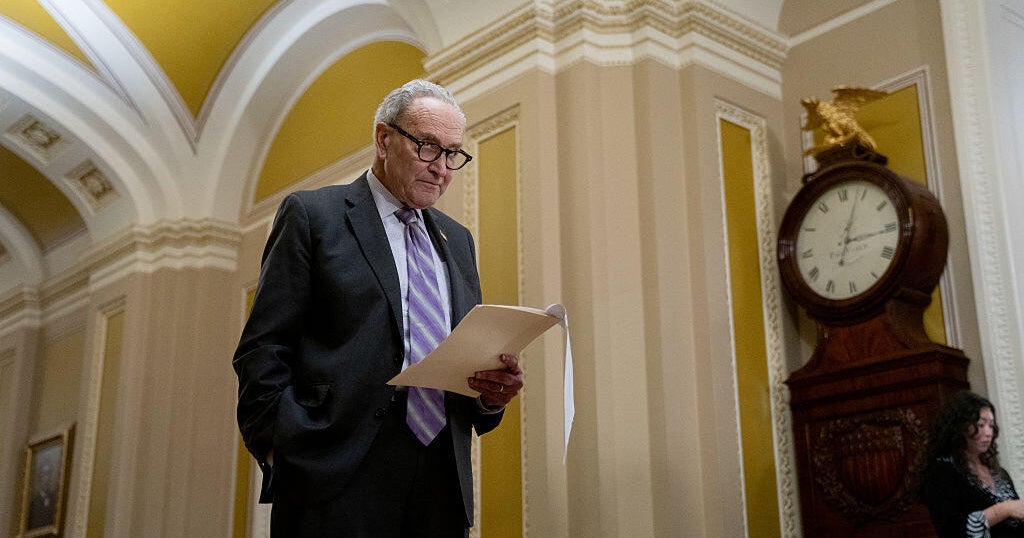
Senate Minority Leader Chuck Schumer condemned the amendment before Thursday’s vote, arguing that it would “impose the single strictest voter ID law in America.” The New York Democrat characterized the proposal as a “radical amendment” that would override the voter ID requirements already in place in all 50 states for federal elections, replacing them with what he called “an overly restrictive, one-size-fits-all approach.” Schumer specifically raised concerns about the mail-in voting provisions, claiming that the amendment would require people voting by mail to include a photocopy of their identification with their ballot, which he argued would eliminate the secrecy of how someone voted—a cornerstone principle of American democracy. This position created significant political tension, as Schumer had stated just one week earlier that Democrats were not opposed to photo ID requirements in principle. His exact words had been, “our objection as Democrats is not to a photo ID,” though he had made this statement while criticizing the broader SAVE America Act. This apparent contradiction gave Republicans an opportunity to accuse Democrats of political inconsistency and playing games with an issue that polling suggests has broad public support across party lines.
The Mail-in Voting Controversy
A central point of disagreement between the two parties centered on how the amendment would affect mail-in voting, an increasingly popular method of casting ballots that expanded dramatically during the COVID-19 pandemic and has remained prevalent in many states. Senator Husted directly refuted Schumer’s characterization of the mail-in ballot process, accusing the Democratic leader of misrepresenting how the system would actually work under his amendment. According to Husted, voters casting mail-in ballots would not need to include a photocopy of their ID inside the envelope with their ballot, as Schumer had claimed. Instead, they would include either a photo of their identification or the last four digits of their Social Security number on the outside of a secrecy envelope that would contain the ballot itself. Election officials would then validate this information to confirm that the ballot came from a registered voter before physically separating the identification information from the ballot, which would be counted separately. This process, Husted argued, would maintain ballot secrecy while still verifying voter identity. The technical details of this debate highlight the complexity of updating voting systems and the genuine challenges involved in balancing security with accessibility and privacy in an era when more Americans are voting by methods other than showing up in person on Election Day.
Public Opinion Versus Political Reality
One of the most striking aspects of this debate is the disconnect between public opinion and Senate action. Multiple polls have consistently shown that a significant majority of Americans—across partisan, racial, and demographic lines—support requiring voters to show some form of valid identification before casting their ballots. Many Americans view this as a common-sense measure, noting that identification is required for numerous everyday activities, from boarding an airplane to purchasing certain age-restricted products. Senate Majority Leader Thune explicitly referenced this public support when he announced that Republicans would use the vote to put Democrats “on the spot” on the issue, following Schumer’s comments suggesting Democratic openness to photo ID requirements. “This is an issue on which there is broad agreement with the public, and obviously we’re going to give the Democrats an opportunity to vote on that one particular issue, and that is whether or not people ought to have to show some form of identification when they go to vote,” Thune said. The fact that the amendment failed despite this apparent public consensus underscores the complex political calculations at play. Democrats argue that devil is in the details—that while they may support voter ID in principle, the specific implementation matters enormously, and poorly designed requirements can create barriers that prevent eligible citizens from voting. Republicans counter that Democrats are using technical objections as cover for opposing a measure that most Americans support, prioritizing partisan advantage over election security. This vote ultimately reflects the broader challenge facing American democracy: finding common ground on voting procedures in an increasingly polarized political environment where each party suspects the other of manipulating election rules for partisan benefit rather than seeking genuine improvements to the democratic process.