

Deadly Confrontation in Cuban Waters Involves American Citizens
The Incident: A Fatal Encounter at Sea
On Wednesday, a shocking maritime confrontation unfolded in Cuban waters that left four people dead and raised serious questions about what exactly transpired. The White House confirmed on Thursday that American citizens were aboard a stolen speedboat when Cuba’s coast guard intercepted them, resulting in a deadly exchange of gunfire. According to reports from both Cuban and U.S. authorities, at least one American was among the four killed when occupants of the boat allegedly opened fire on Cuban military personnel. The 24-foot speedboat, which had departed from Florida, carried ten people in total. Beyond the four fatalities, six others aboard the vessel were wounded and subsequently arrested by Cuban authorities. The incident has created a complex international situation involving questions of terrorism, immigration status, and escalating tensions between the United States and Cuba at a particularly sensitive political moment.
Who Was on the Boat and Why
The people aboard the stolen vessel represented a diverse cross-section of individuals with various connections to the United States. U.S. officials confirmed that in addition to the deceased American citizen, at least one other U.S. citizen was among those arrested following the confrontation. The group’s immigration status varied considerably, with at least one person holding a K-1 visa—a special visa that allows a U.S. citizen’s fiancé to enter the country for the purpose of marriage. Others aboard are believed to have been legal permanent residents of the United States, though the exact number remains unclear. The Cuban government has released the names of all ten individuals involved. The four who lost their lives were identified as Pavel Alling Peña, Michael Ortega Casanova, Ledían Padrón Guevara, and Hector Duani Cruz Correa. The six survivors, now in Cuban custody with injuries, were named as Cristian Ernesto Acosta Guevara, Conrado Galindo Sariol, José Manuel Rodríguez Castelló, Leordan Enrique Cruz Gómez, Amijail Sánchez González, and Roberto Álvarez Ávila. Notably, Cuba initially misidentified one participant but later corrected this error, stating that Rolando Roberto Azcorra Consuegra was not actually involved in the incident.
Conflicting Narratives and Terrorism Allegations
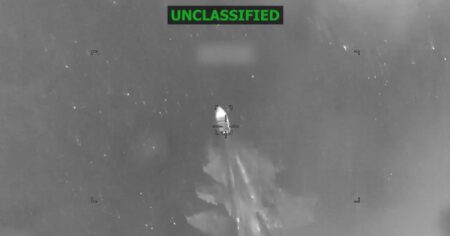
The Cuban Interior Ministry has painted a dramatic picture of what they characterize as an attempted terrorist infiltration. According to their account, the boat was intercepted one nautical mile northeast of the El Pino canal in Cayo Falcones when five members of Cuba’s Border Guard Troops approached for routine identification. At that point, the ministry claims, the occupants opened fire, wounding the commander of the Cuban vessel. Cuban authorities allege that the ten people aboard were heavily armed with an alarming arsenal that included assault rifles, handguns, Molotov cocktails, bulletproof vests, telescopic sights, and camouflage uniforms—equipment that they say clearly indicated plans to “carry out an infiltration for terrorist purposes.” The Cuban Embassy in the United States added further explosive claims on Thursday, stating that two of the boat’s occupants, González and Gómez, were already wanted by Cuban authorities and had been included in lists provided to U.S. officials in both 2023 and 2025 of individuals “subject to criminal investigations” for alleged involvement in acts of terrorism. Cuba accused the United States of allowing these individuals to enjoy “impunity within U.S. territory.” However, the United States has not publicly identified any of the boat’s occupants or offered any explanation for why they were in Cuban waters, leaving many questions unanswered about the true nature of their mission.
The Stolen Boat and Its Owner’s Account
Adding another layer to this complex situation is the fact that the vessel itself was reported stolen. According to an incident report from the Monroe County Sheriff’s Office in Florida, the boat’s owner, Angel Walter Montera, reported his vessel missing on Wednesday from his property in Big Pine Key, Florida. Montera told deputies that his 24-foot 1981 Pro-Line boat, which had been properly registered in Florida under the identification number FL7726SH and docked at his property, had disappeared. He explicitly stated that he had not given anyone permission to use the vessel. Montera told investigators he believed a former employee might be responsible for the theft—a man who had previously done tile work for him. He identified this former employee as Hector Duardy Cruz Correa, who may have taken the boat without authorization. This name matches one of the four individuals killed in the confrontation, though with a slightly different spelling (the Cuban government listed him as Hector Duani Cruz Correa). This connection raises important questions about whether this was a planned operation or something more spontaneous, and whether the theft of the boat was directly connected to whatever mission the occupants had in mind when they headed toward Cuban waters.
Family Perspectives and Personal Motivations
In the aftermath of the deadly incident, family members of those involved have begun to speak out, offering glimpses into possible motivations. Misael Ortega Casanova, brother of Michael Ortega Casanova, one of the four killed, spoke to The Associated Press and provided disturbing insights into his brother’s state of mind. He described his brother as being on an “obsessive and diabolical” quest to end Cuba’s communist government. According to Misael, his brother Michael was an American citizen who had lived in the United States for more than twenty years, working as a truck driver and building a life far from the island nation. Yet despite two decades in America, Michael apparently remained consumed by his opposition to the Cuban government, to the point where he was willing to risk everything—ultimately losing his life—in what appears to have been some kind of action against the regime. This personal testimony suggests that at least some of those aboard the vessel were politically motivated, driven by deep-seated opposition to Cuba’s government rather than criminal intentions. It paints a picture of individuals whose hatred of the communist system outweighed concerns for their own safety, though it leaves open the question of what exactly they hoped to accomplish and whether they had any realistic plan or were simply acting out of desperation and frustration.
Diplomatic Fallout and Ongoing Investigation
The incident occurs at a particularly tense moment in U.S.-Cuba relations and has triggered a complex diplomatic response from both nations. Secretary of State Marco Rubio acknowledged on Wednesday that the U.S. government didn’t have information beyond what Cuban authorities had provided, and he confirmed that the Department of Homeland Security, the Coast Guard, and other agencies are actively investigating the incident. “We’re gonna find out exactly what happened here and we’ll respond accordingly,” Rubio stated, though he offered no timeline or specifics about what that response might entail. The Cuban Embassy in the United States emphasized on Thursday that “from the outset, and having detected that the vessel came from U.S. territory, Cuban authorities have maintained communication about this terrorist attempt with their U.S. counterparts, including the State Department and the Coast Guard.” Cuba stated that “an investigation is underway to clarify the facts with the utmost rigor” and expressed willingness to exchange information with the United States. The embassy indicated that Cuba would be requesting information from U.S. authorities about those involved, the means used, and other details through existing bilateral mechanisms, while noting that U.S. government authorities had shown willingness to cooperate in clarifying the facts. This incident comes against the backdrop of President Trump’s recent imposition of new sanctions and tariffs on Cuba, escalating tensions between the two nations. These moves followed an operation to capture former Venezuelan President Nicolás Maduro, further complicating the regional political landscape. As both nations investigate, many questions remain unanswered: Were these individuals truly planning a terrorist attack, or were they simply anti-communist activists on a poorly planned mission? Did U.S. authorities know anything about their plans beforehand? And what will be the ultimate impact on U.S.-Cuba relations, which were already strained before this deadly maritime confrontation added yet another complication to an already difficult bilateral relationship?