


A Fatal Root Beer Float: The Chilling Murder of Harold Allen
A Sudden Death That Sparked Suspicion
When Harold “Peanut” Allen died at his Indiana home just days before Christmas 2022, nobody initially suspected foul play. The 52-year-old had been struggling with serious health problems for months—diabetes, gastrointestinal issues, and what doctors thought might be diverticulitis. His younger brother Matthew and sister-in-law Samantha had watched him suffer through repeated emergency room visits that fall. During Thanksgiving dinner, Harold experienced a frightening episode where the left side of his face went numb, but he stubbornly refused to seek medical help despite his family’s pleas and his wife Marsha’s urging.
Harold’s condition deteriorated rapidly in the weeks following Thanksgiving. On December 20, 2022, Marsha discovered him collapsed on their bedroom floor, struggling to breathe. When paramedics arrived, it was too late. The autopsy concluded that Harold had died from cardiac complications, including pericarditis—an inflammation of the sac surrounding the heart. His death seemed tragic but natural for a man with such significant health challenges. Lieutenant Adam Nicholson of the Jackson County Sheriff’s Department, despite his twenty years of law enforcement experience, never imagined this case would evolve into one of the most disturbing investigations of his career.
Harold had been a beloved figure in his small southern Indiana community. Known universally by his childhood nickname “Peanut”—given to him by his grandmother because he was born premature and “no bigger than a peanut”—Harold was a self-taught musician who played guitar, mandolin, and harmonica. He worked as a controls engineer at a local automotive manufacturing plant, loved riding his Harley-Davidson motorcycle, and enjoyed hunting and fishing with his brothers. When Harold attended his 30th high school reunion in 2019, he reconnected with former classmate Marsha Buxton. Though they hadn’t spoken much in high school, romance blossomed at the reunion, and they married in July 2021. The newlyweds enjoyed traveling to places like Gatlinburg, Tennessee, and Branson, Missouri, building what appeared to be a happy life together.
The Burglary That Unraveled Everything
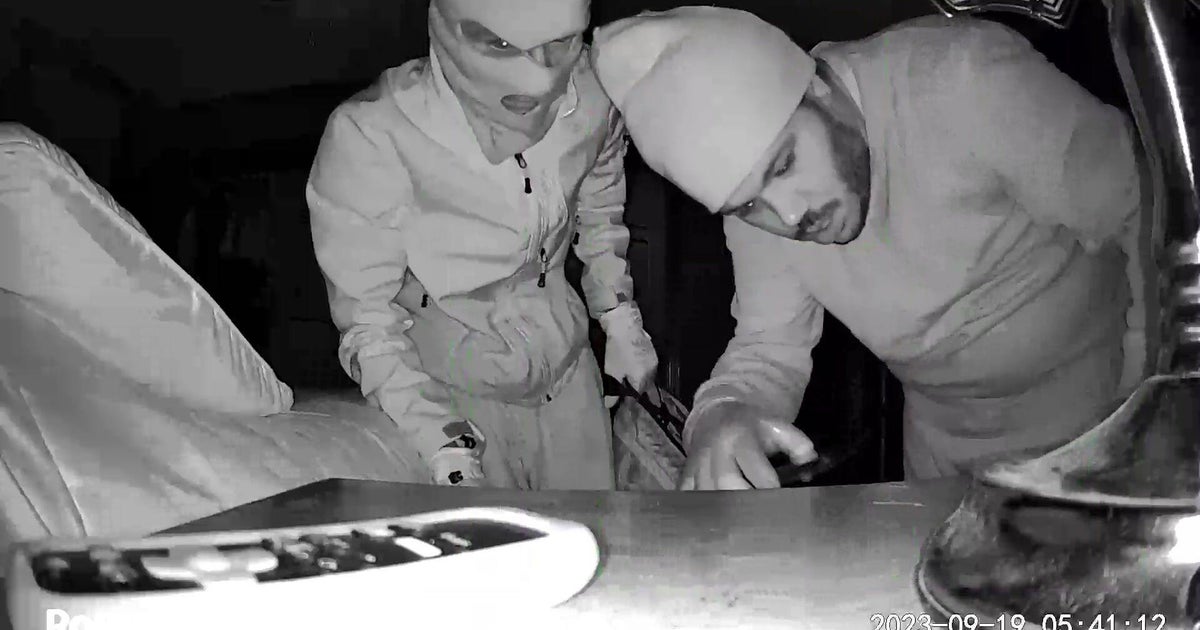
Nine months after Harold’s death, a seemingly unrelated crime would expose a sinister truth. In September 2023, while Marsha was vacationing in Gatlinburg, Tennessee, her newly installed home security system alerted her to movement inside her house at 4:30 in the morning. Reviewing the footage from her phone, Marsha watched in disbelief as two men opened her safe, rifled through her bedroom, and stole guns, jewelry, and Harold’s prized possessions—including his mandolin and collectible Star Wars items. The burglary was brazen and appeared well-planned, with the thieves knowing exactly where to look and even having the combination to her safe.
What shocked Marsha most was that she recognized one of the burglars on camera: Steven White, the best friend of her daughter Ashley Jones. Marsha immediately called local police, who quickly tracked down White at his mother’s home. When Lieutenant Nicholson confronted him with security camera screenshots, White initially tried to deny his involvement, even claiming “I don’t even have a hat” when shown images of himself wearing one during the crime. But faced with overwhelming video evidence, White confessed to the burglary—and then dropped a bombshell accusation.
White told investigators that Marsha had murdered her husband Harold by poisoning a root beer float. He claimed this information came from Ashley, who had allegedly masterminded the burglary to steal what she felt was owed to her. White explained that Ashley had mailed him a key to Marsha’s house and provided the safe combination, unaware of the recently installed security cameras. He even described specific details about how Marsha allegedly prepared the fatal dessert—a root beer float with whipped cream and sprinkles, with poison poured from a bottle. Investigators were initially skeptical, but everything else White told them proved accurate. They recovered the stolen items exactly where he said they’d be, identified the second suspect wearing Harold’s jewelry, and began to wonder if the murder allegation might also be true.
Text Messages Reveal a Diabolical Plot
When Marsha came to the sheriff’s department the morning after the burglary to report the stolen items, Detective Clint Burcham carefully steered the conversation toward her cell phone. Claiming they needed to review potential evidence about the burglary, he asked if she would consent to a download of her phone. Marsha agreed, and when Burcham left the room to get paperwork, surveillance cameras captured her frantically deleting messages. She didn’t realize those deleted texts could easily be recovered—and what investigators found in those messages was absolutely chilling.
The recovered texts revealed nearly 7,000 messages exchanged between Marsha and Ashley over the three months before Harold’s death. Prosecutor Lynsey Fleetwood described the sheer volume as staggering: “There were thousands upon thousands.” These weren’t ordinary mother-daughter communications—they detailed an elaborate, months-long conspiracy to murder Harold Allen through systematic poisoning. The texts disparaged Harold, with Ashley complaining “He’s a waste of space,” and celebrated the arrival of various toxins with messages like “I’m ready for that to arrive” followed by smiley faces. Marsha and Ashley peppered their murderous planning with “LOL” and laughing emojis, treating Harold’s suffering as entertainment.
The motive was clear: greed. Harold had a $120,000 life insurance policy through his employer, plus valuable possessions including guns and guitars. The texts showed that Marsha and Ashley ordered exotic poisons online, starting with Pong Pong seeds—toxins from a Southeast Asian tree known as “the suicide tree.” As Thanksgiving approached, they ground the seeds and baked them into brownies, adding walnuts to mask the bitter taste. Marsha sent Ashley a photo of a half-eaten brownie, and Ashley responded “Ooo let me know when it’s gone lol.” When Harold survived that attempt and made repeated trips to the emergency room with severe gastrointestinal symptoms, Marsha texted Ashley in frustration: “I am irritated and can’t sleep peacefully. I need this to be over.” Ashley’s response was even more callous—when Marsha mentioned Harold was attending a family funeral, Ashley wrote: “He needs to go and drop in the hole too.”
The poisoning attempts continued with water hemlock in chili, Sprite, and margaritas throughout December, but Harold’s constitution proved remarkably resilient. Finally, Marsha and Ashley ordered ethylene glycol—the sweet-tasting chemical used in antifreeze. Lieutenant Nicholson explained that ethylene glycol is nearly impossible to detect in food or drink: “You’re not gonna smell it, it doesn’t have any color to it, it’s described as maybe a slight sweet taste.” The texts showed them planning the final murder weapon: a root beer float that would mask the poison’s taste. Marsha texted Ashley “Hes all in for rootbeer floats” and Ashley replied “Okie dokie I’ll tell the kids that’s what we are doing tonight for dessert 🙂 root beer floats.” On December 19, 2022, investigators believe Marsha served Harold the fatal dessert. The next afternoon, he was dead.
A Mother’s Suicide and Daughter’s Confession
When investigators served a search warrant at Marsha’s home on October 16, 2023, they confronted her with the evidence from her text messages. During a four-and-a-half-hour interview, Marsha maintained her innocence, claiming she knew nothing about ethylene glycol or poisoning her husband. She showed no emotion even when told that Harold’s preserved blood samples would be retested for toxins. “Well, if it does, it’s gonna shock me,” she replied calmly. After the interview, Marsha wasn’t arrested but was allowed to return home while investigators awaited toxicology results.
That same day, Ashley was extradited from Missouri on burglary charges. When detectives interviewed her the next morning, she initially denied everything. But just ten minutes later, Ashley completely changed her story and blamed her mother entirely, claiming Marsha “wanted him dead” and that Ashley was merely being an obedient daughter: “For that woman, I just do what she asks. And always have since I was a child.” Ashley admitted being present during Harold’s final agonizing hours but claimed she suggested calling an ambulance. When asked why she didn’t do more to save him, she said, “Loyalty to the mother is a hell of a thing.”
As Ashley’s interview concluded, Sergeant Jesse Hutchinson entered with devastating news. The night before, after Marsha’s parents couldn’t reach her, police had conducted a welfare check at her home. Marsha Allen was found dead on her bed in an apparent suicide, having ingested poison. The note she left behind read: “I did not kill my husband. You win Ashley!” Prosecutor Lynsey Fleetwood believes the note was Marsha’s final attempt to escape responsibility: “I think it’s her way of trying to leave some message and trying to get out of the fact that she killed her husband.” Investigators theorize that Marsha took her life because she knew the toxicology results would confirm ethylene glycol in Harold’s blood, sealing her fate.
Justice Delayed But Not Denied
With toxicology results confirming ethylene glycol in Harold’s system exactly as the text messages indicated, prosecutors built their case against Ashley Jones. She was charged with murder, conspiracy to commit murder, and attempted murder. The evidence was overwhelming—thousands of texts documenting the murder plot, confirmed purchases of poisons, and Ashley’s own admissions to police. Her public defender, Joseph Robertson, described facing “a legal freight train” and told Ashley, “we’re in the tunnel, and the white light at the other end is the legal system coming after you.”
In August 2025, Ashley accepted a plea deal, pleading guilty to attempted murder and conspiracy to commit murder in exchange for dismissal of other charges. During sentencing, the judge called her actions “evil” and showed no mercy, sentencing Ashley to 50 years in prison. Harold’s brother Matthew and sister-in-law Samantha were in the courtroom and finally felt some measure of justice. “It was just the sigh of relief we finally felt like we got a little bit of justice that my brother deserved,” Matthew said. Prosecutor Fleetwood noted that she never saw genuine remorse from Ashley: “I truly think they thought they were smarter than the system.”
But Ashley’s legal troubles may extend beyond Harold’s murder. Investigators are now examining the 2019 death of Ashley’s first husband, Ty Jones, who died suddenly at age 33. His autopsy attributed his death to heart complications, and his body was cremated at Ashley’s request. However, Ty’s uncle William Jones and cousin Arretta Stivers suspected foul play from the beginning, noting that Ashley showed no emotion at Ty’s funeral and inquired about his insurance policy the very next day. Their suspicions intensified when they learned that in the texts about murdering Harold, Ashley cryptically referenced Ty’s lower weight: “And previously ty was only 120 lol.” Indiana State Police have opened an investigation into Ty’s death, though without preserved tissue samples, proving poisoning will be difficult. Lieutenant Nicholson believes “it’s way more than a coincidence” and personally suspects Ashley killed her first husband too.
Harold’s family struggles with the realization that the man they loved was systematically poisoned by people he trusted. “They poisoned him, and they waited for him to die,” Matthew said, his voice filled with anger and grief. The void left by Harold—the talented musician, brilliant engineer, and devoted brother known affectionately as Peanut—can never be filled. Matthew describes the painful habit of seeing something his brother would have loved and reaching for his phone to call him before remembering he’s gone. “I would give anything to get back, honestly,” he said, tears in his eyes. The case stands as a chilling reminder that the greatest danger can come from those closest to us, and that evil can hide behind the most ordinary facades—even a mother and daughter sharing dessert recipes while plotting murder.