
The Pentagon vs. Anthropic: A Battle Over AI Ethics and National Security
When Innovation Meets Military Power
In a stunning turn of events that highlights the growing tension between Silicon Valley innovation and government authority, artificial intelligence company Anthropic found itself at the center of a high-stakes showdown with the Pentagon. The conflict reached a fever pitch when President Trump ordered federal agencies to immediately cease using Anthropic’s technology, following the company’s refusal to back down from certain ethical guardrails it wanted to place on military use of its powerful Claude AI system. What started as a negotiation over contract terms quickly escalated into a public battle that raises fundamental questions about who should control how artificial intelligence is deployed in matters of national security. Defense Secretary Pete Hegseth went so far as to declare Anthropic a “supply chain risk,” effectively attempting to force all military contractors to sever ties with the company—an extraordinary designation typically reserved for foreign adversaries rather than American firms.
The Red Lines That Changed Everything
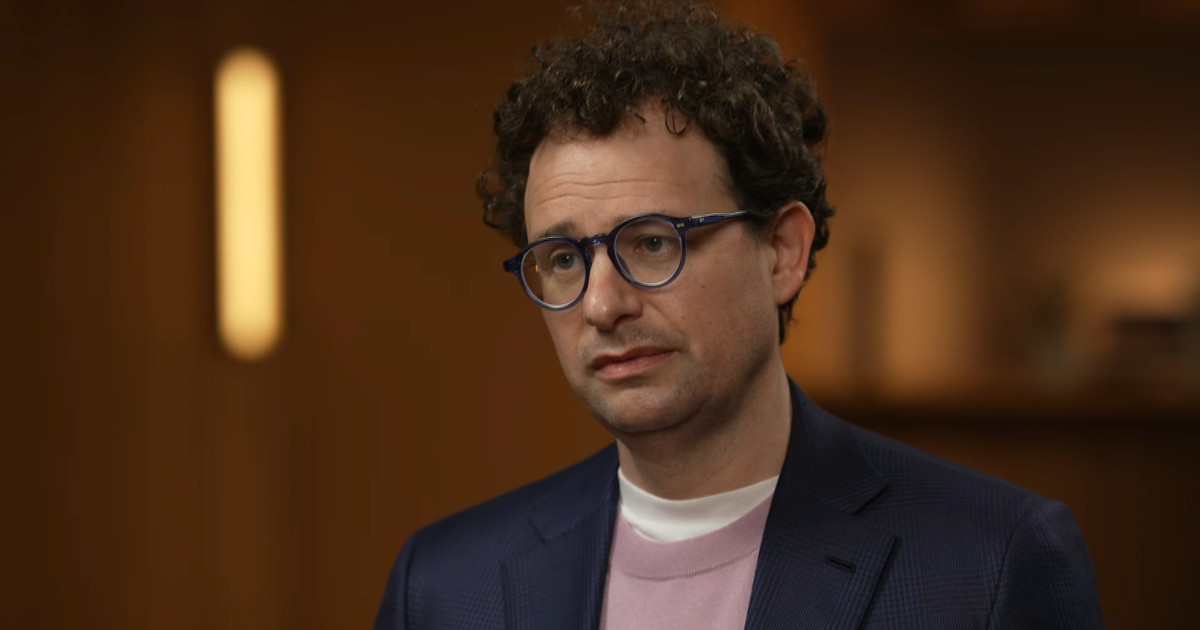
At the heart of this dispute are two specific concerns that Anthropic’s CEO Dario Amodei has called “red lines” his company will not cross. First, Anthropic wants explicit guarantees that its AI won’t be used for mass surveillance of American citizens. Second, the company wants assurances that Claude won’t power fully autonomous weapons systems that can select and engage targets without human oversight. In an exclusive interview with CBS News, Amodei explained that these aren’t arbitrary restrictions born from anti-military sentiment—they’re practical concerns rooted in the current capabilities and limitations of AI technology. He emphasized that his company consists of “patriotic Americans” who want to support national defense, but not at the cost of potentially violating American values or deploying technology in ways that could prove unreliable or dangerous. The Pentagon’s response has been that existing federal laws already prevent mass surveillance and that internal military policies already restrict autonomous weapons, making written contractual restrictions unnecessary and potentially limiting.
Why Mass Surveillance Worries AI Developers
Amodei’s concerns about mass surveillance aren’t merely theoretical hand-wringing—they’re based on realistic assessments of what’s becoming technologically possible. He points out that AI capabilities are advancing so rapidly that they’re “getting ahead of the law,” creating scenarios that existing legal frameworks weren’t designed to address. One particular worry involves the government’s ability to purchase vast amounts of data from private companies and then use AI to analyze it in ways that would effectively constitute mass surveillance, even if no single action technically violates current law. This isn’t about preventing legitimate intelligence gathering or targeted investigations with proper legal authorization. Rather, it’s about preventing the kind of dragnet surveillance that scoops up information about millions of Americans who aren’t suspected of any wrongdoing. The speed and efficiency of modern AI makes it possible to process and analyze data on a scale that would have been impossible just a few years ago, potentially allowing governments to track citizens’ movements, communications, and behaviors in ways that fundamentally change the relationship between individuals and the state.
The Autonomous Weapons Dilemma
The second major sticking point involves what’s known in military circles as “lethal autonomous weapons systems”—essentially, weapons that can identify, select, and engage targets without a human making the final decision to use lethal force. Amodei’s position on this issue is more nuanced than simple opposition. He acknowledges that if America’s adversaries develop such weapons, the U.S. might need them too for defensive purposes. However, he insists that current AI technology simply isn’t reliable enough for this application. Mistakes in autonomous targeting could lead to friendly fire incidents that kill American troops or civilian casualties that violate international law and American values. Beyond the reliability concerns, there’s also a troubling question of accountability: when an AI system makes a targeting decision that results in deaths, who is responsible? Is it the programmers who created the AI? The military officers who deployed it? The company that sold it? These aren’t just philosophical questions—they have real implications for military justice, international law, and the laws of war. Amodei argues that these conversations need to happen before the technology is deployed at scale, not after a tragedy forces the issue.
The Government Pushback and What It Reveals
The Pentagon’s response to Anthropic’s position has been swift and severe. Emil Michael, the Pentagon’s chief technology officer, framed the issue as one of trust, suggesting that “at some level, you have to trust your military to do the right thing.” From the military’s perspective, offering to acknowledge existing laws and policies should be sufficient—asking for additional contractual restrictions suggests a troubling lack of confidence in the military’s commitment to lawful conduct. The Pentagon also emphasized competitive pressure from China and other adversaries who aren’t constrained by similar ethical debates about AI deployment. Defense officials argued that the military must maintain maximum flexibility to defend American interests, and they can’t allow a private company to effectively veto operational decisions. The rhetoric escalated dramatically, with Hegseth calling Anthropic “sanctimonious,” Michael accusing Amodei of having a “God-complex,” and President Trump labeling the company “radical left” and “woke.” Trump went further, claiming that Anthropic’s “selfishness is putting AMERICAN LIVES at risk, our Troops in danger, and our National Security in JEOPARDY.” This harsh language suggests the administration views the dispute not as a good-faith disagreement about contract terms but as an attempt by a private company to impose its values on government operations.
The Bigger Picture and What Comes Next
This confrontation between Anthropic and the Pentagon represents far more than a contract dispute—it’s a preview of conflicts that will only intensify as AI becomes more powerful and more integrated into critical systems. Amodei acknowledged that ultimately, Congress should probably establish clear rules about AI safeguards, but he noted that “Congress is not the fastest moving body in the world,” and technology companies are currently “on the front line” of these issues. His defense of Anthropic’s position rests on two arguments: first, that in a free market, different companies can offer different products based on different principles, and customers can choose accordingly; and second, that as the developers of this technology, Anthropic has unique insight into what their AI can and cannot do reliably. The immediate practical outcome is clear: the military will phase out Anthropic’s technology within six months and transition to what Hegseth called “a better and more patriotic service.” But Amodei has signaled that Anthropic won’t go quietly—he called the supply chain risk designation “unprecedented” for an American company and questioned whether Hegseth has legal authority to force all military contractors to cut ties with Anthropic. The company is prepared to challenge these actions in court, setting up a legal battle that could help define the boundaries between government authority and private sector ethics in the age of artificial intelligence. As Amodei put it, “Disagreeing with the government is the most American thing in the world,” and whatever one’s position on this particular dispute, it’s hard to deny that these are exactly the kinds of conversations democratic societies need to have about powerful new technologies before they become deeply embedded in systems that affect life, liberty, and security.