



Arctic Sea Ice Reaches Historic Lows as Global Heat Records Shatter
Earth’s Natural Refrigerator is Melting
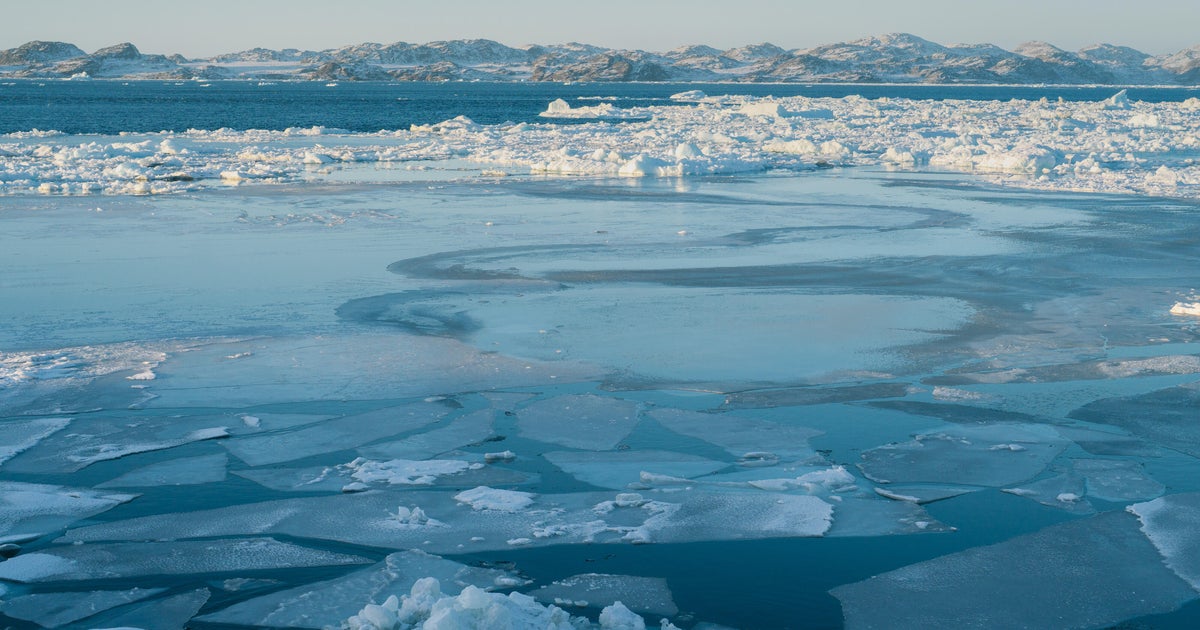
The Arctic sea ice has shrunk to essentially match its lowest recorded level during winter—the season when ice is supposed to grow and replenish itself. This alarming development comes at a time when our planet is experiencing unprecedented temperature extremes across multiple continents. The significance of Arctic sea ice cannot be overstated; it functions as Earth’s natural air conditioning system, reflecting sunlight back into space and preventing our oceans from absorbing excessive heat. When this reflective white surface disappears, the darker ocean water absorbs more solar energy, creating a dangerous warming cycle. Beyond its climate function, the melting ice is opening new shipping routes through previously frozen waters, fundamentally changing global trade patterns and triggering geopolitical tensions. Suddenly, places like Greenland that were once considered remote and strategically unimportant are becoming hotly contested territories. NASA has confirmed that this trend represents a continuation of the downward pattern scientists have been tracking for decades, signaling that climate change is accelerating rather than stabilizing.
Unprecedented Heat Wave Sweeps the Globe
The announcement about Arctic sea ice came on the same day that March temperature records were obliterated across vast stretches of the planet. The scope of this heat event is staggering: sixteen U.S. states broke their March temperature records within just one week. The extreme temperatures were so severe that twenty-seven locations experienced weather hot enough to tie or surpass their hottest April day ever recorded—and this was still in March. Cities like St. Louis saw temperatures more typical of late spring than early spring. Climatologist Maximiliano Herrera, who dedicates his career to tracking temperature extremes worldwide, didn’t mince words when describing the situation. He called this March heat wave “by far the most extreme heat event in world climatic history” and warned that conditions would deteriorate further in the coming days. Mexico has been particularly hard hit, with thousands of temperature records shattered, some reaching levels hotter than the country’s typical May peaks. However, Asia faced even more extreme conditions, with tens of thousands of monthly records broken by margins of 30 to 35 degrees Fahrenheit above normal—an almost incomprehensible deviation from historical patterns. These aren’t minor upticks; these are temperature spikes that fundamentally challenge our understanding of regional climate norms.
The Arctic’s Record-Breaking Ice Loss
Every year follows a predictable pattern: Arctic sea ice expands during the cold winter months and contracts during the warmer summer. It’s a natural breathing rhythm of our planet. But this year, something went wrong with that rhythm. The winter growth was so minimal that when the ice reached its maximum extent before beginning its seasonal melt, it measured just 5.52 million square miles. To put that in perspective, this year’s ice coverage was approximately 525,000 square miles smaller than the average winter peak measured between 1981 and 2010—an area roughly twice the size of Texas simply gone. The National Snow and Ice Data Center, which carefully monitors these measurements, determined that this year’s maximum essentially tied with last year’s record low, making these two years statistically indistinguishable in their severity. Walt Meier, a senior research scientist at NSIDC, warned that “this record low maximum gives a head start to the spring and summer melt season.” In other words, starting from such a diminished baseline means that the summer melting will have less ice to work with, potentially leading to even more dramatic reductions when the heat peaks. Samantha Burgess from the European Centre for Medium-Range Weather Forecasts echoed this concern, noting that the low starting point could trigger “potentially faster and more extensive summer melt” than we’ve seen in previous years.
A Steady Decline with No Regime Shift
Walt Meier emphasized that what we’re witnessing isn’t a sudden catastrophic shift but rather a steady, relentless decline driven by rising temperatures. “As temperatures have warmed and are continuing to warm, especially in the polar region, there is less opportunity to grow ice and it’s gonna tend to, on average, be less,” he explained. The Arctic is warming faster than any other region on Earth—a phenomenon scientists call Arctic amplification—which means each winter season has less cold available to freeze seawater. The implications extend far beyond abstract climate data; they affect real creatures trying to survive in these changing conditions. Polar bears, emperor penguins, and seals all depend on sea ice for their survival. Recent satellite imagery has captured heartbreaking scenes of emperor penguins crowded into increasingly smaller areas as the ice beneath them literally disappears during their molting season—a critical period when they shed feathers and lack waterproofing, making them unable to enter the water safely. Scientists studying these penguin populations have concluded that only meaningful climate cooling can give the species a realistic chance at long-term survival. Without intervention, we’re watching the slow-motion extinction of iconic Arctic and Antarctic species that have thrived in polar environments for millennia.
Summer Melt: The Critical Season
While winter ice extent captures headlines, scientists emphasize that the summer melt season is actually the most critical period for understanding long-term climate impacts. The September measurement, known as the Arctic sea ice minimum, represents the low point of the annual cycle and provides crucial data about warming trends. Meier explained that summer is “really the critical time” because of the sun’s intensity during those months. When white, reflective ice disappears and exposes dark ocean water, the physics of heat absorption change dramatically. The ocean soaks up solar energy that would otherwise bounce back into space, warming the Arctic waters and bringing temperatures closer to those found at lower latitudes. This warming affects atmospheric pressure systems and, according to a leading but still debated scientific theory, alters the behavior of the jet stream—the river of fast-moving air that guides weather systems from west to east across the Northern Hemisphere. When the jet stream’s movement and shape change, it can contribute to extreme weather events, including prolonged heat waves, severe storms, and unusual cold snaps in places that would normally be temperate. It’s important to note that melting sea ice doesn’t directly contribute to sea level rise, since the ice is already floating in the ocean. However, its disappearance triggers other warming processes that do affect sea levels, including the melting of land-based ice sheets in Greenland and Antarctica.
Antarctica’s Contradictions and Future Outlook
Adding to the complexity of global climate patterns, Antarctica recently set a record for the coldest March day ever recorded anywhere on Earth, with temperatures plummeting to minus 105.5 degrees Fahrenheit. This extreme cold highlights an important reality: climate change doesn’t mean everywhere gets uniformly warmer; it means weather becomes more extreme and unpredictable in all directions. Antarctic sea ice is influenced heavily by local weather systems and ocean currents, making it somewhat different from Arctic patterns. In February, Antarctica reached its annual low point for sea ice extent, and while it measured smaller than the 30-year average, it wasn’t close to the record lows experienced in the previous three years. Meier noted that the winter sea ice growth season is particularly variable and susceptible to short-term weather changes, which means a record-low winter maximum doesn’t automatically guarantee a record-low summer minimum. Nevertheless, he confirmed that “the winter maximum is certainly interesting” and represents “a climate change global warming signal” that we cannot ignore. As we look toward the future, the scientific community continues monitoring these polar regions with increasing urgency, knowing that what happens at the ends of the Earth doesn’t stay there—it affects weather patterns, ocean currents, and climate stability for the entire planet. The refrigerator that has kept our planet habitable is breaking down, and the consequences will touch every corner of our world.