



How Israel Gathers Intelligence to Target Iranian Leaders
The Strategy Behind Israel’s Targeted Strikes
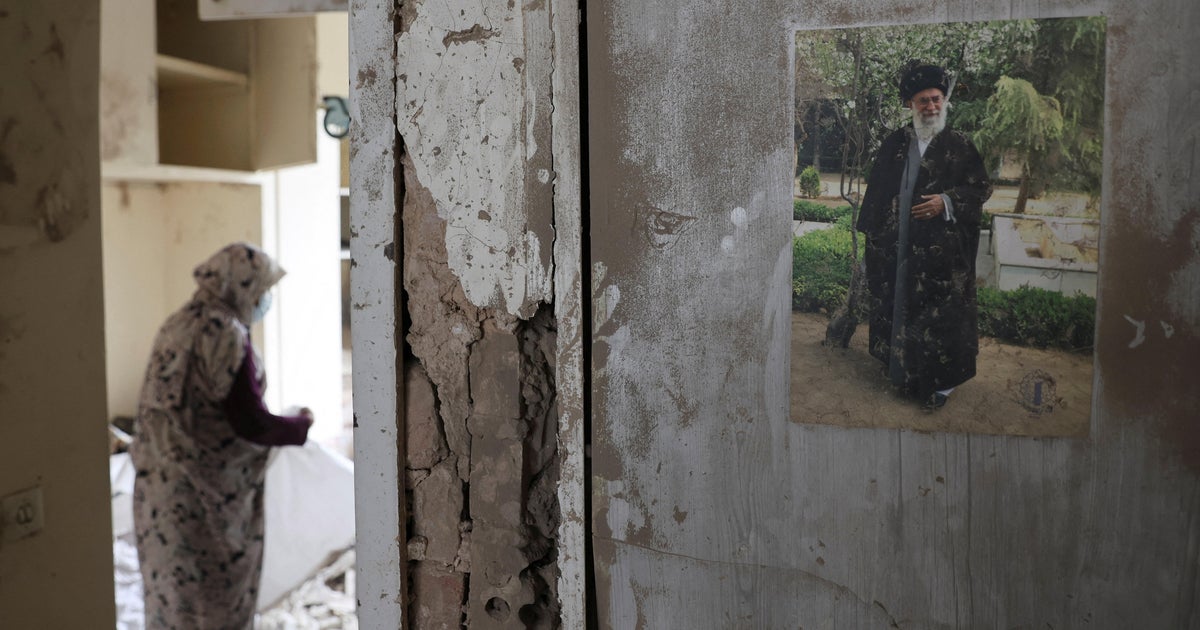
Since the United States and Israel launched coordinated military operations against Iran in late February, the Israeli military has systematically announced the elimination of numerous high-ranking Iranian officials. The campaign began with what Israel claimed was the killing of Supreme Leader Ayatollah Ali Khamenei on the war’s opening day and continued through to the reported death of the Islamic Revolutionary Guard Corps spokesman just last Friday. Israel has characterized these operations as precision strikes guided by sophisticated intelligence gathering. According to Glen Segell, a political analyst and academic based in Israel with extensive experience in operations and information security, the intelligence enabling these targeted assassinations comes from two primary sources. The first involves human intelligence—actual informants positioned on the ground within Iran who provide real-time information about the locations of targeted individuals. The second category encompasses electronic surveillance methods, including mobile phone tracking, landline monitoring, and sophisticated satellite or drone observation systems. Segell emphasizes that Iran’s internal situation creates a fertile environment for intelligence gathering, noting that “there are lots of people on the ground who are reporting on each other,” suggesting significant internal discord within Iranian society that Israeli intelligence agencies have successfully exploited.
A Complex Web of Intelligence Sources
Israel’s intelligence collection on Iran extends far beyond its own independent capabilities, involving a vast network of international partnerships and collaborative monitoring efforts. Segell explained to CBS News that Israel works closely with various allies to build a comprehensive intelligence picture of Iranian activities and leadership movements. These partnerships include Iran’s neighboring countries, the United States, and multiple NATO member states, all of which contribute different pieces to the intelligence puzzle. Furthermore, Israel employs a sophisticated approach of monitoring third-party communications—for instance, intercepting and analyzing exchanges between Russia and Iran—to gain additional insights into Iranian operations and leadership locations. Beyond these state-level intelligence partnerships, Israel also benefits from what Segell describes as “a multitude” of domestic resistance movements operating inside Iran itself. These internal opposition groups provide valuable ground-level information about the whereabouts of targeted individuals and military equipment. The existence of these internal information sources suggests deep fractures within Iranian society and raises questions about the regime’s ability to maintain operational security. The new Supreme Leader, Ayatollah Mojtaba Khamenei, may have acknowledged this vulnerability in a statement posted to social media on Friday, declaring that “security must be taken away from internal and external enemies” of the Islamic Republic—a comment that reveals the regime’s awareness of the intelligence penetration it faces.
Geographic Limitations and Regional Intelligence Partners
Despite Israel’s sophisticated intelligence network, significant geographic constraints limit its ability to conduct the type of direct intelligence gathering in Iran that it routinely performs in neighboring territories like Gaza. Segell pointed out that the considerable distances involved make it extremely challenging for a relatively small country like Israel to replicate in Iran the intensive, ground-level intelligence operations it conducts in Gaza, where proximity and the regular movement of individuals across borders facilitate information collection. This geographic reality forces Israel to rely more heavily on alternative intelligence sources, which Segell characterizes as “very, very good” and notes that these partners also view Iran as a major adversary worthy of sustained intelligence focus. Among these alternative sources, Saudi Arabia stands out as particularly significant. According to Segell, “Saudi Arabia is probably the largest gatherer of intelligence on what’s happening in Iran,” a role that intensified especially after Iran launched drone attacks against Saudi oil facilities several years ago. This attack fundamentally altered Saudi Arabia’s threat perception and motivated the kingdom to dramatically expand its intelligence collection efforts focused on Iranian military capabilities, leadership movements, and strategic intentions. The Saudi intelligence apparatus, with its regional knowledge, linguistic capabilities, and extensive networks throughout the Middle East, provides Israel with crucial information that would be difficult or impossible to obtain through Israeli sources alone.
The “Kill Chain”: Turning Intelligence Into Action
Regardless of how intelligence is initially gathered, the ultimate responsibility for converting this information into lethal action falls primarily on Israeli forces. Mark Cancian, a retired U.S. Marine Corps colonel and senior adviser with the Center for Strategic and International Studies (CSIS) Defense and Security Department, explained that Israel conducts most of the campaign against Iranian officials because of its superior ability to execute what military planners call the “kill chain”—the sequence of events from target identification to strike execution. Cancian emphasized that successful targeted killings require knowing a target’s location at a specific moment in time, not hours earlier. “You can’t know where they are and then strike them three hours later, because they’ll be gone,” he explained. The operational requirement is a very short kill chain, meaning minimal time between when sources report a target’s location and when forces can actually strike. The attacks themselves can take various forms—missile launches from standoff positions, aircraft strikes, or other methods—but the critical factor is the rapid connection between intelligence and action. Israel has demonstrated a consistent ability to close this kill chain quickly in Iran, utilizing both its human sources on the ground and its technical surveillance capabilities to track targets and execute strikes with minimal delay. Cancian attributes Israel’s operational dominance in this campaign to the fact that “their intelligence is just so much better. They can close this kill chain in a way that [the U.S.] can’t.”
Division of Responsibilities Between the U.S. and Israel
The current military campaign against Iran involves a clear geographic and functional division of labor between the United States and Israel, reflecting their different capabilities, priorities, and strategic objectives. According to Cancian, the U.S. and Israel have effectively “divided the battlefield” along geographic lines, with the United States focusing on what the Pentagon designates as the “southern front”—primarily the coastal areas and southeastern regions of Iran. This American focus centers particularly on targets related to Iran’s naval capabilities and its ability to threaten the strategically vital Straits of Hormuz, through which a significant portion of global oil supplies transit. Israel, by contrast, concentrates its operations on the northern and western portions of Iran, areas that include Tehran and other major population centers where much of Iran’s military and political leadership is concentrated. Retired four-star U.S. Army General Joseph Votel provided additional context, explaining that “right now the United States is heavily focused on targets down around the coast, and certainly related to the Straits of Hormuz. That’s probably less of a concern for the Israelis.” Instead, as Votel noted, Israel continues to prioritize “leadership” targets, pursuing a strategy of “disrupting leadership” by systematically eliminating senior Iranian military and intelligence officials. This division of responsibility allows each country to leverage its particular strengths—American long-range strike capabilities for coastal and maritime targets, and Israeli intelligence penetration and regional proximity for leadership decapitation operations in Iran’s interior.
Debating the Effectiveness and Risks of Leadership Targeting
The Israeli strategy of systematically eliminating Iranian leadership rests on the theory that successors will prove more amenable to negotiation or less capable than those they replace. Segell articulated this reasoning, explaining that Israel hopes “the person who replaces him is more sensible,” leading replacement leaders to choose diplomacy over continued conflict. He pointed to historical examples from al-Qaeda and ISIS, where leadership decapitation led to more subdued operations, arguing that while the ideological movement persists, replacement leaders typically prove “less radical” than their predecessors. Segell suggested this logic also applied to the killing of Hezbollah leader Hassan Nasrallah and the Iranian Supreme Leader, noting that the Islamic Revolutionary Guard Corps continues wielding significant power in Tehran, which explains “these large assassinations against the military leadership, the intelligence officers, the various ones involved in the ballistic missile launchers and so forth.” He expressed hope that Iran might reach “that stage of understanding” where “you might actually have a change in the regime’s view of the world without the change in their regime, which becomes entirely acceptable to everyone.” However, other analysts have raised serious concerns about unintended consequences. Northeastern University political scientist Max Abrahms, citing historical examples from Afghanistan, Pakistan, Israel, and Palestinian territories, warned that “leadership decapitation is risky,” potentially resulting in more extreme tactics when restraining influences are removed. He noted that violence against civilians by authoritarian regimes often spikes following targeted killings. Additionally, analysts observe that no public evidence yet suggests cracks within the remaining Iranian regime or signs of major public uprising, though they note that past conflicts like NATO’s 2011 Libya campaign demonstrate how relentless attacks can suddenly destabilize unpopular governments. Cancian summarized the Israeli calculation: they believe eliminating enough senior officials will leave successors without “the legitimacy and connections that the original leaders had,” potentially causing them to seek favorable settlements or even fracturing the regime into competing factions. While acknowledging “that has not happened” yet, he believes this remains Israel’s fundamental strategy, even as concerns persist about whether toppling a regime that’s controlled Iran for nearly half a century without an obvious replacement administration could simply create dangerous chaos.