


Australia Blocks Citizen’s Return from Syrian Detention Camp in Controversial Islamic State Case
Government Takes Unprecedented Action Against Suspected IS Affiliate
In a significant development highlighting the ongoing challenges of repatriating families connected to the Islamic State, Australia’s government has taken the extraordinary step of banning one of its own citizens from returning home from Syria. The woman, whose identity has not been disclosed, was among a group of 34 Australians—comprising 10 women and 23 children—who attempted to leave the Roj detention camp in northeastern Syria on Monday. Home Affairs Minister Tony Burke announced Wednesday that the government had issued the woman with a temporary exclusion order, marking what appears to be the first public use of such powers since the legislation was introduced in 2019. The entire group’s departure was ultimately blocked by Syrian authorities due to what were described as procedural issues, forcing them to return to the detention camp near the Iraqi border where they had been held since the collapse of the Islamic State’s territorial control in 2019.
According to Minister Burke, the Australian government acted swiftly upon learning that the group planned to depart Syria. The woman in question, identified only as an immigrant who left Australia for Syria between 2013 and 2015, received her exclusion order on Monday, with the legal documentation provided to her attorneys by Wednesday. Burke refused to elaborate on whether the woman had children among the group, though he made clear his position that parents bear full responsibility for the dire circumstances facing their offspring stranded in Syrian camps. “These are horrific situations that have been brought on those children by actions of their parents. They are terrible situations. But they have been brought on entirely by horrific decisions that their parents made,” Burke told the Australian Broadcasting Corporation, emphasizing the government’s view that those who chose to align with the Islamic State created their own predicament and that of their families.
Legal Powers and Security Concerns Drive Decision
The temporary exclusion order represents a powerful legal tool that allows the Home Affairs Minister to prevent high-risk Australian citizens from returning to the country for up to two years. This legislation was specifically introduced in 2019 as the Islamic State lost its territorial holdings, with lawmakers concerned about the security risks posed by defeated IS fighters attempting to return to Australia. Despite the law being on the books for several years, there are no previous public reports of such an order being issued, making this case a landmark moment in Australia’s approach to managing citizens with suspected terrorist affiliations. Importantly, Burke clarified that security agencies had not recommended issuing exclusion orders against any of the other 33 Australians in the group, and the law specifically prohibits such orders from being applied to children younger than 14 years of age, recognizing that minors cannot be held responsible for their parents’ decisions to join extremist organizations.
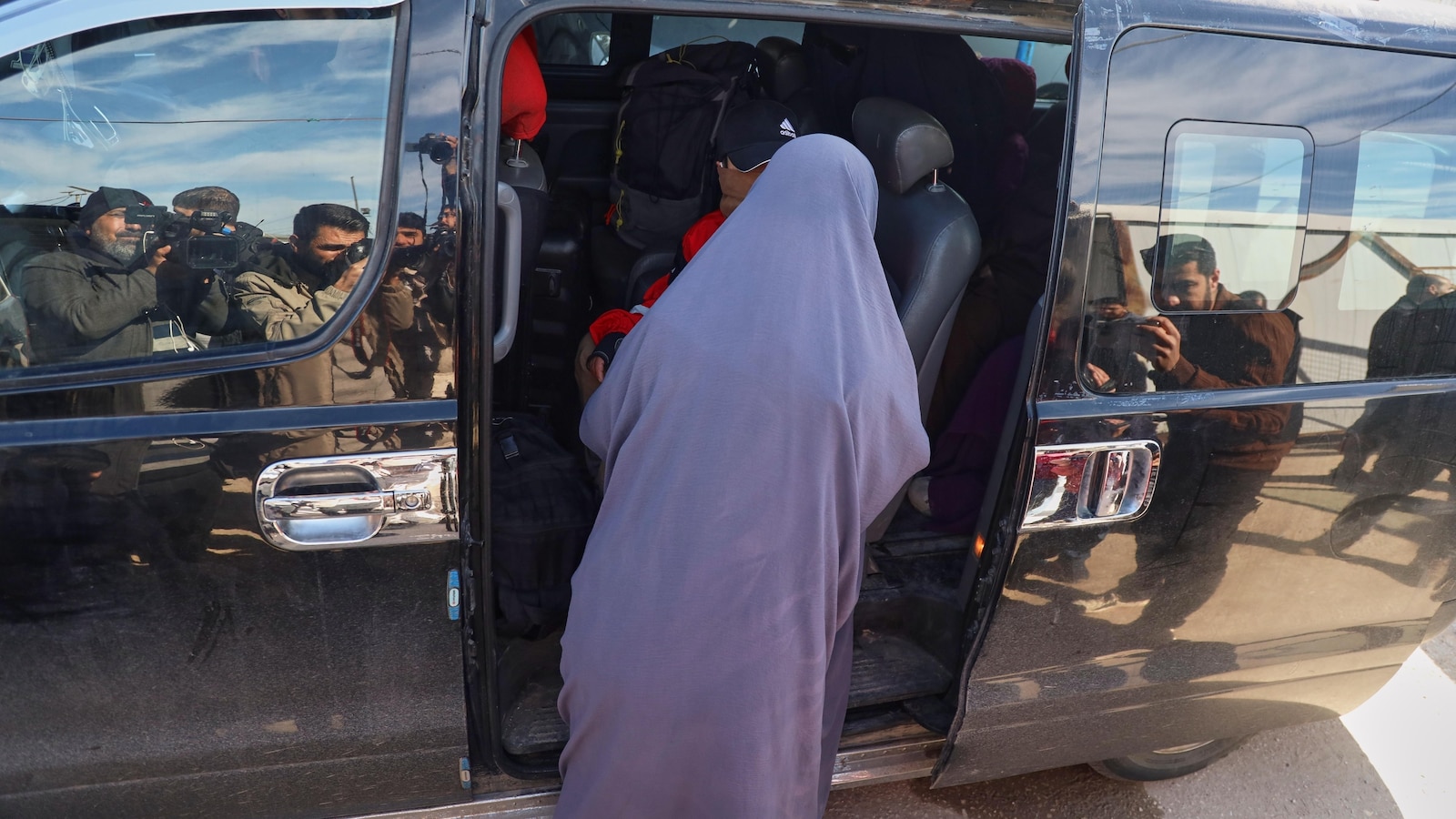
The situation at the Roj camp itself reveals the complexity and sensitivity surrounding these cases. When approached by The Associated Press, the Australian women who had expected to travel home refused to comment, with one woman, Zeinab Ahmad, explaining that their attorney had advised against speaking with journalists. Chavrê Rojava, a security official at the camp, provided additional context, noting that family members of the detainees—who she identified as Australians of Lebanese origin—had actually traveled to Syria to facilitate their return and had brought temporary passports issued for the would-be returnees. However, Rojava emphasized that camp authorities have had no direct contact with the Australian government regarding the matter, as they are not part of the official process and have left it to families to resolve. After the group departed the camp for Damascus, they were contacted by a Syrian government official and warned to turn back, leaving the families “very disappointed” upon their forced return to detention.
Regional Security Dynamics and Camp Conditions
The broader context of Syrian detention camps adds another layer of urgency and complexity to this situation. Rojava noted that camp authorities have “recently requested that all countries and families come and take back their citizens,” reflecting growing concerns about the sustainability and security of these facilities. Syrian authorities are particularly anxious to avoid a “repeat of what happened in al-Hol camp,” a much larger detention facility in northeastern Syria that once held tens of thousands of people, mostly women and children, with alleged ties to the Islamic State. Last month, during intense fighting between Syrian government forces and the Kurdish-led Syrian Democratic Forces that had controlled al-Hol, guards abandoned their posts and many residents fled. This mass exodus raised serious international security concerns that Islamic State members would regroup and stage new attacks throughout Syria, demonstrating the real risks associated with the collapse of detention infrastructure. The Syrian government has since established control of al-Hol and begun relocating its remaining residents to another camp in Aleppo province, while the Kurdish-led force maintains control of Roj camp under a newly established ceasefire.
These camps have housed former Islamic State fighters from multiple countries, along with their wives and children, since the militant group lost control of its self-declared caliphate in 2019. Though territorially defeated, the Islamic State continues to operate through sleeper cells that conduct deadly attacks in both Syria and Iraq, making the question of what to do with detained affiliates and their families a pressing international security concern. For Australia specifically, this is not the first encounter with repatriation from Syrian camps. Australian governments have previously repatriated Australian women and children from Syrian detention facilities on two separate occasions, and other Australians have managed to return without government assistance. However, each case has sparked intense domestic debate about balancing security concerns with humanitarian obligations and the rights of citizens, particularly children who had no say in their parents’ decisions to join a terrorist organization.
Government’s Firm Stance on Ideology and Responsibility
Prime Minister Anthony Albanese made his government’s position unequivocally clear in comments to reporters, reiterating a stance he had announced the previous day that his government would not provide assistance to repatriate this particular group. “These are people who chose to go overseas to align themselves with an ideology which is the caliphate, which is a brutal, reactionary ideology and that seeks to undermine and destroy our way of life,” Albanese stated, referring to the militants’ capture of vast territories more than a decade ago that stretched across Syria and Iraq. During that period, the Islamic State established what it called a caliphate, attracting jihadists from around the world who traveled to Syria to join the group. Over the years that followed, these foreign fighters established families and raised children in IS-controlled territory, creating the current generation of minors now detained in camps who have known no other life.
Albanese acknowledged the difficult position of children caught in these circumstances while firmly placing blame on their parents. “We are doing nothing to repatriate or to assist these people. I think it’s unfortunate that children are caught up in this, that’s not their decision, but it’s the decision of their parents or their mother,” the Prime Minister added. This position reflects the government’s attempt to navigate the ethical minefield of how to treat citizens—particularly children—associated with one of the most brutal terrorist organizations in recent history. The approach prioritizes national security concerns and sends a clear message that choosing to join the Islamic State carries severe and lasting consequences, even as it raises questions about the fate of innocent children and whether they should be punished for their parents’ actions. As this situation continues to unfold, it represents a test case for how democratic nations balance their security interests, their humanitarian obligations, and the fundamental rights of citizenship in an era when terrorism and extremism transcend national borders.