


Australia Refuses to Bring Home Citizens Stranded in Syrian Detention Camps
Government Takes Hard Line on Islamic State-Linked Families
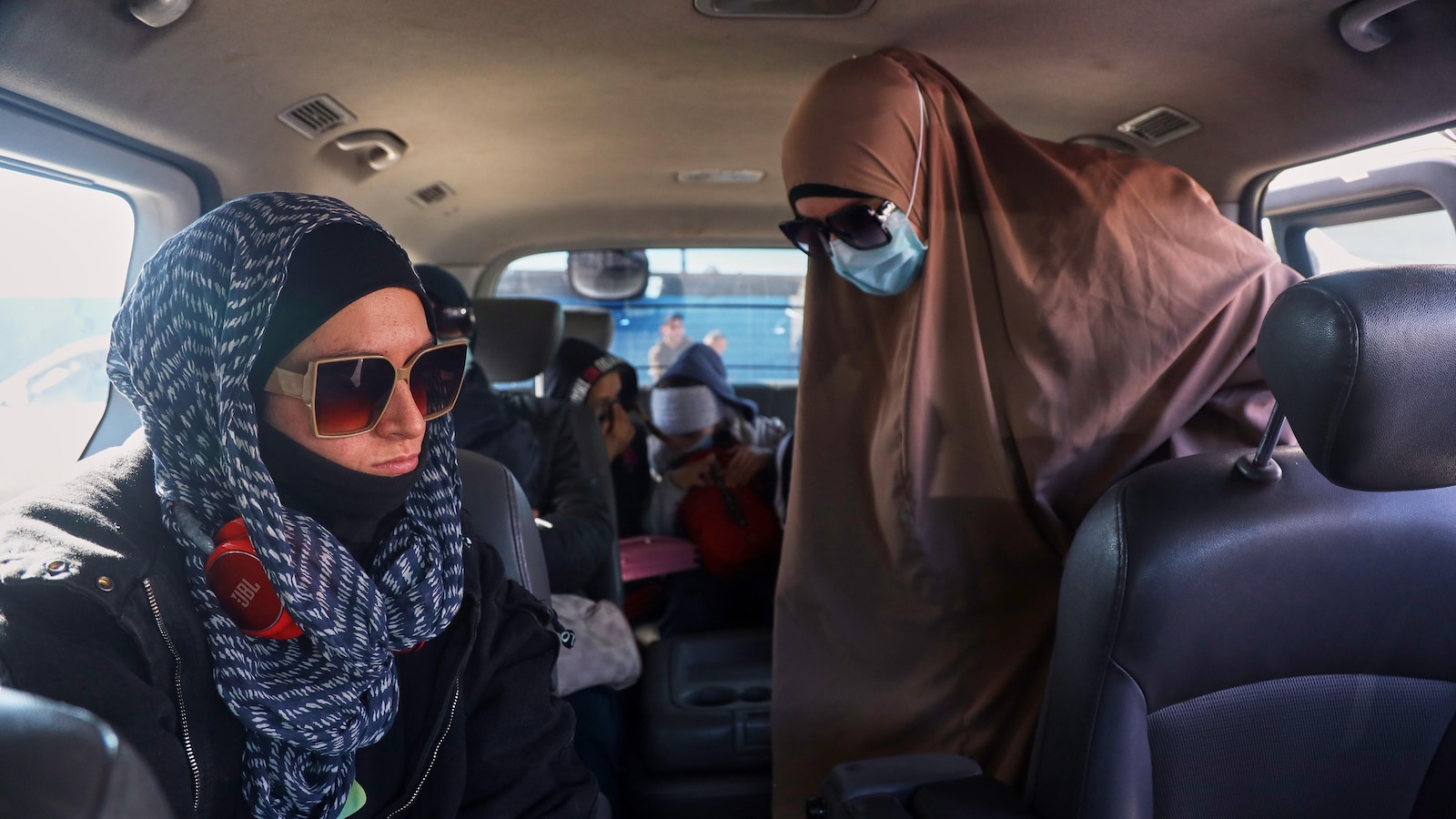
In a controversial decision that has reignited debates about citizenship, terrorism, and child welfare, Australian Prime Minister Anthony Albanese announced this week that his government will not assist in bringing home 34 women and children currently detained in Syria due to alleged connections with the Islamic State militant group. The announcement came after what appeared to be a failed repatriation attempt, when Syrian authorities turned the group back to the Roj detention camp on Monday, citing procedural issues that prevented their departure. The group, consisting of members from 11 different families, had reportedly been prepared to board flights to Australia before the last-minute complications arose.
This latest development marks a significant hardening of Australia’s position on citizens who traveled to the Middle East during the height of Islamic State’s territorial control. Prime Minister Albanese made his stance crystal clear in remarks to the Australian Broadcasting Corporation, refusing even to confirm whether the detained individuals held Australian passports. “We’re providing absolutely no support and we are not repatriating people,” Albanese stated firmly. His words reflected not just a policy position but a moral judgment, adding, “We have no sympathy, frankly, for people who traveled overseas in order to participate in what was an attempt to establish a caliphate to undermine, destroy, our way of life.” Drawing on a folksy phrase his mother used to say, Albanese concluded: “You make your bed, you lie in it.”
The Historical Context of Australia’s Islamic State Problem
To understand the current situation, it’s essential to look back at the rise of the Islamic State more than a decade ago. The militant organization captured vast territories stretching across Syria and Iraq—roughly a third of both countries—where they proclaimed a so-called caliphate with the Syrian city of Raqqa serving as their capital. During this period, thousands of foreign fighters, including Australians, traveled to the region to join the extremist cause. These jihadists established families and had children in the territory controlled by IS, creating a generation of young people who have known nothing but life in a conflict zone or, following IS’s territorial defeat, detention camps. The international coalition led by the United States eventually defeated Islamic State forces in Iraq in 2017 and in Syria by 2019, but the aftermath left thousands of extremists and tens of thousands of women and children linked to them confined in detention facilities.
Since the fall of Islamic State’s territorial control in 2019, Australia has taken a cautious and limited approach to repatriating its citizens from these Syrian camps. Only two groups have returned with government assistance. The most recent repatriation occurred in October 2022, when four mothers—described as former partners of Islamic State supporters—and 13 children arrived in Sydney. Australian officials had determined this group represented the most vulnerable among approximately 60 Australian women and children held at Roj camp at that time. Before that, in 2019, the conservative government that preceded Albanese’s center-left Labor Party administration brought home eight children of two deceased Australian IS fighters. Additionally, some Australians have managed to return from the region without government help, though the exact numbers remain unclear.
Legal and Political Dimensions of the Controversy
The debate over these stranded Australians exists at the intersection of national security concerns, legal obligations, and humanitarian considerations. Under Australian law enacted during the height of Islamic State’s power, traveling to Raqqa and other areas of the caliphate without a legitimate reason between 2014 and 2017 constitutes a criminal offense punishable by up to ten years in prison. This legal framework creates a paradoxical situation: the government refuses to help these citizens return, but if they somehow make it back to Australia on their own, they face potential prosecution. Albanese made this clear, stating, “If anyone does manage to find their way back to Australia, then they’ll face the full force of the law, if any laws have been broken.”
Opposition leader Angus Taylor has pushed the government to go even further, demanding explanations about whether temporary exclusion orders—which allow the government to prevent high-risk citizens from returning to Australia for up to two years—might be applied to this group. Taylor framed the issue in stark terms: “These are individuals who chose to associate with a terrorist caliphate. This is not aligned with the values we as Australians believe in—democracy, the rule of law, our basic freedoms including freedom of religion. The door must be shut to people who do not believe in those things.” When pressed on whether such orders would be used, Albanese declined to give a direct answer, saying only that the government would act “appropriately upon advice” from security agencies.
The legal aspects of repatriation were tested in Australian courts when the international charity Save the Children challenged the government’s refusal to bring citizens home from Syrian camps. The organization, which focuses on child welfare, argued that Australia had a responsibility to repatriate its citizens, particularly the children in these camps who had no choice in their circumstances. However, in 2024, the federal court ruled in the government’s favor, finding no legal obligation to conduct repatriations. Despite this legal defeat, Save the Children Australia’s chief executive Mat Tinkler maintained that even without a legal requirement, the government still bears a moral obligation to help these families, especially the innocent children caught in circumstances beyond their control.
The Human Cost and Ethical Dilemmas
Perhaps the most troubling aspect of this situation involves the children—some of whom were born in the caliphate or brought there at very young ages and have lived their entire lives either under Islamic State control or in detention camps. These young people had no say in their parents’ decisions to travel to Syria or Iraq, yet they now face an uncertain future in facilities that human rights organizations have described as inadequate and potentially dangerous. Albanese acknowledged this uncomfortable reality, admitting, “It’s unfortunate that children are impacted by this as well, but we are not providing any support.” This statement captures the ethical dilemma facing not just Australia but many Western nations: balancing legitimate security concerns against the welfare of children who are citizens by birth but have been shaped by circumstances completely outside their control.
According to Hakmiyeh Ibrahim, the manager of Roj camp in northeastern Syria, relatives of the detained Australians reported that the Australian government had actually prepared passports and travel documents for the camp residents, suggesting that families should collect these papers. This account seems to contradict the government’s firm public statements about providing no assistance, raising questions about what exactly transpired before Syrian authorities turned the group back. The confusion surrounding the failed departure highlights the complex diplomatic, legal, and logistical challenges involved in repatriating citizens from a war-torn region where Australia has no official presence and must rely on other parties to facilitate any movement of people.
International Perspectives and Future Implications
Australia’s hardline approach stands in contrast to the policies of several other Western nations facing similar situations. Countries including the United States, Germany, Britain, France, Italy, the Netherlands, Belgium, and Canada have all repatriated at least some citizens from Syrian camps. Iraq, which accounted for the largest number of detainees after Syrians, has repatriated most of its citizens. Last year, families returned from Roj camp included German, British, and French nationals, showing that other governments have decided the security risks can be managed while still fulfilling what they see as obligations to their citizens, particularly children. The United States military has also transferred thousands of accused IS militants from detention centers in northeastern Syria to Iraq to face trial there, showing different approaches to dealing with the various categories of people connected to Islamic State.
The urgency of the debate in Australia was heightened by recent violence. The issue of Islamic State supporters resurfaced dramatically after attackers allegedly inspired by IS killed 15 people at a Jewish festival at Bondi Beach on December 14. This tragedy reminded Australians that while the Islamic State’s territorial caliphate has been destroyed, the ideology continues to inspire violence, and sleeper cells still carry out deadly attacks in Iraq and Syria. For policymakers, this reinforces the perceived risks of bringing home anyone associated with the extremist group. As Australia grapples with these competing concerns—security, legal responsibilities, humanitarian obligations, and the rights of children—the 34 women and children remain in Roj camp, their future uncertain, caught between a government unwilling to help them return and a detention facility offering little hope for normal life. Their situation represents one of the ongoing consequences of the Islamic State’s rise and fall, a problem that won’t disappear simply because the caliphate has been defeated, and one that will likely continue challenging Australian policymakers and courts for years to come.