


Justice Delayed: Bill Cosby Ordered to Pay $59.25 Million in Historic Sexual Assault Verdict
A Landmark Civil Case Comes to a Close
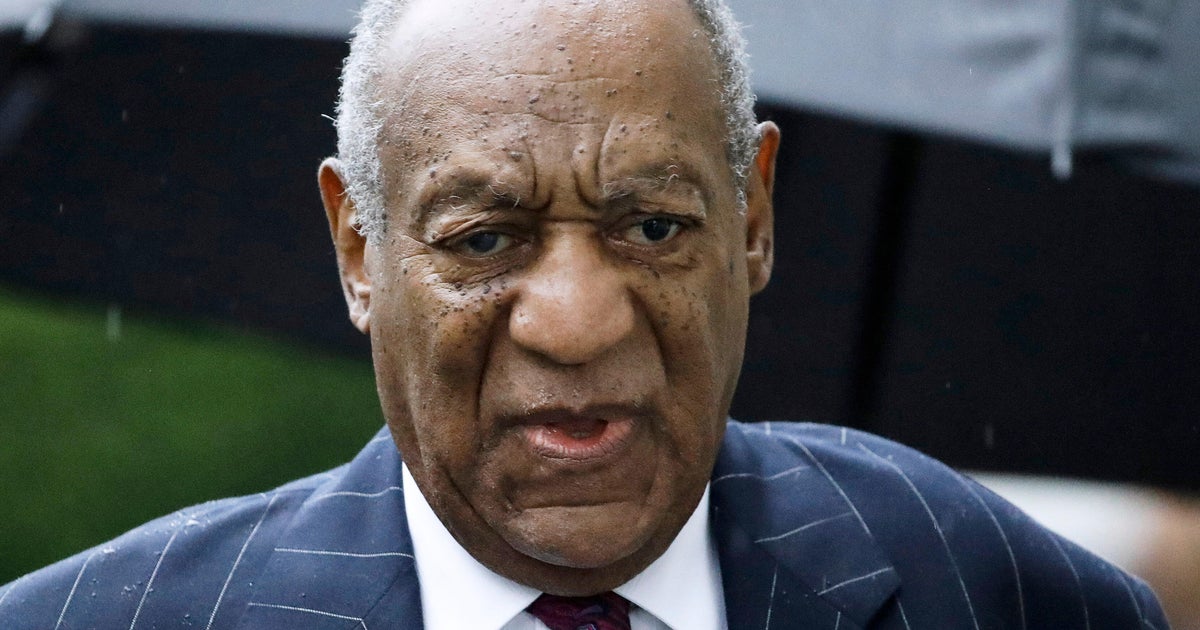
After decades of silence and a nearly two-week trial that captivated national attention, a civil jury in Santa Monica, California, delivered a powerful message on Monday: Bill Cosby must be held accountable for his actions. The jury found the 88-year-old entertainer liable for drugging and sexually assaulting Donna Motsinger in 1972, awarding her a staggering $59.25 million in total damages. This verdict represents one of the most significant financial penalties ever imposed on Cosby in relation to sexual assault allegations, and it carries profound implications beyond the courtroom walls. For Motsinger, now in her 80s, the decision marks the end of a 50-year journey seeking recognition and justice for a trauma she says has never left her. The jury’s decision came after approximately two days of deliberations, during which they carefully weighed evidence and testimony about events that occurred more than half a century ago. The award was divided into two parts: $19.25 million in compensatory damages and an additional $40 million in punitive damages, sending an unmistakable signal that the jury believed Cosby’s actions warranted both compensation for the victim and punishment to deter similar conduct.
The Story of Donna Motsinger’s Traumatic Encounter
Donna Motsinger’s allegations paint a disturbing picture of manipulation and abuse by someone she had no reason to distrust. According to her lawsuit, filed in 2023, Motsinger was working as a server at a restaurant in Sausalito, a picturesque town near San Francisco, when she crossed paths with Cosby. Both were in their 30s at the time—a period when Cosby was building his reputation as a clean-cut comedian and entertainer. Cosby reportedly invited Motsinger to attend one of his stand-up comedy shows at a theater in nearby San Carlos, an invitation that seemed like an exciting opportunity at the time. What should have been an evening of entertainment turned into a nightmare, according to Motsinger’s account. She testified that Cosby offered her wine along with two pills, which he allegedly told her were aspirin. Trusting his representation, she took them. Soon after, Motsinger found herself drifting in and out of consciousness, unable to maintain control over her own body or mind. Her last coherent memories of that evening include being placed into a limousine by two men while in this compromised state. When she finally regained full consciousness, she was in her own home, stripped of nearly all her clothing except her underwear, with no clear memory of how she got there or what had happened to her. The lawsuit stated plainly what Motsinger believed to be true: “She knew she had been drugged and raped by Bill Cosby.” For more than five decades, Motsinger carried this burden largely in silence, wrestling with the psychological aftermath of an assault she couldn’t fully remember but whose effects she felt every day.
The Legal Battle and Cosby’s Defense
Cosby’s legal team, led by attorney Jennifer Bonjean, mounted a vigorous defense against Motsinger’s claims, arguing that the case rested on speculation rather than concrete evidence. In court filings, Cosby’s attorneys pointed out that Motsinger “freely admits that she has no idea what happened,” suggesting that the gaps in her memory made it impossible to prove Cosby’s culpability beyond the required legal standard. This defense strategy emphasized the challenges inherent in any case involving allegations from decades past, where physical evidence has long since disappeared and memories have faded or become fragmented. Cosby himself did not take the stand during the trial, a strategic decision likely made to avoid the risk of damaging cross-examination. However, the trial did feature compelling testimony from Andrea Constand, the Temple University sports administrator whose allegations against Cosby led to his criminal conviction in Pennsylvania in 2018. Constand’s presence in the courtroom served as a powerful reminder of the pattern of allegations that have followed Cosby for years. Following the verdict, Bonjean expressed disappointment in an email statement and confirmed that Cosby’s team fully intends to appeal the decision. She emphasized their belief that the jury’s findings were not supported by sufficient evidence, setting the stage for what could be years of additional legal wrangling. The compensatory damages—$17.5 million for past damages and $1.75 million for future damages—were calculated to address the profound psychological impact on Motsinger, including mental suffering, loss of enjoyment of life, grief, anxiety, humiliation, and emotional distress. The subsequent punitive damages of $40 million were specifically designed to punish Cosby and deter similar conduct, reflecting the jury’s belief that his actions warranted substantial financial penalty.
A Pattern of Allegations Spanning Decades
Motsinger’s case does not exist in isolation. Her lawsuit echoes allegations made by at least 60 women against Cosby over the years, all detailing remarkably similar patterns of behavior involving drugging and sexual assault. These women have described scenarios strikingly parallel to Motsinger’s account: invitations from a powerful celebrity, offers of drinks or pills, loss of consciousness, and awakening to the realization that something terrible had happened. Cosby has consistently denied all such allegations, maintaining his innocence even as the number of accusers has grown and civil judgments have been rendered against him. The entertainer who was once affectionately known as “America’s Dad” for his wholesome portrayal of Dr. Cliff Huxtable on “The Cosby Show” has seen his reputation completely destroyed by these allegations. Motsinger first came forward with her story, though anonymously, in a 2005 lawsuit filed by Andrea Constand. Her decision to remain anonymous at that time reflected the very real fears many sexual assault survivors face: the fear of not being believed, of being blamed, of having their lives scrutinized and their characters attacked. It would take nearly two more decades before Motsinger felt ready—or the legal landscape became favorable enough—for her to pursue her own case publicly. In 2022, another jury in Santa Monica awarded $500,000 to a woman who said Cosby sexually assaulted her at the Playboy Mansion when she was just a teenager in 1975, establishing a precedent for civil accountability even when criminal prosecution was no longer possible. These cases have collectively painted a picture of systematic predatory behavior spanning decades, conducted by someone whose fame and influence may have initially shielded him from consequences.
The Complex History of Cosby’s Criminal Case
The story of Bill Cosby’s legal troubles took a dramatic turn in 2018 when he became the first celebrity tried and convicted in the #MeToo era. A Pennsylvania jury found him guilty of sexually assaulting Andrea Constand at his home in 2004, and he was sentenced to three to ten years in prison. For many of his accusers and supporters of the #MeToo movement, the conviction represented a watershed moment—proof that even the rich and famous could be held accountable for sexual violence. Cosby served nearly three years of his sentence before the Pennsylvania Supreme Court intervened in 2021 with a stunning reversal. The appeals court found that Cosby had given incriminating testimony in a civil deposition only after a previous prosecutor had promised him immunity from criminal prosecution. The court determined that charging Cosby after he had relied on this promise of immunity violated his constitutional rights, and they permanently threw out his conviction. The decision was controversial and left many feeling that justice had been denied, though it was based on important principles of due process and prosecutorial ethics rather than Cosby’s guilt or innocence. This criminal case reversal made civil cases like Motsinger’s all the more important. While Cosby would not face prison time for these allegations, civil courts offered another avenue for accountability. Civil cases operate under a different standard of proof—preponderance of evidence rather than beyond a reasonable doubt—and they can be brought even when criminal statutes of limitation have expired. For many survivors of sexual assault, particularly those whose attacks occurred decades ago, civil litigation has become the primary path to some form of justice and public validation of their experiences.
A Victory for Survivors and the Broader Implications
In a statement released after the verdict, Donna Motsinger spoke not just about her personal vindication but about the broader significance of the jury’s decision. “This verdict is not just about me—it’s about finally being heard and holding Mr. Cosby accountable,” she said. “I have carried the weight of what happened to me for more than 50 years. It never goes away. Today, a jury saw the truth and held him accountable. That means everything. I hope this gives strength to other survivors who are still waiting for their moment to be heard.” These words capture something essential about the experience of sexual assault survivors, particularly those who were victimized long before the #MeToo movement created more space for their stories to be heard and believed. For decades, Motsinger lived with the knowledge of what had been done to her, but without validation from the legal system or society at large. The psychological burden of carrying such trauma in silence is immense, often manifesting in depression, anxiety, difficulties with trust and relationships, and a persistent sense that justice will never come. The $59.25 million verdict against Cosby represents the largest financial penalty he has been ordered to pay in relation to sexual assault allegations, though whether Motsinger will actually collect the full amount remains uncertain. Cosby has settled some similar lawsuits and has been ordered to pay in others, but his current financial situation and the likelihood of successful appeals may affect what Motsinger ultimately receives. Nevertheless, the symbolic importance of the verdict cannot be overstated. It tells survivors that their stories matter, that the passage of time does not erase the harm that was done, and that powerful people cannot escape accountability forever. As the legal process continues with Cosby’s promised appeal, this case stands as a testament to the courage of survivors who come forward despite the personal costs, and to the evolving understanding of sexual violence and justice in our society.