


The Great Northern Migration: How Earth’s Largest Forests Are Reshaping Our Planet
A Forest on the Move
Imagine a vast green carpet stretching across the top of our world, spanning continents from Alaska to Siberia. Now picture that carpet slowly creeping northward, driven by forces beyond its control. This isn’t science fiction—it’s what’s happening to our boreal forests right now. Thanks to decades of satellite surveillance, scientists have confirmed what they’ve long suspected: the world’s largest forest ecosystem is migrating toward the North Pole, transforming landscapes that have remained relatively unchanged for thousands of years. These forests, which circle the northern hemisphere like a verdant crown, are responding to climate change in real-time, and the implications ripple far beyond the trees themselves.
The boreal forest, also known as the taiga, represents Earth’s most extensive land-based ecosystem. Stretching across eight countries—including Canada, Russia, the United States, and several Scandinavian nations—these forests have earned a sobering distinction in recent years: they’re warming faster than any other forest type on our planet. Over the past century, annual temperatures in these northern woodlands have climbed approximately 1.4 degrees Celsius (2.52 degrees Fahrenheit). While that might sound modest, this temperature increase has triggered profound changes across millions of square miles. Scientists describe what’s unfolding as “unprecedented changes” in a system that plays a crucial role in regulating our global climate, storing more than a third of the world’s terrestrial carbon. When the lungs of our planet shift and transform, we all feel the effects eventually.
What the Satellites Revealed
The evidence for this massive ecological shift comes from an extraordinary technological achievement: the Landsat program, a joint effort between NASA and the U.S. Geological Survey that represents the longest continuous space-based observation of Earth’s land surface. Researchers painstakingly analyzed nearly 250,000 satellite images captured between 1985 and 2020—the highest-resolution, longest-term record of tree coverage ever assembled. What these images revealed was both fascinating and concerning. Over those thirty-five years, the boreal forests haven’t just shifted northward—they’ve actually expanded by about 12 percent. Trees are establishing themselves in areas that were previously too cold to support them, colonizing tundra landscapes and pushing the boundaries of where forests can exist.
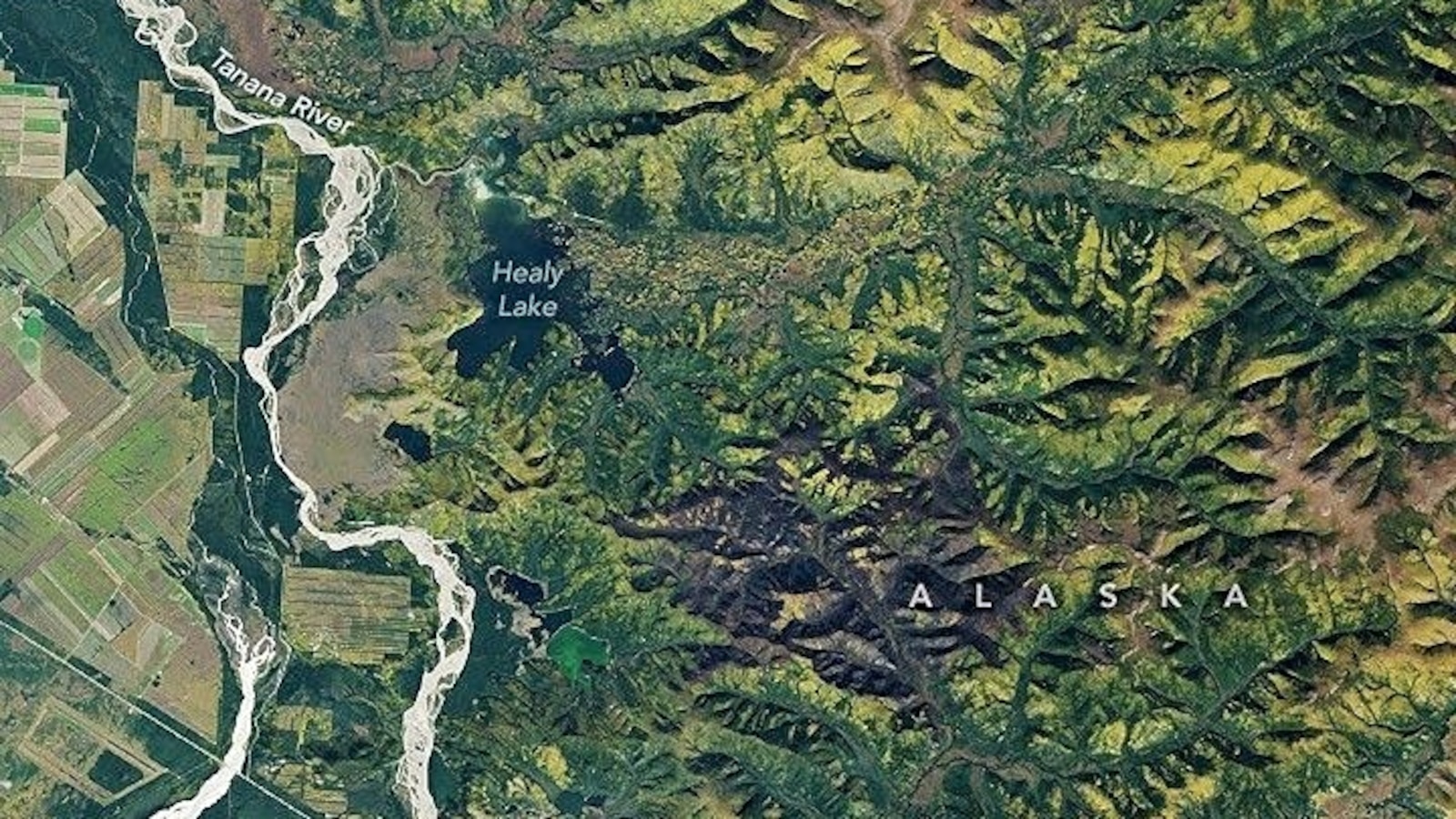
This expansion isn’t uniform across all regions, and the satellite data tells different stories depending on where you look. In North America, the most significant forest gains appeared at the northernmost edges of the boreal zone, where warming temperatures have made previously inhospitable areas suitable for tree growth. However, these gains came alongside significant losses in other areas due to natural disturbances. Western Canada and interior Alaska have experienced devastating wildfires, while British Columbia suffered a massive bark beetle outbreak that killed vast swaths of trees. In northern Europe, forest expansion has been influenced not just by climate but by human forest management practices. Meanwhile, in Asia, researchers observed new forest growth in areas where Soviet-era farms were abandoned after the USSR’s collapse, as well as in the permafrost regions of eastern Siberia, where larch trees are spreading into areas once locked in permanent ice.
The Carbon Storage Surprise
One of the most encouraging findings from this research involves carbon—specifically, the forests’ ability to absorb and store it. As atmospheric carbon dioxide drives global warming, forests act as crucial carbon “sinks,” pulling CO2 from the air and locking it away in wood, roots, and soil. The younger forests expanding at the northern edges of the boreal zone are particularly hungry for carbon. Scientists estimate that trees younger than 36 years in these expanding areas could potentially sequester an additional 2.3 to 3.8 petagrams of carbon—that’s between two and nearly four billion metric tons. To put that in perspective, this amount equals roughly 5 to 8 percent of all global CO2 emissions from fossil fuels over an entire year. It’s a significant buffer against climate change, though nowhere near enough to solve the problem on its own.
However, this silver lining comes with important caveats. While new forest growth captures carbon, disturbances like wildfires and insect outbreaks release massive amounts of stored carbon back into the atmosphere. The relationship between boreal forests and climate is complex and bidirectional—warming helps forests expand into new territory, but it also makes them more vulnerable to catastrophic fires and pest invasions. Field studies have shown that boreal tree growth rates vary enormously depending on local climate conditions, soil properties, and forest management practices. The transition zone between boreal forest and Arctic tundra—what scientists call an “ecotone”—is particularly dynamic, with competition playing out between advancing tree lines and retreating permafrost. Understanding these complex interactions is crucial for predicting how these forests will continue to evolve as the planet warms.
The Changing Face of the North
The composition and distribution of boreal forests follow predictable patterns, with dense tree coverage in the southern portions gradually thinning as you travel north. These forests are dominated by coniferous species—pine, spruce, and fir trees that have adapted to long, harsh winters and short growing seasons. Mixed in with these evergreens are hardy broadleaf species like poplar and birch. As you move northward through the boreal zone, the forests become increasingly sparse, transitioning from dense stands to open woodlands dotted with herbaceous vegetation and eventually to treeless barrens. The absolute northern limit of tree growth currently sits at approximately 71 degrees north latitude, approaching the Arctic Circle, where conditions become too extreme even for the hardiest forest species.
But these boundaries are now in flux. Areas that were tundra a generation ago now host young trees. Landscapes that appeared in satellite images from the 1980s as bare or sparsely vegetated are now showing significant tree cover. This transformation has profound implications not just for the trees themselves, but for entire ecosystems. Arctic tundra supports its own unique community of plants and animals adapted to treeless environments. As forests advance, they shade out tundra vegetation, change snow accumulation patterns, alter how much sunlight the land surface reflects back to space, and transform habitat for everything from caribou to ground-nesting birds. The migration of the boreal forest northward represents one of the most visible manifestations of climate change—a reshaping of Earth’s fundamental ecological zones that can be observed from space.
Looking Forward: Implications and Uncertainties
The northward march of the boreal forests raises crucial questions about our planet’s future. Will this expansion continue at the current pace, accelerate, or eventually stabilize? How will the increased carbon storage capacity balance against carbon releases from fires and thawing permafrost? What will happen to the species that depend on tundra ecosystems as forests encroach on their habitat? These questions don’t have simple answers, partly because the boreal forest system is so vast and complex, spanning multiple continents and climate zones, and partly because the pace of climate change itself remains uncertain, depending on future greenhouse gas emissions.
What we do know is that this massive ecosystem is transforming before our eyes, and satellite technology has given us front-row seats to watch it happen. The Landsat program’s decades-long record provides an invaluable baseline for understanding how Earth’s landscapes respond to warming, and continued monitoring will be essential for tracking how these changes progress. The boreal forests’ journey northward serves as both a warning and a reminder—a warning that climate change is already dramatically reshaping our planet’s fundamental ecological architecture, and a reminder of nature’s remarkable capacity to adapt and respond to changing conditions. As these forests continue their slow migration across the top of the world, they carry with them implications for global climate, carbon cycles, biodiversity, and the communities of people who call these northern regions home. Understanding and protecting these critical ecosystems will remain one of humanity’s most important environmental challenges in the decades ahead.