
Tragic Cross-Border Operation Reveals Secret U.S.-Mexico Drug War Cooperation
Unauthorized CIA Presence Sparks National Security Concerns
A devastating car accident during an anti-drug operation in Mexico’s Chihuahua state has exposed what appears to be unauthorized cooperation between U.S. intelligence agencies and Mexican security forces, leading to a diplomatic crisis between the two nations. Mexican President Claudia Sheinbaum revealed to reporters on Wednesday that the country’s military had no knowledge that American agents were participating in the operation, raising serious questions about sovereignty and protocol violations. The two Americans killed in the crash were later confirmed by multiple sources to be employees of the Central Intelligence Agency, though the CIA has declined to officially comment on the matter. This revelation has sparked outrage in Mexico, with President Sheinbaum emphasizing that this is “something that Mexicans shouldn’t take lightly.” The federal government has launched a comprehensive investigation into potential violations of national security laws, as the circumstances surrounding how CIA operatives came to be involved in a Mexican military operation remain murky and troubling for officials on both sides of the border.
Details of the Fatal Operation and Its Victims
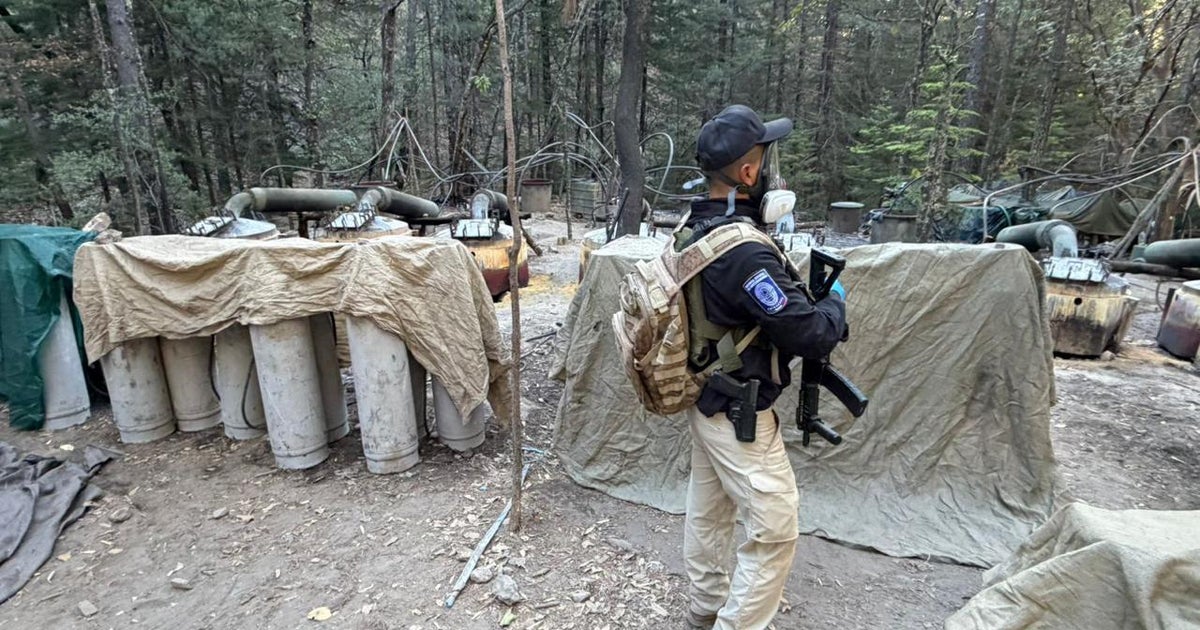
The tragic incident claimed the lives of four individuals—two Americans and two Mexican officers—who had been participating in a raid targeting a clandestine drug laboratory in the remote mountainous sierra region of northern Chihuahua state. According to Mexican authorities, the operation was directed at methamphetamine production facilities located in the rugged terrain between the municipalities of Morelos and Guachochi. The Mexican State Investigation Agency identified their fallen officers as First Commander Pedro Román Oseguera Cervantes and Officer Manuel Genaro Méndez Montes, both of whom were serving their country in the dangerous fight against drug trafficking organizations. The operation involved a convoy of five vehicles carrying a mixed force of soldiers and members of the Chihuahua State Investigation Agency. State prosecutor Cesar Jauregui characterized the American agents as “instructor officers” who were supposedly “carrying out training tasks” as part of binational anti-drug cooperation efforts. Jauregui emphasized the significance of the target, describing the labs as “one of the largest sites found in the country where chemical drugs were produced,” which underscores both the importance and the danger of the mission that cost these four individuals their lives.
Political Sensitivities and Historical Context
The revelation of U.S. agents operating on Mexican soil has touched a particularly sensitive nerve in Mexico, where national sovereignty is a deeply cherished principle and foreign military or intelligence operations are viewed with extreme suspicion by both the public and political establishment. Historically, on-the-ground cooperation between U.S. law enforcement and Mexican security forces has been exceptionally rare, and when it does occur, it becomes an immediately contentious political issue. President Sheinbaum herself has publicly rejected such practices in the past, making this incident all the more politically explosive for her administration. The situation is further complicated by local politics in Chihuahua, which is one of only four out of Mexico’s 31 states governed by the conservative National Action Party (PAN), a political rival to Sheinbaum’s left-leaning Morena party. Chihuahua, home to the strategically important border city of Ciudad Juárez, has long been a battleground in Mexico’s war against drug cartels, and the political tensions between state and federal authorities add another layer of complexity to an already difficult situation. President Sheinbaum has announced plans to meet with the Chihuahua state governor to discuss the incident, a meeting that will likely be charged with political implications as both sides seek to understand how this unauthorized operation came to be and who bears responsibility for the tragic outcome.
Diplomatic Response and the Broader U.S.-Mexico Security Relationship
U.S. Ambassador Ronald Johnson issued a statement on social media expressing condolences for the lives lost but provided few concrete details about the circumstances of the incident or the nature of the American agents’ involvement. “We honor their dedication and tireless efforts to confront one of the greatest challenges of our time,” Johnson stated, adding that “This tragedy is a solemn reminder of the risks faced by those Mexican and U.S. officials who are dedicated to protecting our communities.” The carefully worded statement reflects the delicate diplomatic balance that both nations must maintain as they navigate this crisis. The incident comes at a particularly sensitive time in U.S.-Mexico relations, as President Sheinbaum has been actively resisting the Trump administration’s increasingly aggressive threats to use airstrikes or even ground troops to combat Mexican drug cartels on Mexican territory. Sheinbaum has instead promoted a model of cooperation that emphasizes intelligence sharing between the two nations while keeping actual enforcement operations firmly in the hands of Mexican security forces, a approach designed to respect Mexican sovereignty while still addressing American concerns about drug trafficking. This incident threatens to undermine that careful diplomatic framework and could provide ammunition to those in the U.S. who advocate for more unilateral American action in Mexico.
Recent Successes and Escalating Violence in the Drug War
The tragic accident occurs against the backdrop of several significant victories in Mexico’s ongoing battle against powerful drug cartels, though these successes have come at a considerable cost in terms of both human life and social stability. In February, elite Mexican troops, operating with U.S. intelligence support, successfully killed drug kingpin Nemesio “El Mencho” Oseguera, one of the most wanted criminals in both Mexico and the United States. However, this high-profile success triggered a devastating wave of retaliatory violence that left more than 70 people dead as cartel factions fought for control and sought revenge against security forces. This pattern of success followed by escalating violence illustrates the complex challenges facing both Mexican and American officials as they attempt to dismantle these powerful criminal organizations. The cycle demonstrates that while tactical victories can be achieved, they often come with unpredictable and deadly consequences that can destabilize entire regions. Nevertheless, the pressure from the Trump administration to show results has pushed Mexican authorities to intensify their efforts, even as questions remain about the sustainability and long-term effectiveness of this militarized approach to drug interdiction.
Intensified Lab Dismantling Efforts Amid U.S. Pressure
In recent months, Mexico has significantly ramped up its efforts to locate and dismantle clandestine drug laboratories, a campaign that appears to be at least partially motivated by Trump administration threats of possible military action if Mexico fails to curb drug trafficking into the United States. The Mexican government has announced the destruction of numerous drug production facilities across several states, often accompanied by the seizure of massive quantities of methamphetamine and other illegal substances. In February, Mexican naval personnel discovered a hidden drug laboratory in the Durango region and successfully “neutralized” over 5,000 pounds of methamphetamine, representing a significant blow to cartel production capabilities. Earlier, in January, authorities announced that more than 1,500 pounds of methamphetamine had been seized from clandestine laboratories operating in the states of Durango, Sinaloa, and Michoacán, three regions that have long been strongholds of major drug trafficking organizations. These operations represent a substantial escalation in Mexico’s efforts to combat drug production at its source, rather than simply attempting to interdict drugs as they move toward the U.S. border. However, the recent tragedy in Chihuahua raises important questions about the methods being employed, the level of coordination with U.S. agencies, and whether Mexican sovereignty is being compromised in the rush to demonstrate results to Washington. As both nations continue to grapple with the aftermath of this incident, the fundamental challenge remains: how to effectively combat transnational drug trafficking while respecting national sovereignty and ensuring proper authorization and oversight of joint operations.