



BTS Returns: A Historic Reunion That Brought Seoul to a Standstill
A Comeback Four Years in the Making
After nearly four years away from the stage, global K-pop phenomenon BTS made their highly anticipated return to live performance, reuniting for their first concert since completing their mandatory military service. The event, held in central Seoul on a Saturday night, was nothing short of spectacular, drawing massive crowds of devoted fans whose enthusiasm effectively shut down the heart of South Korea’s capital city. This reunion concert represented more than just another performance—it marked a significant moment in K-pop history, as BTS became one of the rare groups to successfully navigate the challenging hiatus imposed by South Korea’s military service requirements. In South Korea, most men are required to serve approximately two years in the military due to the ongoing technical state of war on the Korean peninsula. Historically, this mandatory service has proven to be a career-ending obstacle for many K-pop idols, with groups often disbanding or losing momentum during these years away from the spotlight. However, BTS has defied these odds, demonstrating that their connection with fans and their cultural impact runs far deeper than typical entertainment trends. The sheer scale of their comeback—both in terms of attendance and global interest—proved that the group’s appeal has only intensified during their time apart.
Fans of All Ages Celebrate the Return
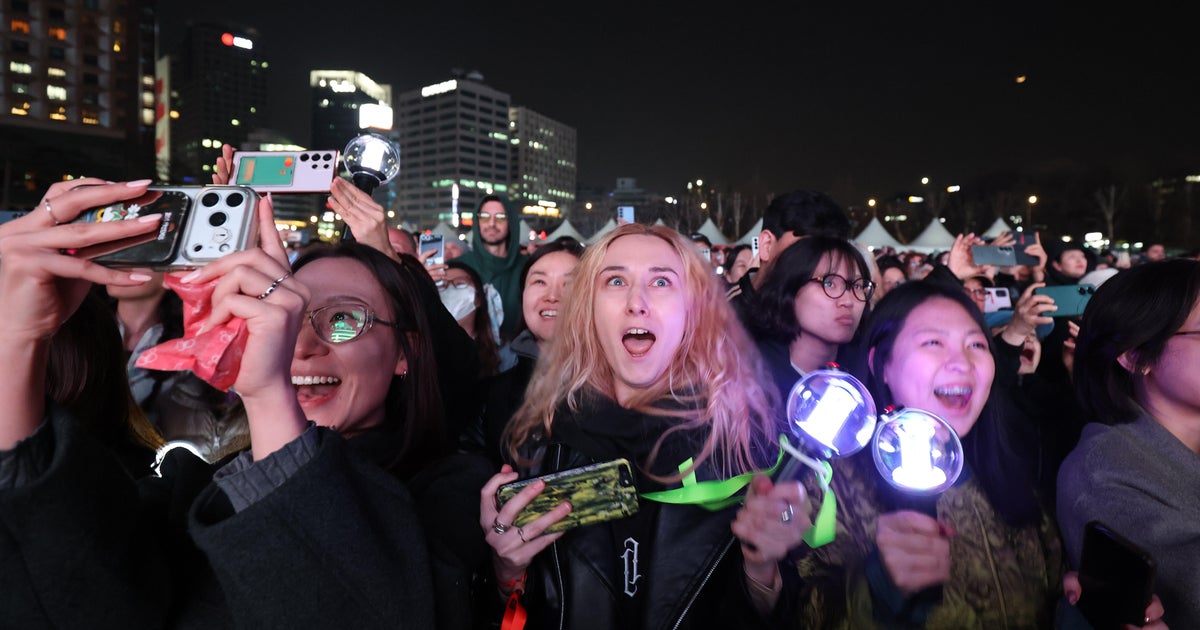
The diversity of BTS’s fanbase was on full display during the Seoul celebration, with supporters spanning multiple generations and coming from countries around the world. Among the crowd was 71-year-old Sopia Kim, who traveled three hours to attend the festivities, dressed completely in BTS’s signature purple color from head to toe. Her presence and enthusiasm perfectly illustrated how the group’s appeal transcends typical demographic boundaries. In her conversation with CBS News, Kim offered a poignant perspective on the significance of the event, suggesting that “with all the political situations around the world, this might be the last time humankind can enjoy a festival as grand as this.” Her words captured not just the joy of the moment but also an awareness of how special such gatherings have become in our current global climate. Kim also expressed her pride in how BTS represents Korea on the international stage, saying, “You can’t help but acknowledge it when you see their songs and dance — they’re truly outstanding.” Her sentiment reflects the broader feeling among many Koreans who view BTS as cultural ambassadors, elevating their nation’s profile through artistic excellence and positive messaging.
A Concert Blending Tradition and Technology
The production of the comeback concert was itself a masterpiece of modern entertainment, seamlessly blending South Korea’s rich historical heritage with cutting-edge broadcasting technology. The show opened near Gyeongbokgung Palace, one of Seoul’s most iconic historical landmarks, creating a visual backdrop that connected centuries of Korean culture with the contemporary global phenomenon that is BTS. The concert began with the traditional ringing of a bell, followed by stunning drone video footage that set the stage for what was to come. The event was live-streamed on Netflix, an arrangement that allowed fans across multiple time zones around the world to watch simultaneously, transforming what could have been a local event into a truly global experience. After performing three songs from their album, the seven members of BTS took a moment to greet their fans directly. Jin, who had enlisted in the military ahead of the other members, offered particularly touching reflections on the group’s hiatus. He recalled clearly asking fans to wait for their return during what turned out to be their final concert in Busan in October 2022. “I had a lot of worries before standing here again,” Jin admitted to the crowd, “but I’m thankful and happy to be able to face you once more.” His words resonated with the approximately 22,000 ticket holders who watched the free one-hour concert from designated viewing areas throughout central Seoul, where large outdoor screens had been strategically installed to accommodate the crowds.
A City Transformed by Music
The impact of BTS’s return concert on Seoul itself cannot be overstated—the event essentially transformed the city’s central district into a massive celebration zone. Beyond the official viewing areas, the Gwanghwamun area and surrounding streets were absolutely packed with fans who had come to be part of the historic moment, even if they couldn’t secure official tickets. Some devoted supporters sat along roadsides watching the concert on their mobile phones through Netflix, while others gathered outside shops and cafés wherever television screens were available. The Seoul Metropolitan Government had initially prepared for crowds of up to 260,000 people, implementing comprehensive traffic controls that began the evening before the concert and rerouting buses across more than 60 stops throughout the city. However, local reports ultimately estimated that approximately 40,000 people gathered in the area—still an impressive turnout that required significant coordination. Security was understandably tight for such a large-scale event, with around 15,000 security personnel deployed, including approximately 6,700 police officers tasked with maintaining order and ensuring public safety. Among those who made the journey to be part of the celebration was Jen Howes, a 37-year-old teacher from South Africa who lives in Korea. She told CBS that she was eager to “see vibes and meet people” while cheering on the band, emphasizing the communal aspect of the BTS fan experience that extends beyond just the music itself. Howes also noted that she had always been confident the group would reunite, explaining that “they always seem to have a good bond and seem keen to perform again together”—an observation that speaks to the genuine connection between the seven members that fans have always appreciated.
International Fans Make the Pilgrimage
The concert attracted not just local supporters but international fans who traveled significant distances to witness BTS’s return firsthand. Marco Supetran and two friends made the journey from the Philippines specifically to see the group perform. Supetran shared that she became a fan of the band in 2020, introduced to their music by her daughters—another example of BTS’s cross-generational appeal. Although the trio couldn’t secure tickets to the official viewing areas, their dedication was evident as they lined up outside Seoul’s City Hall Square starting at 11 a.m., determined to watch the performance on one of the large screens set up for overflow crowds. Supetran’s friends highlighted what they described as BTS’s “wholesome” feeling as a key component of the group’s ability to appeal to fans across different age groups and cultural backgrounds. This wholesome quality—combined with sophisticated musical production, impressive choreography, and messages promoting self-love and social consciousness—has been central to BTS’s unprecedented global success and their ability to build one of the most dedicated fanbases in entertainment history.
Looking Ahead: A New Album and World Tour
The Seoul comeback concert represented just the beginning of BTS’s return to active performance, serving as the launch point for an extensive world tour following the release of their latest album, “Arirang,” on March 20, 2026. The commercial success of the new album was immediate and overwhelming—Big Hit Music, the label run by BTS’s management agency, reported that “Arirang” sold an astounding 3.98 million copies on its first day of release alone, demonstrating that the group’s commercial appeal remained strong despite their time away. The music video for the album’s title track “SWIM” had already surpassed 40 million views online by the time of the concert, further evidence of the intense anticipation surrounding BTS’s return. The world tour schedule is ambitious and truly global in scope, beginning with the U.S. leg on April 25 in Tampa, Florida, before taking the group through South America, Europe, and Asia. The final performance is scheduled for March 14, 2027, in the Philippines—a fitting conclusion given the country’s passionate BTS fanbase. This reunion and successful comeback carries significance beyond just the entertainment industry, representing a cultural moment that brings people together across borders, generations, and backgrounds through shared appreciation for artistry and meaningful connection.