
California Court Denies Attorney General’s Attempt to Stop Election Fraud Investigation
Court Rules Against State Officials in High-Stakes Political Battle
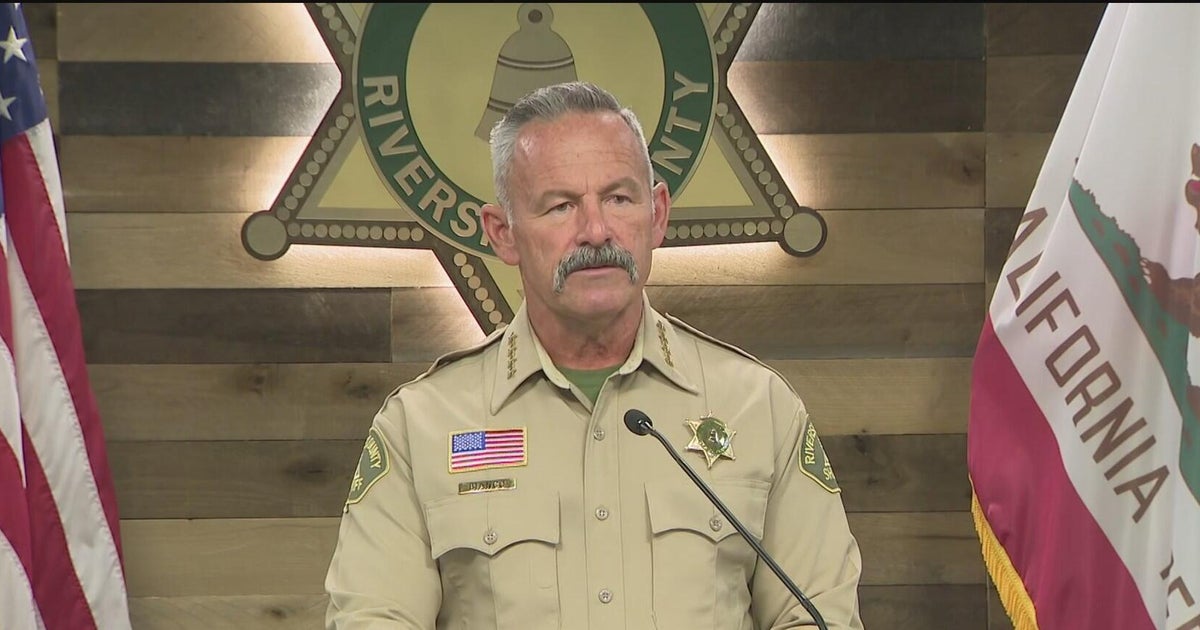
In a significant development that has captured statewide attention, a California appellate court rejected State Attorney General Rob Bonta’s appeal to stop an ongoing election fraud investigation being conducted by the Riverside County Sheriff’s Department. The decision, handed down on Tuesday, represents a major moment in what has become an increasingly contentious dispute between state and local law enforcement authorities. While Bonta’s office emphasized that the denial was based on technical filing issues rather than the merits of their case, the ruling allows the controversial investigation to continue moving forward. The Attorney General’s office quickly issued a statement clarifying their position, noting that “the appellate court denied their request based solely on where we filed the case and is not a ruling on the underlying of the petition.” They reinforced their stance that the facts surrounding the case remain unchanged and that Riverside County Sheriff Chad Bianco continues to defy constitutional authority and state law by conducting this investigation. The office also indicated they are actively evaluating their next moves to bring what they consider a swift and appropriate resolution to this escalating matter.
The Investigation That Started It All
At the heart of this legal battle lies Sheriff Chad Bianco’s decision to seize more than 611,000 ballots from the Proposition 50 special election, a redistricting measure that fundamentally altered California’s political landscape. The proposition, which passed in Riverside County with approximately 56% voter approval, resulted in a controversial redrawing of congressional district boundaries. Most significantly, the redistricting shifted five of California’s Republican U.S. House seats to configurations more favorable to Democratic candidates in subsequent midterm elections. According to data from The Associated Press, the ballots supporting the new congressional maps exceeded those against by roughly 82,570 votes. However, Bianco’s investigation stems from a complaint filed by a local group alleging potential irregularities in vote counting, specifically claiming a discrepancy of approximately 45,800 more votes being reported to California’s Secretary of State than actually existed. Sheriff Bianco, who is currently running for governor in California’s upcoming election, has characterized his agency’s work as a straightforward “fact-finding mission” rather than a politically motivated action. During a press conference held last Friday, he outlined what he sees as a simple investigative approach: “This investigation is simple: Physically count the ballots and compare that result with the total votes reported.” His framing of the investigation as basic due diligence has become a central talking point in his defense against critics who question both his authority and his motives.
State Officials Push Back Against Sheriff’s Authority
California Secretary of State Shirley Weber has been particularly vocal in her opposition to Bianco’s investigation, arguing that the allegations driving it “lack credible evidence and risk undermining public confidence in our elections.” Weber’s concerns extend beyond just the specific claims being investigated to the broader question of who has the proper authority and expertise to examine election processes. In her official statement, she emphasized a fundamental issue with the sheriff’s involvement: “The fact remains that he and his deputies are not elections officials and they do not have expertise in election administration.” This criticism strikes at the heart of the jurisdictional dispute, as Weber contends that investigations into election processes must be conducted exclusively by individuals with appropriate legal authority and specialized subject matter expertise. She drew parallels to similar situations in other states where individuals lacking election administration experience raised comparable claims that were subsequently “thoroughly reviewed and debunked” by qualified experts. County elections officials have also challenged the very premise of Bianco’s investigation, directly disputing his assertion about the magnitude of the discrepancy. According to the Riverside County Registrar of Voters, the difference between the machine count and the final count submitted to the state was approximately 100 votes—a far cry from the 45,800-vote discrepancy claimed by the sheriff’s office. Despite this significant disagreement over basic facts, the Registrar’s office has maintained a cooperative stance, stating they “will continue to comply with all lawful court orders and with all legal obligations applicable to election materials and election administration.” Sheriff Bianco, however, remains unmoved by these contradictions, insisting that “there is no acceptable error, small or large, in our elections, let alone a 45,000 vote difference.”
The Attorney General’s Constitutional Concerns
Over the past two months, Attorney General Bonta’s office has repeatedly communicated with Sheriff Bianco’s agency, sending multiple letters expressing serious concerns about both the legality and the impact of the ongoing investigation. These communications have consistently echoed Secretary Weber’s position that Bianco’s staff lacks the necessary qualifications to conduct a proper recount and that the investigation itself contributes to eroding public trust in the electoral process. Bonta’s office has raised fundamental questions about the legal basis for the investigation, noting a critical deficiency: “The Sheriff has not identified any particular crime that may have been committed by anyone—a necessary predicate to obtain a criminal search warrant.” This legal point strikes at the foundation of criminal investigations, which typically require at least probable cause of a specific crime before law enforcement can seize evidence. The Attorney General’s statement highlighted Bianco’s own characterization of the investigation, quoting the sheriff’s admission that the probe is “just as much to prove the election is accurate as it is to show otherwise.” This neutral framing, Bonta’s office argues, reveals that the investigation lacks the criminal predicate necessary for such an action. Furthermore, the Attorney General pointed out that California already has “a robust civil process, overseen by state and local elections officials, to request a recount or challenge the results of an election,” and that proper process has not been invoked in this case. This argument suggests that Bianco has bypassed established legal channels designed specifically to address election concerns, instead creating his own parallel investigative track without proper authority.
Political Implications for the Governor’s Race
The timing of this investigation has raised eyebrows given that Sheriff Bianco is currently a candidate in California’s gubernatorial race, adding an unavoidable political dimension to what he insists is purely a law enforcement matter. Until March, most polls positioned Bianco, a Republican, alongside conservative commentator Steve Hilton as the likely top two finishers in the state’s unique primary system. California’s primary structure allows only the top two vote-getters to advance from the June primary to the November general election, regardless of party affiliation. This system has created a complex dynamic in the current race, where a crowded field of progressive candidates is competing for approximately 60% of the vote that Democrats typically secure in statewide races. Political analysts have warned that this abundance of candidates could result in vote-splitting that ultimately locks Democratic candidates out of the general election entirely. As political consultant Paul Mitchell explained, “The challenge could be that Democrats, in splitting up their 60% of the pie, split it up in such small pieces that you have candidates getting 8%, 10%, 12%, 14%, 19%.” However, recent polling data from mid-March suggests a potential consolidation of support among fewer candidates. According to the UC Berkeley-Politico poll, Hilton maintains the lead with 19%, followed by billionaire Democratic candidate Tom Steyer at 13%. The remaining candidates trail closely: Rep. Eric Swalwell at 11%, Bianco at 11%, former Rep. Katie Porter at 11%, and former State Attorney General and Health Secretary Xavier Becerra at 5%. A separate Emerson College poll shows similar trends, with Swalwell and Hilton occupying the top two positions.
Sheriff Defends Investigation Amid Political Scrutiny
Despite the obvious intersection between his role as sheriff and his gubernatorial campaign, Bianco has firmly rejected any suggestion that his investigation is politically motivated. He has insisted the probe has “absolutely nothing to do” with his campaign for governor, instead framing it as a matter of basic law enforcement duty. “I have a duty to investigate alleged crime in Riverside County,” he stated, positioning himself as simply fulfilling his sworn obligations regardless of any personal political ambitions. This defense, however, has done little to quiet critics who see the investigation as either an abuse of authority or a campaign stunt designed to energize conservative voters concerned about election integrity. The ongoing legal battle between Bianco and state officials represents more than just a jurisdictional dispute—it reflects deeper tensions in American politics around election administration, the appropriate role of law enforcement in electoral matters, and the potential for investigations themselves to become political tools. As both sides evaluate their next steps following the court’s decision to deny the Attorney General’s appeal, the investigation continues, along with the questions it has raised about authority, expertise, and the delicate balance between ensuring election integrity and maintaining public confidence in democratic processes. The resolution of this conflict may have implications extending far beyond Riverside County or even California, potentially setting precedents for how similar disputes are handled across the country.