


CDC Leadership in Limbo: Staff Grapple with Uncertainty as Trump Administration Delays Permanent Director Appointment
A Year of Turmoil at America’s Public Health Agency
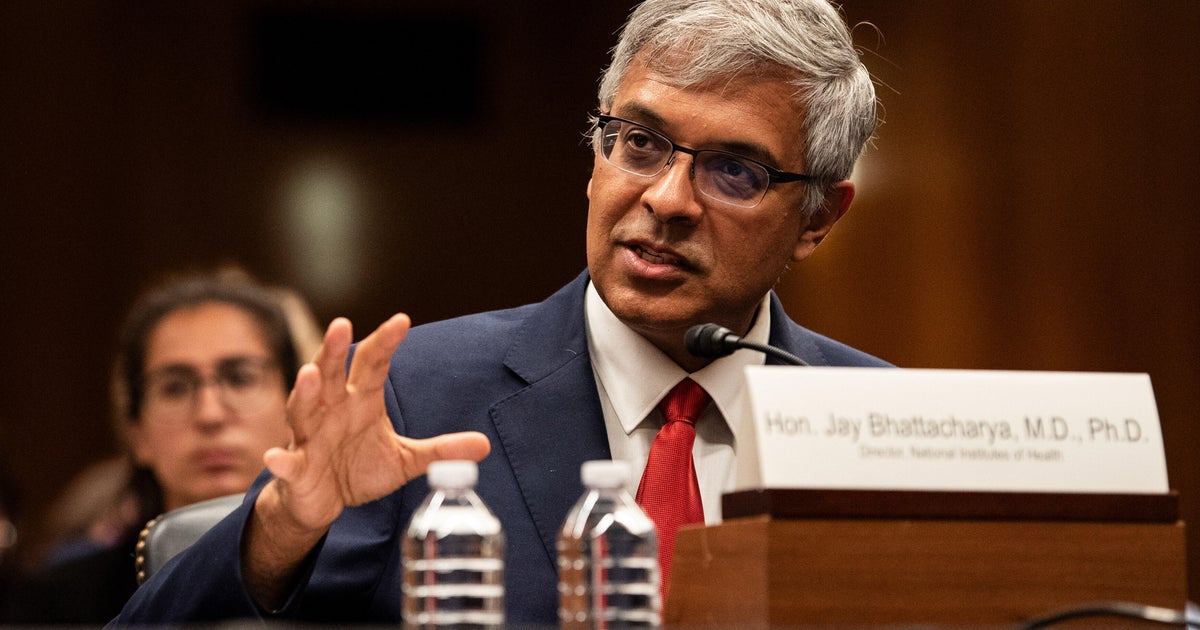
The Centers for Disease Control and Prevention finds itself in a prolonged state of uncertainty as the Trump administration continues to delay naming a permanent director for the agency. Dr. Jay Bhattacharya, who currently serves as the director of the National Institutes of Health, has been juggling both roles as the CDC’s acting director since February. In a candid staff meeting held on Wednesday, Bhattacharya addressed weary employees about the agency’s future, initially suggesting that President Trump might announce a permanent replacement as soon as Thursday. However, that timeline has since stalled, with major news organizations reporting that the administration is postponing the decision amid concerns about Senate confirmation challenges and political pressures. For now, Bhattacharya will continue leading the CDC, though the exact nature of his role—whether as “acting director” or something else entirely—remains somewhat ambiguous, a situation he compared with self-deprecating humor to an episode of the television comedy “The Office.”
The past year has been extraordinarily difficult for CDC employees, and Bhattacharya didn’t shy away from acknowledging this reality. The agency has weathered multiple rounds of devastating job losses that have stripped away institutional knowledge and expertise. In August, tragedy struck when a gunman attacked the CDC’s Atlanta headquarters, killing a police officer and causing extensive property damage—a traumatic event that shook an already demoralized workforce. “I want to acknowledge very honestly that I know that it has been such a difficult year for the CDC and for every single one of you here,” Bhattacharya told staff members, according to a recording obtained by KFF Health News. Beyond these immediate crises, the agency has been operating with significant leadership gaps, with Bhattacharya noting during his first meeting with top officials that “almost every single one of them is acting” in temporary capacities rather than permanent positions. This leadership vacuum has created additional instability at a time when the agency desperately needs steady guidance to fulfill its critical public health mission.
Staff Concerns: Schedule F, Job Security, and Disappearing Expertise
The questions from CDC employees during the meeting revealed deep anxieties about their future and the agency’s capacity to function. Staff members repeatedly raised concerns about ongoing staffing losses, plummeting morale, and their personal job security. One particularly pointed question addressed the elephant in the room: Schedule F, President Trump’s initiative to reclassify certain federal employees in policy-related roles and strip them of civil service protections. This policy, though not yet fully implemented, could potentially make it easier for the administration to fire thousands of federal workers based on political considerations rather than job performance. “What’s scaring the hell out of us right now is Schedule F,” one employee stated bluntly. “We are terrified that ‘at will’ means you’re gone, you’re not here, you’re fired.” The fear is palpable among career public health professionals who have dedicated their lives to protecting Americans from disease, only to find themselves wondering if they’ll have jobs tomorrow based on political winds rather than their expertise and contributions.
Another employee painted a stark picture of the agency’s depleted capacity: the CDC has lost a “huge amount” of “internal capacity and expertise in the past year,” making it “very challenging for staff to do their jobs” under conditions that are “a bit demoralizing.” Yet in a testament to the dedication of CDC workers, one staff member asserted the agency’s resilience: “The CDC can function without leaders. We function without directors. And this entire team will make CDC run without you if you’re not here.” This statement captured both pride in the workforce’s commitment and frustration with the revolving door of leadership and the lack of institutional support. Bhattacharya acknowledged these concerns but admitted his limited influence over some of the broader political decisions, repeatedly saying issues like Schedule F were “above my pay grade” or “above my level.” He emphasized instead his focus on ensuring “the work is supported” and promised efforts to “depoliticize what we do fundamentally” so that “every American sees us as working for their benefit,” though he clarified that depoliticization doesn’t mean avoiding difficult conversations—rather, it means creating an environment where staff can “talk about the hard things without fear that you’re gonna be retaliated against.”
Rebuilding Trust and Vaccine Policy in a Skeptical Era
Vaccine policy has become one of the most politically charged aspects of public health in recent years, and Bhattacharya addressed this sensitive topic with what appeared to be an attempt at balance. He noted that one of his first actions as acting CDC director was recording a video “strongly encouraging parents to vaccinate their kids from measles,” a statement that likely offered some reassurance to CDC scientists concerned about the influence of vaccine skeptics in the current administration. However, his broader comments on rebuilding public trust in vaccines emphasized engagement with communities “without denigrating them” and respecting “how they think and their values.” This language walks a careful line between maintaining scientific integrity and acknowledging the real erosion of trust in public health institutions that occurred during and after the COVID-19 pandemic. The challenge facing the CDC is monumental: how to restore confidence in vaccines and other public health measures among Americans who have grown skeptical of government health recommendations, without compromising the scientific evidence that underpins those recommendations.
Bhattacharya also discussed his vision for better coordination between the NIH and CDC, particularly on HIV prevention. He described wanting to implement “an implementation science strategy” that would use available tools to “actually end the HIV pandemic.” This focus on cross-agency collaboration could represent a bright spot in an otherwise uncertain period, potentially leveraging his unique position overseeing both agencies to break down silos that have historically limited effectiveness. He also addressed President Trump’s controversial decision to withdraw the United States from the World Health Organization, though he again deflected the political aspects: “The politics of WHO withdrawal are above my pay grade. What I do know is that without the CDC, the world will be in much worse health.” This statement emphasized the CDC’s continued importance in global health regardless of broader policy decisions, though it left unanswered how the agency will navigate international health cooperation without the formal WHO framework.
The Robert F. Kennedy Jr. Factor and HHS Oversight
Adding another layer of complexity to the CDC’s situation is the role of Health and Human Services Secretary Robert F. Kennedy Jr., who oversees the agency and is leading the search for a permanent director alongside other HHS officials and the White House. Kennedy, a prominent vaccine skeptic who has spent years promoting debunked theories linking vaccines to autism, now holds tremendous influence over America’s public health infrastructure. Bhattacharya described himself as friends with Kennedy and pushed back against what he called “the caricature of him that I’ve seen in the press,” insisting that Kennedy “really does have a deep desire to make America healthy.” This defense will likely concern public health professionals who worry that Kennedy’s well-documented history of spreading vaccine misinformation makes him fundamentally unsuited to oversee agencies tasked with promoting vaccination and other evidence-based health measures.
The fact that the permanent CDC director search is proceeding slowly, with reports suggesting the administration is postponing the appointment due to Senate confirmation challenges and political pressures, reveals the difficult position the Trump administration finds itself in. Any nominee who is acceptable to Kennedy and the president’s political base may face tough questions from senators concerned about scientific qualifications and commitment to evidence-based public health. Conversely, a nominee with sterling public health credentials might struggle to win support from the administration’s allies who view the CDC with suspicion following COVID-19 controversies. Meanwhile, the agency operates in limbo, with Bhattacharya splitting his attention between two of America’s most important health agencies during a time when both desperately need focused, stable leadership.
Looking Forward: Can the CDC Recover Its Mission?
Bhattacharya expressed his goal of leaving the CDC in “a solid, secure place” so it can do its work “without so much of the turmoil that we’ve seen the last year.” He pointed to progress in filling key leadership roles across the agency as evidence that “leadership stability is essential to delivering our mission.” However, his comments also revealed the challenges of working within what he called “the speed of bureaucracy,” with the Department of Health and Human Services moving slowly on hiring and operational issues despite his efforts to accelerate progress. The acting director’s message to staff combined acknowledgment of their difficulties with calls to “move past the last year,” suggesting that the agency now has “an opportunity really to do that.” Yet for employees facing job insecurity, depleted teams, and uncertain political support for their work, such optimism may feel premature without concrete changes in their circumstances.
The CDC’s situation reflects broader tensions in how the Trump administration approaches scientific and public health institutions. The agency that Americans rely on to track disease outbreaks, issue health recommendations, and coordinate responses to public health emergencies finds itself weakened by staff losses, leadership instability, and political crosscurrents at precisely the time when threats like measles outbreaks and ongoing HIV transmission demand strong, coordinated responses. Whether the CDC can recover its standing and effectiveness depends not just on who eventually becomes its permanent director, but on whether that leader receives the resources, autonomy, and political support needed to rebuild institutional capacity and public trust. For now, the agency’s dedicated workforce continues showing up to protect American health despite the uncertainty, demonstrating a commitment to public service that persists even when the institutions themselves face existential questions about their future direction and stability.