


China Forges Ahead With Economic and Technological Priorities Amid Global Uncertainty
Staying the Course While the World Watches Iran
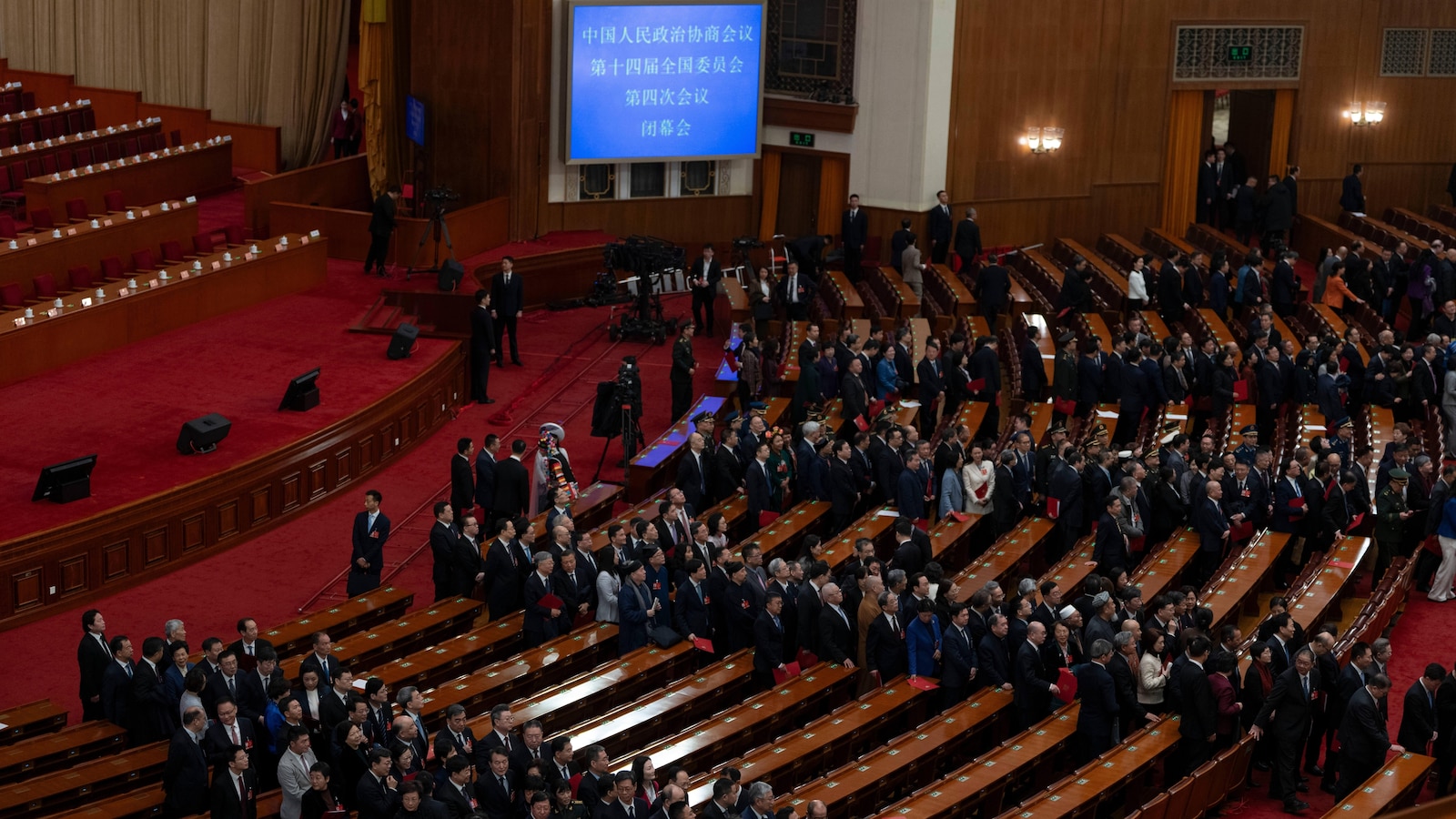
While international headlines have been dominated by escalating tensions surrounding the Iran conflict, China has remained steadfastly focused on its own strategic agenda. At the recent National People’s Congress—the country’s most significant annual political gathering—Chinese leadership made it abundantly clear that their priorities lie not in distant conflicts, but in reshaping their economy and securing dominance in the technologies that will define this century. Though Beijing certainly recognizes the potential impact of Middle Eastern instability on energy markets and global power dynamics, the government’s attention remains firmly fixed on what it views as the more consequential arena: the intensifying technological competition with the United States. This week, delegates formally endorsed a comprehensive five-year plan that signals China’s unwavering commitment to economic transformation and technological leadership. In a world characterized by increasing volatility and unpredictability, Chinese state media positioned the country’s steady developmental trajectory as a stabilizing force. The People’s Daily newspaper articulated this perspective in a prominent column, asserting that “a stable and developing China injects more stability and certainty into a world fraught with change and turbulence.” This messaging reflects Beijing’s broader narrative that while other nations—particularly the United States under President Trump’s administration—pursue disruptive policies through tariffs and military interventions, China offers consistency and reliable growth as an anchor in turbulent times.
Technology Takes Center Stage in China’s Five-Year Blueprint
The newly approved five-year plan reveals where China’s true ambitions lie: at the cutting edge of technological innovation. Despite widespread agreement among economists that China needs to stimulate domestic consumption and reduce its historical dependence on exports, the plan makes technology development the undisputed centerpiece of the nation’s economic strategy. This approach confirms that Chinese leadership views technological supremacy not merely as an economic goal but as essential to national security and global influence in the ongoing rivalry with Washington. The government intends to channel substantial resources into artificial intelligence, robotics, and other frontier technologies, even as measures to boost consumer spending are implemented only gradually through incremental expansions of social security and healthcare benefits. Premier Li Qiang set an economic growth target of 4.5% to 5% for 2026—a relatively modest goal by historical Chinese standards—which gives policymakers greater flexibility to pursue these longer-term technological objectives without the pressure of meeting more aggressive short-term growth numbers. This strategic patience reflects a mature economy transitioning from the breakneck expansion of previous decades to a more sustainable model focused on innovation and quality rather than sheer quantitative growth. The message to both domestic and international audiences is clear: China is playing a long game, willing to accept slower growth in the near term to ensure technological leadership that will pay dividends for generations to come.
Environmental Commitments and Ongoing Climate Challenges
The five-year plan’s approach to environmental protection has drawn scrutiny from climate experts who note that China has opted for “emissions intensity” reduction targets rather than absolute emissions cuts. The plan commits to reducing emissions intensity—the amount of pollution generated relative to economic output—by 17%, but this approach allows total emissions to potentially increase as the economy grows. Analysts suggest this target could permit emissions to rise by 3% or more, a prospect that concerns those watching the world’s largest greenhouse gas emitter. Niklas Hohne of Germany’s NewClimate Institute noted that “international good practice is to move away from intensity targets towards absolute emission reduction targets.” However, China’s environmental story contains more nuance than these targets alone suggest. The country has become the global leader in solar panel production and clean energy deployment, with installations proceeding at a pace that may drive emissions down regardless of the official targets. China’s leaders have consistently maintained that any evaluation of the country’s pollution must account for its massive population of 1.4 billion people and the scale of its economy. This defense reflects a broader developing-world argument that wealthy nations achieved their prosperity through carbon-intensive industrialization and shouldn’t impose standards that limit poorer countries’ development. Nevertheless, the tension between China’s legitimate development needs and its responsibilities as the world’s largest emitter remains a central challenge in global climate negotiations.
Cultural Unity and the Controversial Ethnic Minorities Law
Among the legislation approved during the National People’s Congress was a comprehensive ethnic minorities law that has raised concerns among human rights observers and scholars of Chinese policy. The law emphasizes the creation of “a common consciousness of the Chinese nation,” language that critics interpret as codifying a government policy of cultural assimilation at the expense of distinct ethnic identities. Chinese officials frame the legislation as promoting stronger community bonds and more equitable economic development among the country’s diverse ethnic groups, which include Uyghurs, Tibetans, Mongolians, and dozens of smaller communities. However, the law represents the culmination of a broader shift under President Xi Jinping’s leadership that has prioritized national unity and a homogeneous Chinese identity over the celebration and preservation of ethnic cultures and languages. James Leibold, a professor at Australia’s LaTrobe University who specializes in China’s ethnic policies, offered a stark assessment: “It puts a death nail in the party’s original promise of meaningful autonomy.” When the Communist Party came to power in 1949, it established a system of autonomous regions supposedly designed to give ethnic minorities self-governance within their traditional territories. This new law effectively abandons that framework in favor of a more centralized approach that treats diversity as something to be managed and minimized rather than respected and maintained. The legislation fits within a broader pattern of policies in regions like Xinjiang and Tibet that have drawn international condemnation, including mass detention programs and restrictions on religious practice and language instruction.
Work-Life Balance Emerges as Major Social Concern
One of the most striking aspects of this year’s National People’s Congress was the intense public interest in proposals addressing work-life balance—a topic that generated more social media attention than many of the government’s headline policy announcements. Delegates submitted numerous suggestions for reducing working hours, establishing a “right to rest,” and protecting employees from the expectation that they remain available for work communications outside business hours. These proposals resonated deeply with a public increasingly exhausted by what many describe as an unsustainable workplace culture. The infamous “996” schedule—working from 9 a.m. to 9 p.m., six days a week—has become common in China’s technology sector and other competitive industries, leading to widespread burnout and health problems. Currently, many Chinese workers receive only five days of paid vacation annually, far below standards in developed economies. Yu Miaojie, an economist and congressional deputy, proposed doubling the minimum statutory annual leave from five to ten days. The popularity of these work-life proposals reflects not just worker fatigue but also the intense competition that characterizes China’s job market, where employees often feel they have no choice but to accept punishing schedules or risk being replaced. Interestingly, proponents frame these reforms not only as humanitarian improvements but also as economic stimulus measures—workers with more leisure time would have more opportunities to spend money, potentially boosting the domestic consumption that economists say China desperately needs to develop.
Looking Ahead: China’s Path in an Uncertain World
As the National People’s Congress concluded with the ceremonial approval of the five-year plan—passing with 2,758 votes in favor, one against, and two abstentions—China’s leadership projected confidence about the country’s trajectory despite mounting challenges. Foreign Minister Wang Yi captured this sentiment at his annual news conference, declaring, “We are forging ahead at full speed in building a great country.” This optimism persists even as China faces significant headwinds: a property sector crisis, demographic decline, persistent youth unemployment, and increasing technological restrictions imposed by the United States and its allies. The coming weeks will test China’s diplomatic agility as President Trump is scheduled to visit Beijing for talks with Xi Jinping. The meeting comes at a moment when the Trump administration’s unpredictable approach to international relations—from tariffs on Chinese goods to military interventions in Venezuela and the Middle East—has disrupted the post-World War II international order that China publicly champions while advocating for reforms to make it more equitable for developing nations. For China, the path forward involves a delicate balancing act: maintaining enough economic growth to ensure social stability and Communist Party legitimacy, while simultaneously investing heavily in the advanced technologies that will determine great power status in the 21st century. Whether this strategy succeeds will depend not only on Chinese policy choices but also on factors beyond Beijing’s control, from global economic conditions to the trajectory of U.S.-China relations. What remains clear is that China’s leaders view their current course as non-negotiable—a strategic imperative that transcends the immediate crises capturing headlines elsewhere in the world.