


Illinois Senate Race: A New Era Begins as Durbin Steps Down
A Crowded Field Vies for a Historic Seat
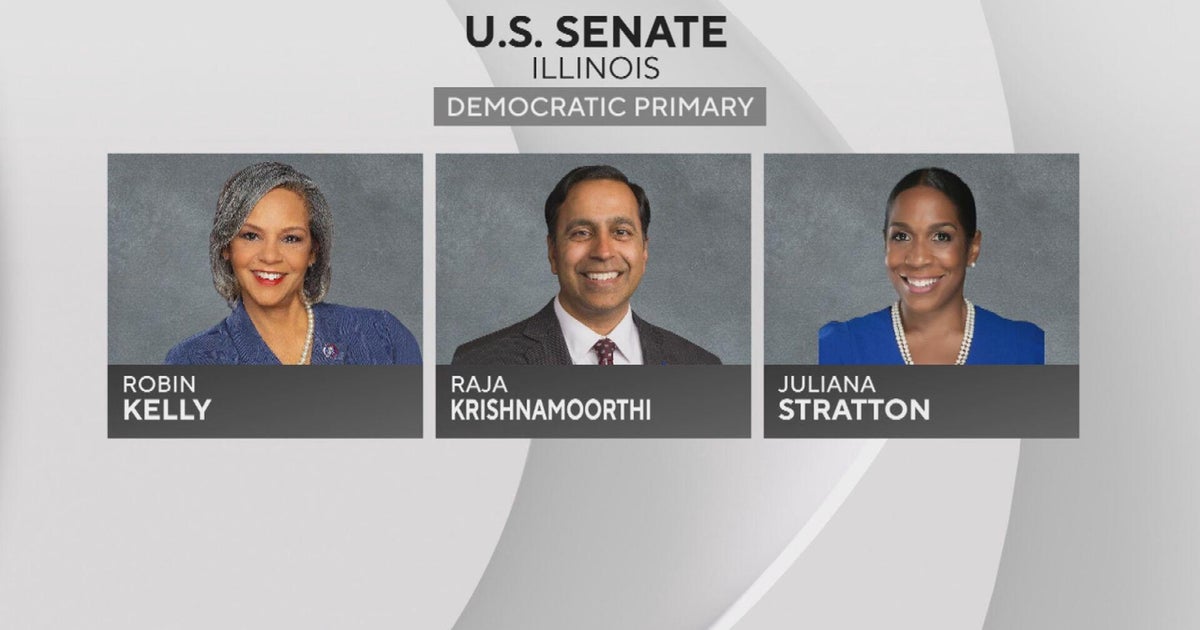
After nearly three decades of service, Senator Dick Durbin’s decision to retire has opened the floodgates for what has become one of the most competitive and expensive Senate races in recent American political history. Illinois voters are experiencing a pivotal moment as they prepare to choose Durbin’s successor in Tuesday’s primary elections, marking a significant generational transition in the state’s Senate leadership. The race has attracted an impressive field of candidates, with ten Democrats and six Republicans throwing their hats into the ring, each hoping to claim this coveted position. The Democratic primary has emerged as particularly consequential, featuring three leading contenders who represent the diverse tapestry of Illinois politics: U.S. Representative Raja Krishnamoorthi, U.S. Representative Robin Kelly, and Lieutenant Governor Juliana Stratton. Each brings unique credentials, experience, and vision to the table, setting up what promises to be a transformative election regardless of who ultimately prevails. The winner of the Democratic primary will enter November’s general election with substantial advantages, given Illinois’s strong Democratic lean in recent Senate races. Since Durbin first won his seat in 1996, Illinois has elected only two Republicans to the Senate—Peter Fitzgerald in 1998 and Mark Kirk in 2010, both serving just single terms—underscoring the state’s firm blue trajectory in federal elections.
The Front-Runners and Their Distinct Paths
The three Democratic frontrunners each offer compelling narratives and bring different strengths to this historic race. Raja Krishnamoorthi has represented Illinois’s 8th Congressional District, covering Chicago’s west and northwest suburbs, since 2017, building a reputation as a prodigious fundraiser and effective legislator. His campaign has shattered expectations by raising more than $30 million, making it the second-most-funded Senate campaign nationwide for the 2026 cycle—a testament to both his political skills and the enthusiasm surrounding his candidacy. Should Krishnamoorthi win both the primary and general election, he would make history as only the second Indian American ever elected to the U.S. Senate, following Vice President Kamala Harris, representing a significant milestone for Asian American political representation at the highest levels of government.
Juliana Stratton brings a different set of credentials to the race, having served as Governor JB Pritzker’s lieutenant governor since 2019. Her partnership with Pritzker has given her extensive executive branch experience and insight into statewide governance that her congressional rivals lack. Stratton has secured not only Pritzker’s personal endorsement but also substantial financial backing exceeding $5 million, providing her campaign with resources that have helped her compete with Krishnamoorthi’s fundraising juggernaut. Her candidacy represents continuity with the current administration’s policies while offering fresh leadership for the next generation.
Robin Kelly rounds out the top tier of candidates with her extensive congressional experience, having represented Illinois’s 2nd Congressional District since 2013. Her district encompasses portions of Chicago’s South Side, the south suburbs, and parts of central Illinois, giving her a geographic and demographic breadth of representation that speaks to various constituencies across the state. Both Stratton and Kelly carry the potential to make history themselves—if either wins the primary and subsequently the general election, she would become the fourth African American senator elected from Illinois, joining the distinguished company of Carol Moseley Braun, Barack Obama, and Roland Burris. This historical significance adds another layer of importance to an already consequential race.
Durbin’s Legacy and the Leadership Vacuum
Dick Durbin’s retirement marks the end of an era for Illinois and the Senate Democratic caucus. As the fifth most senior member of the Senate and serving as Senate Democratic Whip—the second-highest position in Senate Democratic leadership—Durbin has wielded considerable influence over legislative priorities and party strategy since first taking office in 1997. His leadership on the Senate Judiciary Committee, where he serves as ranking member, has been particularly notable, including his stewardship of the confirmation process for Supreme Court Justice Ketanji Brown Jackson in 2022, a historic moment that placed the first African American woman on the nation’s highest court. Additionally, his seat on the powerful Senate Appropriations Committee has allowed him to direct significant federal resources to Illinois while shaping national spending priorities.
Durbin’s departure is expected to trigger broader changes within the Democratic Senate leadership structure, as other senior members may seek to fill the void left by his retirement. This generational transition comes at a critical moment for Democrats, who are working to maintain their relevance and effectiveness in an increasingly polarized political environment. The person who ultimately replaces Durbin will face enormous expectations—not merely to represent Illinois effectively but to step into a leadership vacuum and help guide the party through challenging times. The next senator from Illinois will need to build seniority, develop relationships, and earn the respect of colleagues while simultaneously serving the immediate needs of their constituents, a delicate balancing act that will define the early years of their tenure.
A Campaign Defined by Money and Controversy
The race to succeed Durbin has become a financial arms race, ranking among the most expensive Senate contests in the nation for the 2026 election cycle. According to federal campaign finance records, the disparity in fundraising has been substantial, with Krishnamoorthi’s $30 million haul dwarfing Stratton’s $4 million and Kelly’s $3 million in direct campaign contributions. However, these numbers don’t tell the complete story, as outside money has played a crucial role in leveling the playing field. Illinois Future PAC, funded primarily by Governor Pritzker to the tune of at least $5 million, has spent more than $10 million supporting Stratton’s Senate bid, dramatically expanding her effective campaign resources beyond her direct fundraising totals. This influx of outside spending has raised questions about influence, obligations, and the role of billionaire donors in shaping electoral outcomes.
These financial dynamics took center stage during the final debate before the primary election, where the candidates didn’t shy away from confronting each other about their funding sources. Robin Kelly directly challenged Juliana Stratton about the massive support from Governor Pritzker, pointedly asking, “One billionaire family has donated 73% of what you have received, so are you obligated to them?” This question struck at the heart of concerns about whether elected officials can truly remain independent when their campaigns depend heavily on wealthy benefactors. Stratton, who has made her refusal to accept corporate PAC money a centerpiece of her campaign, found herself defending against charges that she had simply replaced one form of potentially compromising funding with another.
Ethical Questions and Attack Politics
The debate’s confrontational tone continued as Stratton pivoted to attack Krishnamoorthi’s own funding controversies, specifically highlighting his acceptance and subsequent donation of money from a Palantir executive—significant because Palantir holds major contracts with Immigration and Customs Enforcement (ICE), an agency that has become deeply controversial among progressive Democrats. “Congressman, you did not even think about returning the funding until the public called for you to do so,” Stratton charged, suggesting that Krishnamoorthi’s ethical compass only functioned under public pressure rather than from genuine principle. This attack touched on broader tensions within the Democratic Party between progressive activists who view ICE as an agency requiring fundamental reform or abolition and more moderate voices who support immigration enforcement with reforms.
Krishnamoorthi didn’t let these attacks go unanswered, firing back at Stratton with his own damaging accusation. He pointed out that during her tenure presiding over the Democratic Lieutenant Governors Association, the organization “solicited and received tens of thousands from CoreCivic, the largest private prison operator in the U.S. that operated the ICE Broadview Center.” This counterattack highlighted what Krishnamoorthi portrayed as hypocrisy—Stratton criticizing him for connections to companies with ICE contracts while she herself had led an organization that accepted money from the very companies operating ICE detention facilities. These exchanges illustrated how even within a single party’s primary, candidates with broadly similar policy positions can find sharp points of contrast, particularly around questions of political ethics, funding sources, and the perceived authenticity of their progressive credentials. For voters trying to distinguish between candidates who agree on most substantive policy issues, these debates about character, judgment, and political integrity have taken on outsized importance in shaping the race’s narrative and potentially determining its outcome.
Looking Ahead: History in the Making
Regardless of which candidate ultimately prevails, Illinois is poised to make history with this Senate election. The frontrunner status of Krishnamoorthi, Stratton, and Kelly means that the state will likely either elect its second Indian American senator or its fourth African American senator—both outcomes representing meaningful progress in diversifying American political leadership at its highest levels. This symbolic importance extends beyond Illinois, as the Senate has historically been one of the least diverse legislative bodies in American government, and every expansion of representation matters for communities that have been underrepresented in these powerful positions.
The high stakes of this race—both in terms of historical representation and political power—explain why it has attracted such enormous financial resources and national attention. The winner will not only represent Illinois’s interests in Washington but will also carry the weight of broader representation for their communities and serve as a potential leader in the next generation of Democratic senators. As Tuesday’s primary approaches, Illinois voters face a consequential choice that will shape not just their state’s representation but potentially influence the direction of the Democratic Party and the Senate for years to come. The competitive nature of this race, the caliber of the candidates, and the historical possibilities at stake have combined to create an election that captures both the promise and the challenges of American democracy in the 21st century.