


The Battle Over DHS Funding: Trump, Congress, and America’s Airports in Limbo
Trump Calls for Nuclear Option as Government Standoff Continues
In a dramatic escalation of the ongoing government funding crisis, President Trump has publicly urged Republican senators to consider what many view as the “nuclear option” – eliminating the Senate filibuster to force through Department of Homeland Security funding. Taking to his Truth Social platform, the president expressed frustration with the legislative gridlock that has left America’s airports and critical infrastructure in chaos, asking pointedly, “When is ‘enough, enough’ for our Republican Senators?” This marks a significant shift in rhetoric from a president who has watched his party struggle to navigate the delicate balance between maintaining unity and keeping the government operational.
Trump’s call to “TERMINATE THE FILIBUSTER” represents more than just political frustration – it reflects the very real consequences Americans are experiencing as the DHS shutdown continues. The president didn’t mince words, characterizing the situation as something “which should have been done a long time ago,” while simultaneously warning that Democrats would seize this opportunity “on day one, if they ever get the chance.” His message carries an implicit threat and prediction: that if Republicans don’t act decisively now, they’re simply postponing an inevitable Democratic power play. The president also used this moment to push his SAVE America Act, an election integrity bill that has become increasingly central to his legislative agenda. Earlier this week, Trump complicated ongoing negotiations by instructing Republicans to reject any deal with Democrats unless it included provisions from his elections bill, effectively linking two contentious issues into one impossibly complex negotiation.
However, Trump’s call for eliminating the filibuster faces significant headwinds within his own party. Senate Majority Leader John Thune has repeatedly stated that there simply isn’t sufficient support among Republican senators to take such a drastic step. The filibuster, which requires 60 votes to advance most legislation in the 100-member Senate, has long been viewed as a crucial protection for minority party rights and a brake on hasty legislative action. Many Republican senators remember when they were in the minority and relied on the filibuster to block Democratic initiatives, making them understandably reluctant to eliminate a tool they may need again in the future. Despite this reality, Trump seems convinced that the mere threat of eliminating the filibuster might be enough to force Democratic cooperation, claiming in another post that Senate Minority Leader Chuck Schumer “will make a deal now because he thinks that if he doesn’t, Republicans will TERMINATE THE FILIBUSTER, something which they should do whether he makes a deal or not!!!”
Congressional Schedule Uncertainty as Critical Deadline Approaches
As this standoff intensifies, senators find themselves facing an uncomfortable question: Will they be spending the next two weeks at home with their constituents as planned, or trapped in Washington trying to resolve a crisis of their own making? The Senate is officially scheduled to begin a two-week recess starting next week, a regularly scheduled break that allows senators to return to their home states, meet with voters, and attend to local concerns. However, Majority Leader Thune has made it clear that nothing is guaranteed, keeping the door conspicuously open to canceling the recess if the government funding impasse continues.
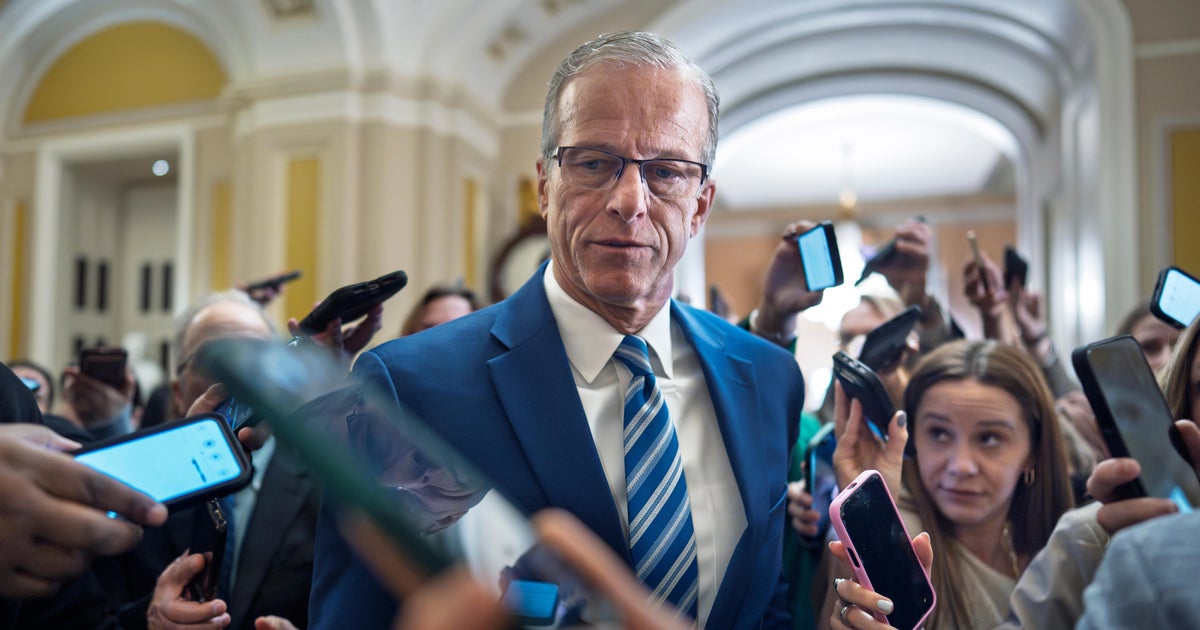
When reporters pressed Thune on Wednesday morning as the Senate convened for another day of deadlock, he acknowledged that no final decisions had been made about whether senators would be staying in town. His reasoning was straightforward and difficult to argue with: “I think it’s awfully hard not to have the government funded if we’re not here.” It’s a simple truth that highlights the absurdity of the situation – lawmakers can hardly resolve a funding crisis if they’re scattered across the country. Later in the day, Thune adopted a more philosophical tone about the approaching deadline, suggesting that sometimes the pressure of an imminent departure is exactly what’s needed to force compromise. “You know how it is around here. It’s not Thursday yet,” Thune told reporters. “And sometimes you’ve got to let things run. We’ll see where the deal might land.”
This approach to legislative brinkmanship is familiar to anyone who has watched Congress operate in recent years, but it’s nonetheless frustrating to Americans watching from the outside. The idea that senators need the threat of missing their scheduled vacation to motivate them to fund critical government operations doesn’t exactly inspire confidence in the legislative process. Yet Thune’s comments reflect a hard reality of Senate negotiations: Sometimes deals only come together when everyone involved faces real consequences for failure. For senators, that consequence might be missing flights home on Thursday night and explaining to angry constituents why they’re still in Washington while airports remain chaotic and government services remain disrupted.
Repeated Votes Highlight Deep Partisan Divide
The Senate’s planned Thursday afternoon vote on advancing the DHS funding measure represents the seventh attempt to break through the legislative logjam – a repetition that underscores just how entrenched both parties have become in their positions. Wednesday’s vote, the sixth in this series, marked the first time the chamber voted with Republicans’ latest offer on the table: an amendment that would fund all of DHS except for ICE’s Enforcement and Removal Operations division, the very unit responsible for deportations that have become such a flashpoint in this debate. Despite this new proposal, only one Democrat – Senator John Fetterman of Pennsylvania – voted to advance the measure, falling far short of the 60 votes needed to proceed.
Fetterman’s willingness to break with his party is notable, reflecting either a different political calculation or a genuine belief that some compromise is better than continued shutdown. For Republicans, his lone Democratic vote represents a small crack in what has otherwise been a unified wall of opposition, and they’re hoping that Thursday’s vote will peel away additional Democratic supporters. The GOP strategy appears to be that their offer to forgo funding for ICE deportation operations represents such a significant concession that Democrats will face increasing pressure to accept it and end the shutdown. After all, Republicans are essentially offering to fund everything except the very deportation activities that Democrats have been most vocally opposing.
However, Democrats have shown little inclination to accept this framework, arguing that the Republican offer is more illusion than substance and doesn’t address their fundamental concerns about how immigration enforcement is being conducted. The repeated failed votes have created a frustrating spectacle for Americans watching the dysfunction unfold, as senators cast essentially the same votes day after day with largely the same results. Each failed vote represents not just a legislative setback but also another day of disrupted government services, strained airports, and growing public frustration with Washington’s inability to perform its most basic function: keeping the government operational.
Democrats Demand ICE Reforms Despite Republican Resistance
The Democratic response to the Republican funding proposal has been to insist that any agreement must include meaningful reforms to ICE operations, not just a temporary defunding of certain activities. Democrats quickly put forward a counterproposal that would fund the government while implementing new training standards for immigration officers and requiring them to wear visible identification while on duty. These reforms reflect long-standing Democratic concerns about accountability and professionalism within immigration enforcement agencies, concerns that have only intensified given recent enforcement activities. However, Republicans dismissed this Democratic counteroffer almost immediately, characterizing it as fundamentally unserious and arguing that Democrats have no standing to demand reforms to an agency they refuse to fund.
The Republican argument has a certain logical appeal: If Democrats won’t provide money for ICE’s core deportation mission, why should Republicans negotiate over how that unfunded mission would be reformed? From the GOP perspective, Democrats are trying to have it both ways – blocking the funding needed for enforcement while simultaneously seeking to impose new requirements on how enforcement should be conducted. Independent Senator Angus King of Maine, who previously played a key role in ending an earlier shutdown, has emerged as a critical voice in these negotiations, offering a perspective that complicates the Republican framing. King points out that under the GOP proposal, ICE’s Homeland Security Investigations division and Customs and Border Protection would still receive funding, and these agencies could potentially be redirected to perform the same deportation work currently done by the defunded Enforcement and Removal Operations division.
“Right now, most of HSI is in ICE doing ERO work,” King explained to reporters. “It’s an illusory solution, if they can man ICE with people from CBP and HSI. I don’t have any problem with HSI and CBP doing their jobs. But not if they’re doing ICE’s job.” King’s argument suggests that the Republican offer might not represent the meaningful policy change it appears to be on paper, but rather a bureaucratic shell game that would allow deportation operations to continue under different organizational labels. This critique has given Democrats ammunition to resist the GOP proposal while arguing they’re not being unreasonable. Despite the initial Republican rejection of Democratic reform demands, Majority Leader Thune suggested later Wednesday that the door remains open to further negotiation, noting that if Democrats “get a more realistic set of proposals, or a more realistic offer on the table, then we’ll be back in business.” Thune also notably declined to rule out a short-term funding measure that would keep the government operating while longer-term negotiations continue, suggesting that Republicans might be looking for an off-ramp from the current crisis even if it means postponing rather than resolving the underlying disagreements.