


The 67-Year Mystery: Missing Oregon Family Finally Found in Columbia River
A Christmas Outing That Became a Decades-Long Mystery
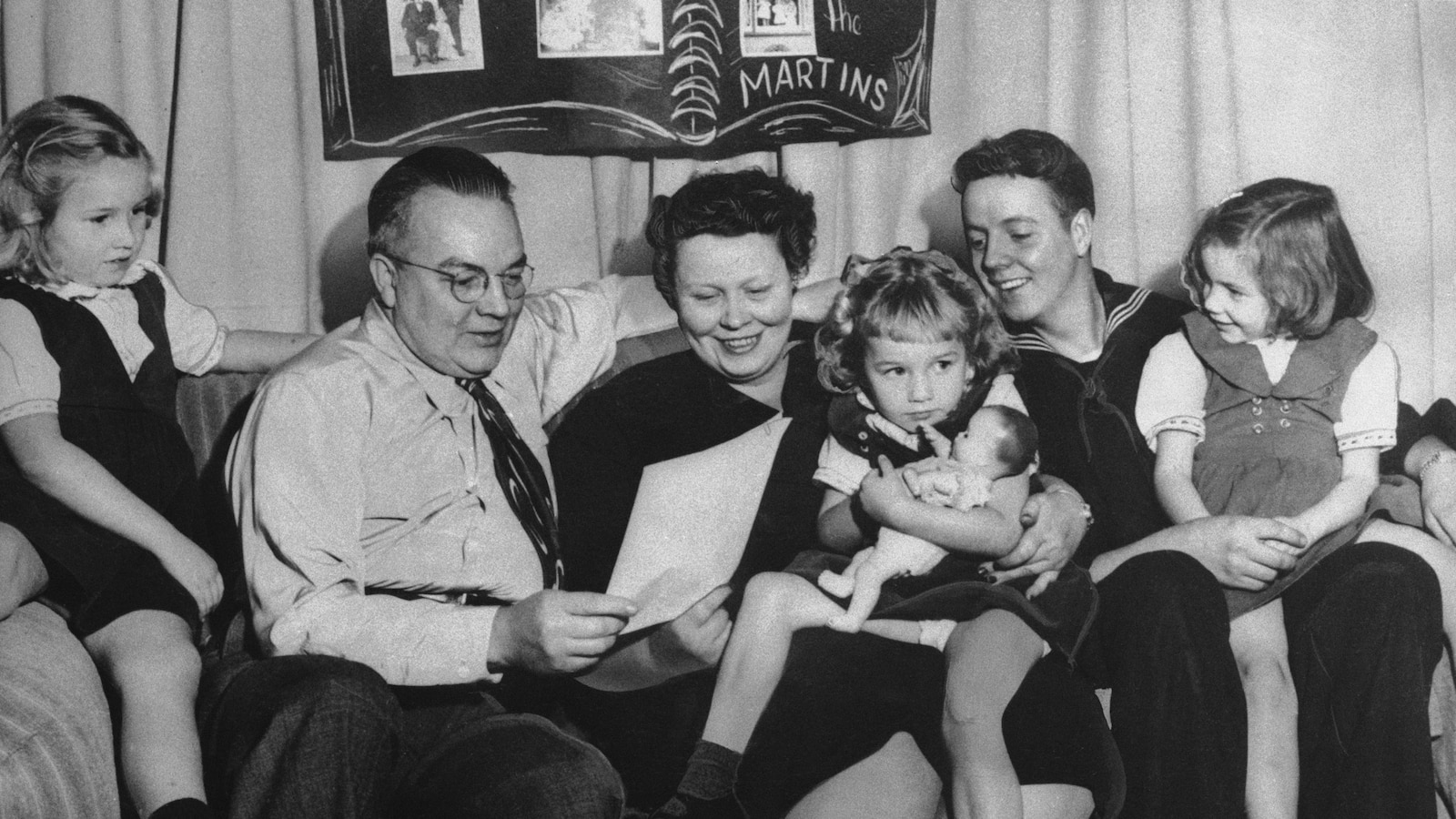
In December 1958, the Martin family set out on what should have been a simple, joyful pre-Christmas excursion to gather evergreen boughs for holiday decorating—a common tradition in the Pacific Northwest. Kenneth and Barbara Martin, along with their daughter Barbie, never returned home from that trip. What followed was one of the most haunting missing persons cases in Oregon history, a mystery that gripped the nation and left a community searching for answers for nearly seven decades. This week, authorities in Hood River County finally closed the book on this tragic case, announcing that DNA analysis has positively identified remains found in the Columbia River as those of the missing Martin family members. The discovery brings closure to a story that has puzzled investigators, captivated amateur sleuths, and haunted the memories of those old enough to remember when the Martins first vanished.
The case had always been shrouded in uncertainty and speculation. When the family first disappeared, search parties combed the rugged terrain around the Columbia River Gorge, looking for any sign of the missing vehicle or its occupants. In the months following the disappearance, the bodies of two of the Martin children were recovered, deepening the tragedy but providing no clear answers about what had happened to the rest of the family. Kenneth, Barbara, and young Barbie simply seemed to have vanished without a trace, leaving behind questions that would remain unanswered for generations. The lack of evidence frustrated investigators and family members alike, while spawning theories that ranged from tragic accident to something more sinister.
The Search That Captured America’s Attention
The disappearance of the Martin family became a national news story in the late 1950s, an era when such mysteries captivated the public imagination in ways that feel familiar even today. Newspapers across the country followed the case, and a substantial reward of $1,000—equivalent to roughly $10,000 in today’s money—was offered for information that could help solve the puzzle. The Associated Press, in a poignant article published in 1959, captured the frustration that investigators felt: “Where do you search if you’ve already searched every place logic and fragmentary clues would suggest?” It was a question that had no good answer at the time.
Theories about what might have happened to the Martin family ran the gamut. Some wondered if the family had met with foul play, perhaps falling victim to robbery or worse on that December day. The fact that two of the children’s bodies had been found, but not the parents or Barbie, seemed to suggest something more complicated than a simple accident. Others theorized that the family’s car might have gone off one of the winding roads near the Columbia River, plunging into the water in an area where it couldn’t be easily spotted. The Columbia River, with its strong currents, deep channels, and murky waters, had claimed vehicles and lives before. But without any physical evidence—no car, no additional bodies, no witnesses—the case grew cold, eventually fading from headlines as newer tragedies and mysteries took its place in the public consciousness.
A Diver’s Determination Solves the Mystery
The breakthrough in this decades-old case came not from law enforcement using new technology or reopening old files, but from the dedication of a private diver who became fascinated with the Martin family’s story. For several years, this individual systematically searched sections of the Columbia River near Cascade Locks, Oregon, believing that the answers to the family’s disappearance lay beneath the water’s surface. In 2024, that persistence paid off when the diver located what appeared to be the wreckage of a vehicle matching the description of the Martin family’s Ford station wagon. The discovery set in motion a careful recovery and investigation process that would ultimately provide the answers that had eluded so many for so long.
Retrieving evidence from the river proved to be a challenging endeavor. According to the Hood River County Sheriff’s Office, the vehicle had become extensively encased in sediment over the more than six decades it had been submerged. The Columbia River’s powerful currents and the layers of silt that accumulate over time had essentially buried the car, preserving it in a tomb of mud and debris. When authorities pulled parts of the vehicle from the water in 2025, only the frame and some attached components could be recovered—the rest had either deteriorated completely or remained too deeply embedded to extract. Despite the fragmentary nature of the recovery, investigators were able to analyze these components and definitively conclude that this was indeed the Martin family’s missing station wagon.
Modern Science Provides Long-Awaited Answers
The most significant discovery came later in 2025, when the diver located human remains in the vicinity of the vehicle wreckage. These remains were carefully recovered and turned over to the Oregon State Medical Examiner’s Office, where forensic scientists applied modern DNA analysis techniques that couldn’t have been imagined when the Martins first disappeared. The process involved developing DNA extracts from the remains—no simple task given their age and the conditions they had been subjected to for nearly seven decades underwater. Scientists then generated DNA profiles from these extracts and compared them with DNA samples provided by living relatives of the Martin family. The results provided definitive identifications: the remains belonged to Kenneth Martin, Barbara Martin, and their daughter Barbie.
This confirmation answered the fundamental question that had haunted the case for so long: what happened to the Martin family? The Hood River County Sheriff’s Office, after conducting a thorough investigation of all the evidence, concluded that there was no indication of foul play. The most likely scenario is that on that December day in 1958, while searching for Christmas greenery along the roads that wind through the Columbia River Gorge, the Martin family’s car left the roadway and plunged into the river. Whether it was due to icy conditions, a mechanical failure, a moment of distraction, or simple tragic misfortune, we may never know with certainty. What is clear is that the family met with an accident, their vehicle sinking into waters that would hold their secret for 67 years.
Closure After Nearly Seven Decades
The identification of the Martin family’s remains and the conclusion of the investigation brings a measure of closure to a case that has lingered in the community’s collective memory for generations. For any surviving relatives—grandchildren, nieces, nephews, and extended family members who grew up hearing stories about Kenneth, Barbara, and Barbie—the news provides concrete answers, even as it confirms the tragic end that many had long suspected. There’s something particularly poignant about the circumstances of their disappearance: a family undertaking the simple, wholesome activity of gathering Christmas greenery, a snapshot of 1950s American life, meeting with sudden tragedy that would remain hidden for so long.
This case also stands as a testament to the power of persistence and modern forensic science. The mystery was solved not through a renewed official investigation but through the determination of one individual who refused to let the story remain unfinished. Combined with advances in DNA technology that allow scientists to extract and analyze genetic material from remains that have been submerged for decades, this dedication brought answers that seemed impossible to obtain for most of the past 67 years. As the Hood River County Sheriff’s Office officially closes its investigation, the Martin family can finally rest with their story known, their disappearance no longer a mystery but a tragic accident that serves as a reminder of both the dangers of the natural world and the enduring human need to find answers, no matter how long it takes.