

Democrats Launch Major Legal Battle Against Trump’s Mail-In Voting Executive Order
A Constitutional Challenge to Presidential Authority
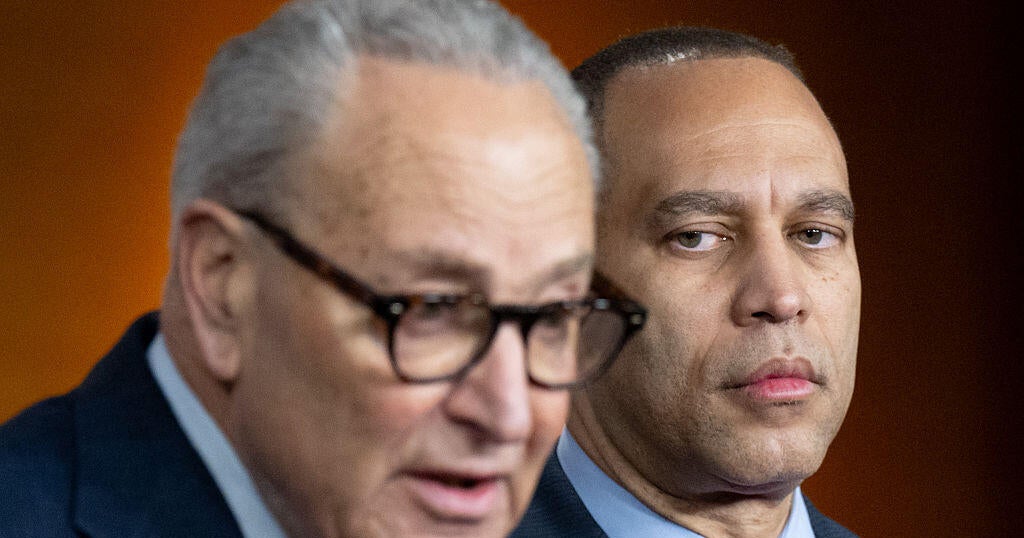
In a significant legal confrontation that could reshape how Americans vote, a powerful alliance of Democratic organizations filed a lawsuit on Wednesday challenging President Trump’s recent executive order on mail-in voting. The coalition includes heavy hitters like the Democratic National Committee, the Democratic Governors Association, and two prominent Democratic campaign organizations, all represented by attorney Marc Elias. What makes this case particularly noteworthy is that it’s not just party operatives leading the charge—the top two Democrats in Congress, Senate Minority Leader Chuck Schumer and House Minority Leader Hakeem Jeffries, have also put their names on the lawsuit. This united front signals just how seriously Democrats are taking what they view as an unprecedented federal intrusion into state election processes. The lawsuit, filed in Washington D.C.’s federal court, represents the first major legal pushback against an executive order that Trump signed just a day earlier, setting the stage for what promises to be a contentious battle over who gets to control how Americans cast their ballots.
What the Executive Order Actually Does
At the heart of this controversy is an executive order that would fundamentally change how mail-in voting works across America. The order tasks Secretary of Homeland Security Markwayne Mullin with creating comprehensive lists of U.S. citizens eligible to vote in every single state, drawing information from the Social Security Administration’s databases. But it doesn’t stop there—the order also directs the U.S. Postal Service to only deliver absentee ballots to people whose names appear on each state’s federally approved mail-in ballot list. It’s essentially creating a federal gatekeeper system for something that has traditionally been managed at the state level. Perhaps most concerning to critics is the enforcement mechanism: states that refuse to comply with the executive order risk losing federal funding, according to White House officials. This financial threat raises the stakes considerably, potentially forcing states to choose between maintaining their traditional election procedures and losing crucial federal dollars. Adding to the uncertainty is a troubling question that nobody seems able to answer clearly: what happens if an eligible U.S. citizen somehow gets left off the list? Could legal voters be inadvertently disenfranchised by administrative errors or database problems?
The Constitutional Arguments Against Federal Overreach
The Democratic coalition’s legal argument rests on fundamental principles of American constitutional law—specifically, that the president is massively overstepping his authority. Their 64-page complaint argues that the executive order unconstitutionally tramples on powers that the Constitution explicitly reserves for Congress and individual states when it comes to regulating elections. The Constitution, after all, doesn’t grant the president any direct authority over how federal elections are conducted. This isn’t just a technical legal point; it goes to the heart of how American democracy functions. The lawsuit frames Trump’s order as part of a broader pattern—an attempt to “rewrite election rules for his own perceived partisan advantage.” In language that echoes the founding principles of American government, the Democratic groups wrote: “Our Constitution’s Framers anticipated this kind of desire for absolute power. They recognized the menace it would pose to ordered liberty and the ways in which it would corrode self-government like an acid.” The plaintiffs describe the executive order as “convoluted and confusing” and argue that it “dramatically restricts the ability of Americans to vote by mail, impinging on traditional state authority.” They’re asking the court to strike down the order on multiple constitutional grounds, including violations of the First, Fifth, and Tenth Amendments, separation of powers principles, and several federal laws including the Administrative Procedure Act and the Voting Rights Act.
The Broader Context of Trump’s War on Mail-In Voting
This executive order didn’t emerge in a vacuum—it’s part of President Trump’s sustained public campaign against mail-in voting, which he has repeatedly claimed is riddled with fraud despite a complete lack of evidence supporting such allegations. Trump has been pressuring Congress to pass the SAVE Act, legislation that would impose proof-of-citizenship requirements ostensibly aimed at preventing non-citizens from registering to vote, even though election experts agree that such illegal voting is already extraordinarily rare. The president’s focus on this issue reveals a deeper strategy: reshaping American voting procedures in ways that he apparently believes will benefit him and his party politically. This isn’t even Trump’s first attempt to use executive power to change voting rules. Last year, he signed another executive order that tried to impose proof-of-citizenship requirements on federal mail voter registration forms and threatened to withhold congressional funding from states that didn’t enter into election-related information-sharing agreements with the federal government. That earlier order met the same fate that this new one might face—it was struck down by multiple courts who found that the president simply doesn’t have the constitutional authority to make such sweeping changes to election procedures on his own.
Legal Precedent Points Toward Democratic Victory
History may be on the Democrats’ side in this legal battle. When courts examined Trump’s previous executive order on voting, they delivered clear and unambiguous rejections of presidential authority in this area. U.S. District Judge Colleen Kollar-Kotelly’s opinion in striking down the earlier order provides a roadmap for how courts might approach this new challenge. She wrote with remarkable clarity: “The first question presented in these consolidated cases is whether the President, acting unilaterally, may direct changes to federal election procedures. Because our Constitution assigns responsibility for election regulation to the States and to Congress, this Court holds that the President lacks the authority to direct such changes.” This precedent establishes a clear principle: the president cannot simply decree changes to how Americans vote, no matter how strongly he feels about the issue. The legal framework is well-established—election regulation is a power shared between the states and Congress, not something the president can control through executive action. The federal system was designed this way deliberately, to prevent exactly the kind of centralized control over elections that Trump’s order attempts to establish. Unless courts suddenly reverse their previous interpretations of constitutional authority, this executive order faces steep odds of survival.
The Stakes for American Democracy
Beyond the immediate legal questions, this lawsuit represents a clash over fundamental questions about how American democracy should function. At stake is whether individual states will continue to have primary authority over their own election procedures—a principle that’s been central to American federalism since the founding—or whether the federal executive branch can impose nationwide voting rules from Washington. The Democratic coalition’s decision to mount such a comprehensive legal challenge, with representation from Marc Elias (a prominent election law attorney) and support from Congress’s Democratic leadership, shows how seriously they view the threat. This isn’t just about making voting more convenient or protecting one party’s electoral chances; it’s about preserving the constitutional balance of powers that prevents any one branch of government from dominating the others. As the case moves forward through the federal courts, Americans should pay close attention not just to the immediate outcome but to the broader implications. Will courts continue to enforce constitutional limits on presidential power, or will they allow executive orders to reshape fundamental democratic processes? The answer will help determine what kind of democracy America has in the years to come. While the White House has been asked for comment on the lawsuit, the legal battle is just beginning, and its resolution could set precedents that echo far beyond this particular executive order or this specific administration.