


New Lyme Disease Vaccine Shows Promise: What You Need to Know
Breakthrough Results from Clinical Trials
This week brought encouraging news in the fight against Lyme disease when pharmaceutical giant Pfizer, working alongside partner company Valneva, shared results from their late-stage clinical trials of an experimental vaccine. The vaccine candidate, known scientifically as PF-07307405, demonstrated an impressive 73.2% effectiveness in preventing confirmed Lyme disease cases after participants received all four doses compared to those who received a placebo. While this sounds like a major victory, there’s a small catch that’s worth understanding. The study didn’t quite hit one of the statistical markers that scientists use to measure how confident they can be in the results. Think of it like getting a B+ when you needed an A- to meet a scholarship requirement—it’s still good, just not quite what was hoped for. The confidence interval came in at 15.8% when researchers were looking for at least 20%. The reason? There were actually fewer Lyme disease cases during the trial period than expected, which made it harder to gather the robust statistical evidence they were aiming for. Despite this technical shortfall, infectious disease experts are viewing these results as genuinely promising, though they’re careful to note they need to review all the detailed data before making final judgments about the vaccine’s potential impact.
Understanding Lyme Disease and Its Growing Impact
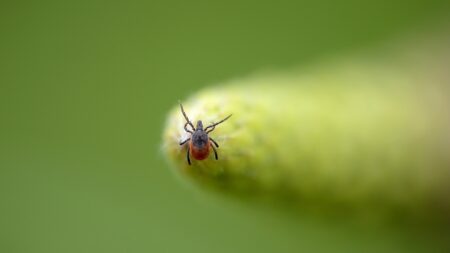
For those unfamiliar with Lyme disease, it’s a bacterial infection transmitted to humans through bites from blacklegged ticks, commonly called deer ticks. These tiny creatures carry bacteria that, once in your system, can cause a range of uncomfortable and potentially serious symptoms. Initially, people infected with Lyme disease typically experience fever, persistent headaches, overwhelming fatigue, and often develop a distinctive skin rash called erythema migrans. If someone doesn’t catch the infection early and get treatment, things can get considerably worse—the bacteria can travel throughout the body, affecting joints, the heart, and even the nervous system, leading to long-term health complications. The numbers tell a sobering story about how widespread this disease has become. In 2023 alone, state health departments and the District of Columbia reported more than 89,000 cases to the Centers for Disease Control and Prevention. But that’s just what gets officially reported. When researchers account for cases that might not make it into official statistics, they estimate that approximately 476,000 Americans are diagnosed and treated for Lyme disease every single year. That’s roughly equivalent to the population of a mid-sized American city dealing with this illness annually, making it a significant public health concern that affects communities across the country, particularly in regions where tick populations thrive.
The Vaccine That Was and What Could Be Again
Here’s something many people don’t realize: the United States actually had a Lyme disease vaccine available once before. Back in the late 1990s and early 2000s, Americans could get vaccinated against this tick-borne illness. So what happened? According to Dr. Gene Shapiro, a professor specializing in pediatric infectious diseases and epidemiology of microbial diseases, the vaccine was discontinued in 2002, but not because it didn’t work. “The uptake was poor. The sales were poor, and the company decided to stop selling it,” Shapiro explained. It was essentially a business decision based on lack of demand. Dr. Martin Becker, a clinical associate professor at NYU Grossman Long Island School of Medicine, adds more context to why people avoided the vaccine back then. There were concerns circulating that vaccine recipients might develop joint problems, which understandably made people nervous. However, when researchers conducted thorough studies to investigate whether there was actually a connection between the vaccine and joint issues, multiple studies failed to find any real association. It appears fear and misinformation played a significant role in the vaccine’s demise. What makes the current Pfizer-Valneva vaccine particularly interesting is that it’s “very, very similar to that vaccine, with very minor modifications,” according to Shapiro. Essentially, researchers took something they knew worked and made small improvements, rather than starting from scratch.
Expert Perspectives on the New Vaccine’s Potential
Medical experts watching this development are cautiously optimistic while maintaining the professional skepticism that good science requires. Dr. Shapiro points out an important competitive advantage this vaccine has: timing. “There are many other companies that are trying to develop something, but those are years and years and years away from being anywhere close to being marketed,” he noted. While other pharmaceutical companies are working on their own Lyme disease vaccines, they’re much earlier in the development pipeline, meaning we could be waiting a decade or more to see alternatives. That makes this Pfizer-Valneva vaccine the frontrunner by a significant margin. Dr. Becker has been following the vaccine trials closely and describes this as “the one that’s been most advanced” among current clinical trials. “We were eagerly awaiting results from this large Phase III trial,” he said, explaining that earlier trials had already shown promising results regarding both safety and the vaccine’s ability to trigger an immune response. When it comes to the technical miss on the primary statistical endpoint, Becker maintains an encouraging outlook. “It doesn’t mean it doesn’t work,” he emphasized, “but it does mean—if we had higher numbers of incidence of infection—we would be more confident about the degree of protection. It’s very encouraging.” In other words, if more people had contracted Lyme disease during the trial period, researchers would have had more data points to work with, making their statistical confidence stronger. The lower-than-expected infection rate is actually good news for participants but made the math more challenging for researchers.
The Road to FDA Approval and Public Access
So what happens next? Pfizer and Valneva have announced they’re planning to file for approval with the U.S. Food and Drug Administration, the regulatory body responsible for ensuring vaccines and medications are safe and effective before they reach the American public. Pfizer has indicated that despite the statistical technicality they missed, the trial results clearly demonstrate the vaccine provides meaningful protection against Lyme disease. The FDA approval process is thorough and can take considerable time, as regulators carefully review all the trial data, manufacturing processes, and safety information. If approved, the vaccine would be the first Lyme disease prevention option available to Americans in over two decades. However, getting FDA approval is just the first hurdle. The real question that many experts are pondering is whether Americans will actually get vaccinated this time around, given the poor uptake of the previous vaccine. Dr. Shapiro believes there’s reason for optimism that things might be different this time. When the old vaccine was on the market, the recommendation from the CDC’s Advisory Committee on Immunization Practices was fairly lukewarm. “It was not a very strong recommendation,” Shapiro recalled. The guidance essentially said people at higher risk should consider it, but those at low or no risk didn’t really need it. That kind of tepid endorsement doesn’t exactly inspire people to roll up their sleeves. Additionally, Shapiro notes that “there was less awareness of Lyme disease” back then. Today, with cases climbing and more public health education about tick-borne illnesses, awareness is considerably higher.
Looking Ahead: Hope for Prevention
The potential approval of this Lyme disease vaccine represents more than just a new medical product—it’s a chance to prevent hundreds of thousands of infections annually and spare people from both the acute misery of the illness and the potential for long-term complications. For people living in areas where Lyme disease is endemic—particularly the northeastern and upper midwestern United States—this vaccine could be life-changing. Outdoor enthusiasts, people who work outside, families with children who play in wooded areas, and anyone else at risk of tick exposure would have a powerful new tool for protection beyond tick checks and insect repellent. The scientific community appears genuinely hopeful while maintaining appropriate caution until all data can be thoroughly reviewed. As Dr. Shapiro put it, “I think we have to pay attention to this.” The combination of demonstrated efficacy, a track record of safety from the similar previous vaccine, and the fact that it’s years ahead of any competing products makes this vaccine worthy of serious consideration. If the FDA grants approval and healthcare providers offer strong recommendations, we might finally see effective, widespread vaccination against a disease that affects nearly half a million Americans each year. The next few months will be crucial as Pfizer and Valneva work through the regulatory process and the medical community awaits access to the complete trial data. For now, the results offer genuine hope that protection from Lyme disease might soon be just a few shots away.