

Fettuccine Alfredo: A Century-Old Roman Love Story with a Hollywood Twist
Where La Dolce Vita Came to Life
Step inside Alfredo alla Scrofa in Rome, and you’re not just entering a restaurant—you’re walking into living history. The walls tell stories through photographs of golden-age Hollywood royalty: John Wayne’s rugged charm, Audrey Hepburn’s elegance, Gregory Peck’s sophistication, and Tony Curtis’s star power all frozen in time. “This was La Dolce Vita,” says Mario Mozzetti, the restaurant’s current owner and custodian of a century-old culinary tradition. But these weren’t just casual diners stopping by for a quick bite. When the cameras stopped rolling and the glamorous movie stars of the 1950s and 60s needed sustenance, they found their way to this very spot to experience the authentic Fettuccine Alfredo—a dish that was born within these walls over a hundred years ago. Mozzetti carries on a proud family legacy as a third-generation “mantecatore,” or creamer—the person responsible for the theatrical, almost balletic mixing of the pasta that transforms simple ingredients into culinary magic. The origin story is as tender as the pasta itself: Alfredo Di Lellio, the restaurant’s original owner, created this dish out of love when his wife fell ill after childbirth and couldn’t eat. In his kitchen, driven by devotion, Alfredo crafted something extraordinary from the simplest ingredients, creating not just a meal but a remedy, a comfort, and eventually, a legend.
The Dance of Simple Perfection
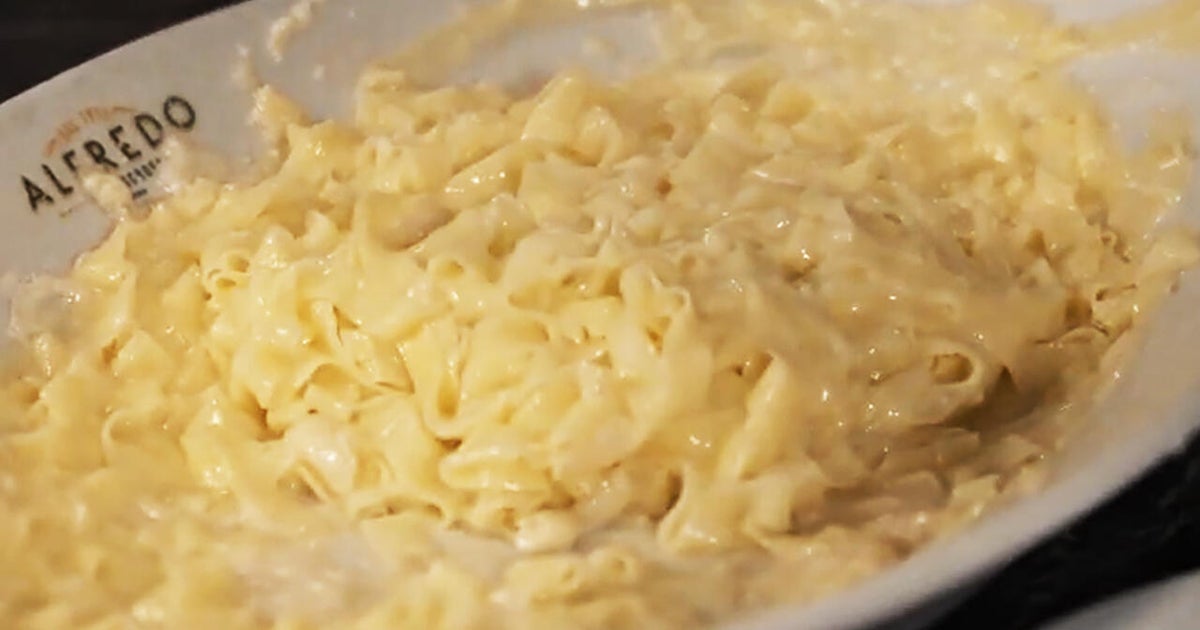
What makes Fettuccine Alfredo so special isn’t complexity—it’s the paradox of extreme simplicity executed with precision. The dish begins with fresh egg pasta, cut so thin that the preparation takes longer than the cooking. And the cooking? That’s where Mozzetti’s expertise becomes crucial. “More or less, 30 seconds,” he explains, “instead of three, four, five minutes, which is the normal cooking time of egg pasta.” Those brief thirty seconds are critical—too long and you lose the delicate texture that makes this pasta transcendent. Once perfectly cooked, the pasta goes into a dish with some of its cooking water, a modest amount of butter, and Parmesan cheese aged for exactly 24 months. Then comes the performance: Mozzetti’s dramatic mixing technique, which resembles weaving as much as cooking. His hands move in practiced rhythms, lifting and folding, creating an emulsion that coats every strand. “This is a dance!” he declares with pride. “This is the waltz that Alfredo dedicated to his wife. It’s simple, but very, extremely simple and complicated at the same time.” This beautiful contradiction—something that uses just three main ingredients yet requires years to master—captures the essence of Italian cooking at its finest. It’s a reminder that great cuisine doesn’t always mean exotic ingredients or elaborate techniques; sometimes it means respecting tradition, understanding timing, and performing simple steps with consummate skill and genuine love.
When Hollywood Royalty Fell in Love
The year 1920 marked a turning point not just for cinema but for this humble pasta dish. Mary Pickford and Douglas Fairbanks were the Brad Pitt and Angelina Jolie of their era—perhaps even bigger. Their marriage was a media sensation, covered with the same breathless excitement that would later greet royal weddings. For their honeymoon, they chose Rome, and there they discovered Fettuccine Alfredo. The power couple didn’t just enjoy the dish; they became evangelists for it, helping to spread its fame across the Atlantic. Decades later, in 1951, Pickford was still declaring her devotion. Mozzetti shows off a message she wrote: “Alfredo the great, yesterday, today, tomorrow, and for always, Alfredo.” She was in love with this place,” he says with evident pride. As a token of their gratitude and affection, Fairbanks and Pickford presented Alfredo with a golden fork and spoon—ceremonial utensils befitting a dish they considered worthy of royalty. But like many treasures in war-torn Europe, these originals met a tragic fate. “In the ’40s and during the second war, unfortunately, the Nazis took the original ones,” Mozzetti explains. Yet the loss of those physical symbols couldn’t diminish the restaurant’s appeal. For more than a century, everyone who was anyone in show business made the pilgrimage. Mozzetti recalls with particular emotion meeting playwright Arthur Miller: “Arthur Miller was a shock for me. I said, ‘Let me touch you. Let me touch.’ ‘Why?’ ‘Because you were the husband of Marilyn Monroe. Come on. I can’t resist!'” That human moment—a restaurateur starstruck not by Miller’s literary genius but by his connection to another icon—somehow captures the beautiful, slightly absurd magic of celebrity culture and how this restaurant sat at its delicious intersection.
The Plot Thickens: A Rival Emerges
Like any good Hollywood script, this story features conflict, competing claims, and dramatic revelations. Just a short walk from Alfredo alla Scrofa sits another establishment with an audacious name: Il Vero Alfredo—The REAL Alfredo. Run by Chiara Cuomo, great-granddaughter of Alfredo De Lelio, and her mother Ines de Lelio, this restaurant makes its own claim to authenticity, serving what they insist is “the real Fettuccine Alfredo.” Their walls feature an equally impressive celebrity gallery: Ava Gardner, Walt Disney, Elizabeth Taylor, Richard Burton, Sylvester Stallone, and Ronald Reagan all smiled for cameras here. And in a detail that seems almost too perfect, they also possess a golden fork and spoon! When asked about the story of Nazi theft, Cuomo is blunt: “It’s not true. Fake!” So what explains this culinary cold war in the heart of Rome? The answer lies in family business decisions made during tumultuous times. During World War II, Alfredo de Lelio sold his original restaurant to one of his waiters—the uncle of Mario Mozzetti. After the war ended, Alfredo decided to open another restaurant, presumably unable to stay away from the dish and the craft he’d created. Ever since, these two establishments have coexisted in what might charitably be called grudging tolerance, each serving as a mecca for the powerful and famous. Ines de Lelio fondly recalls the Kennedy family visiting their restaurant. “My grandfather said to Kennedy that they will bring luck and health,” she shares—a blessing from one kind of royalty to another, united by their appreciation for perfectly prepared pasta.
The American Interpretation (or Misinterpretation)
Despite their fierce rivalry over authenticity and lineage, the two restaurants find common ground on at least one significant point: Americans have largely gotten Fettuccine Alfredo wrong. “With the shrimps, with cream, I don’t like it,” Cuomo says with unmistakable disapproval. To understand her frustration, consider that the authentic version contains no cream whatsoever—the creamy texture comes entirely from the emulsion created by mixing hot pasta, starchy pasta water, butter, and cheese. Yet across America, “Fettuccine Alfredo” has become synonymous with heavy cream sauce, often loaded with chicken, shrimp, broccoli, or whatever proteins and vegetables a restaurant wants to add. Mozzetti notes that by his count, more than 50 brands of “Alfredo Sauce” are sold in the American market—jarred concoctions that would likely be unrecognizable to the dish’s creator. When asked how he feels about others getting rich off Fettuccine Alfredo while the authentic version remains relatively unknown, Mozzetti’s response is poignant: “It’s very painful. And nobody knows, at least, they don’t know about this place, this location.” Or, as the reporter notes, both locations. This transformation from a simple, technique-driven dish to a cream-heavy American staple reflects a broader pattern in how Italian cuisine has been adapted—some might say diluted—for American tastes. Where Italian cooking prizes simplicity, quality ingredients, and precise technique, American versions often emphasize richness, abundance, and convenience. Neither is inherently wrong, but they represent fundamentally different culinary philosophies. The jarred sauces and cream-laden versions may bear the Alfredo name, but they’re really distant cousins to what Alfredo created in his kitchen out of love for his ailing wife.
Two Pillars of an Italian-American Classic
Perhaps there’s a beautiful irony in the fact that Fettuccine Alfredo, a dish created as an intimate gesture of love between husband and wife, now exists in a state of division between two rival claimants. Yet both restaurants have thrived for decades, each maintaining its own loyal following, each preserving its version of the tradition, each serving as a destination for those seeking authentic Roman cuisine and a taste of history. The rivalry itself has arguably helped keep the authentic dish alive and in the public consciousness. Without the competing claims and the colorful family drama, would Fettuccine Alfredo’s Roman origins be as well-remembered? Would food writers and curious tourists make the pilgrimage to discover the “real” version? Perhaps not. In this way, the two establishments function as dueling guardians of tradition, each motivated to maintain the highest standards partly because the other is watching. These two restaurants represent something larger than a family dispute or competing business interests. They’re living museums of La Dolce Vita, of an era when Hollywood glamour and Roman tradition met over plates of perfectly prepared pasta. They remind us that food is never just fuel—it’s memory, culture, love, and artistry all rolled into one. Whether you choose to visit Alfredo alla Scrofa or Il Vero Alfredo (or both, to compare), you’re not just eating lunch. You’re participating in a story that spans a century, crosses an ocean, and connects a Roman chef’s love for his wife to golden-age Hollywood to your own dining table. That’s the real magic of Fettuccine Alfredo—not the cream sauce or the chicken or the jarred convenience, but the human story of love, craft, and tradition that it carries with every perfectly twirled forkful.