

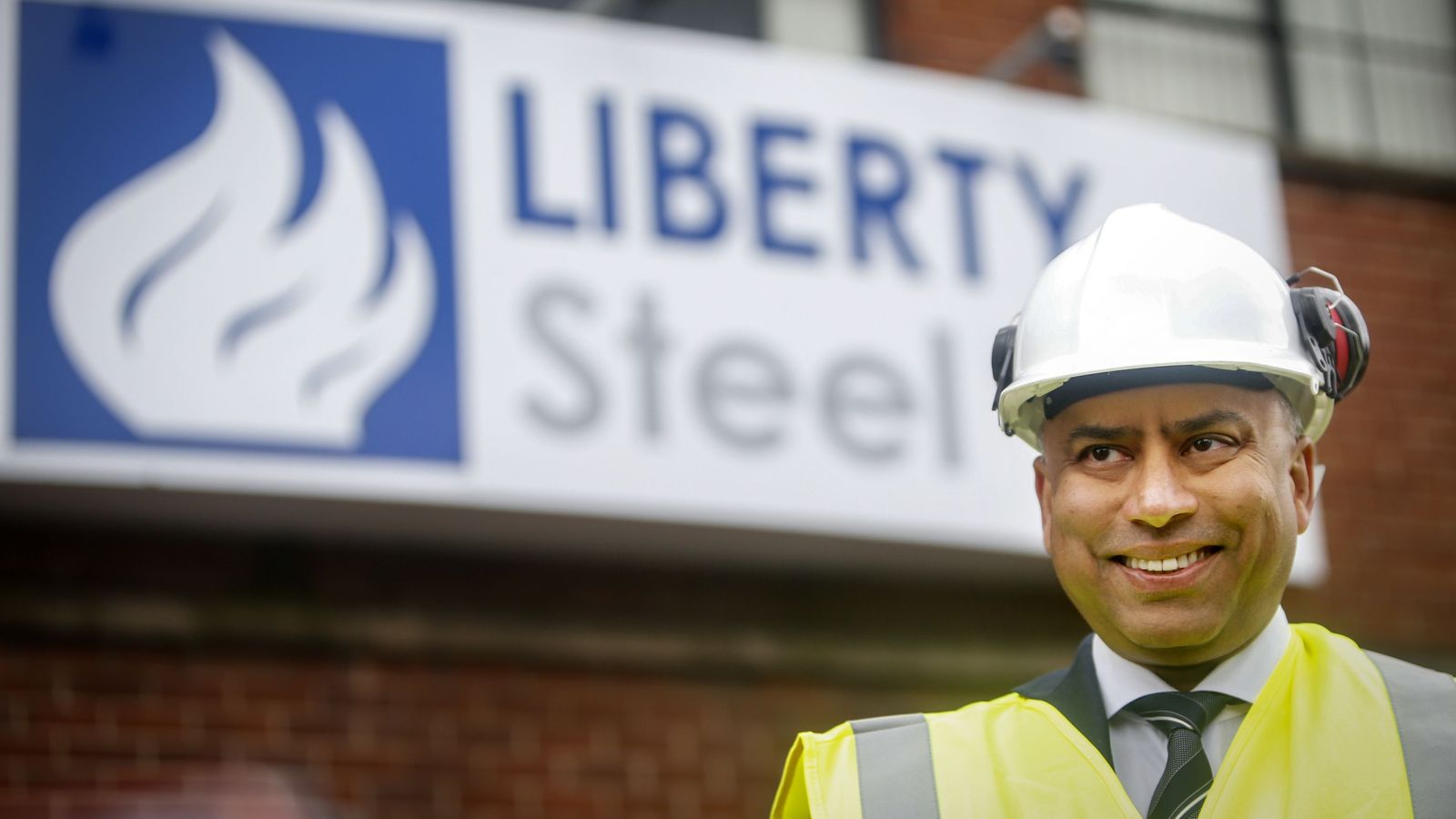

The Unraveling of a Steel Empire: Liberty Steel’s Hartlepool Operations Seek Emergency Buyer
A Business Empire Under Pressure
The once-sprawling industrial empire of businessman Sanjeev Gupta is continuing its dramatic collapse, with the latest casualty being Liberty Steel’s pipe manufacturing facility in Hartlepool. This northeastern England plant, which employs approximately 170 workers and supplies critical steel piping to some of the world’s largest energy companies including BP, Shell, and Equinor, has been put up for urgent sale. The decision marks another chapter in the troubled story of Gupta’s GFG Alliance, a business network that has faced mounting financial difficulties in recent years. Insolvency specialists BTG Advisory, operating under the Begbies Traynor banner, have been brought in to manage what’s being described as an “accelerated sales process,” with potential buyers already being approached. The tight deadline of February 10th for initial bids underscores the urgency of the situation and raises serious questions about the facility’s future if a suitable purchaser cannot be found quickly.
From Expansion to Contraction: The Liberty Steel Story
The current crisis at Liberty Pipes represents just one piece of a much larger puzzle involving Sanjeev Gupta’s ambitious but troubled business ventures. Gupta had built a reputation as something of an industrial savior, acquiring struggling steel assets across Britain and promising to revitalize them. However, the foundation of this empire began to crack dramatically last summer when the majority of his British steel operations, collectively known as Speciality Steel UK (SSUK), were forced into liquidation. A judge delivered a devastating assessment, declaring these operations “hopelessly insolvent,” a legal determination that left little room for optimism about their future. The collapse of SSUK triggered a formal sale process now being managed by the Official Receiver, the government official responsible for handling bankruptcies and liquidations. This process has attracted considerable interest from various parties, demonstrating that despite the financial troubles, the underlying industrial assets and capabilities still hold value for potential investors who might be able to turn them around under different ownership and management.
A Diverse Field of Potential Rescuers
The competition to acquire pieces of Gupta’s former empire reveals the continuing importance of British steel manufacturing despite the sector’s well-documented challenges. Among the bidders for the larger SSUK operations are Arabian Gulf Steel Industries, showing Middle Eastern interest in British industrial capacity. Perhaps more surprisingly, EIG Global Trust, a cryptocurrency fund, has also emerged as a contender according to reports from The Sunday Times, representing an unconventional player in traditional heavy industry. Another competitor, 7 Steel, rounds out the field of outside bidders. In an intriguing twist, Gupta himself hasn’t given up on retaining some control of his former holdings and has been exploring the possibility of mounting his own bid, reportedly with financial backing from BlackRock, the American investment management giant that oversees trillions of dollars in assets worldwide. The Insolvency Service has confirmed that the Official Receiver is actively working through these various proposals, stating that “the sales process is ongoing, with the aim to complete a sale at the earliest opportunity.” This variety of interested parties suggests that while Gupta’s management of these assets may have failed, the fundamental business proposition remains attractive to those who believe they can operate them more successfully.
The Human and Economic Stakes
Behind the financial maneuvering and legal proceedings are real people whose livelihoods hang in the balance. The 170 workers at the Hartlepool pipes facility face an uncertain future as the clock ticks toward the February 20th deadline that Liberty Steel has set for completing a sale. Liberty Steel’s official statement attempts to strike an optimistic tone, explaining that directors have launched this accelerated process specifically to “identify the right industrial or strategic investor to support continued production and deliver a long-term sustainable business.” The company emphasizes that a successful sale would “protect skilled employment, maximise asset value, and deliver the most favourable outcome for the company’s stakeholders.” These aren’t just abstract corporate objectives—they represent the hopes of experienced steelworkers and their families who depend on these jobs, as well as the broader Hartlepool community that benefits from the economic activity the plant generates. The facility recently demonstrated its capabilities by delivering 51,000 tonnes of steel pipe to a major carbon capture project on Teesside, showing that it remains operationally viable and capable of contributing to important infrastructure developments, particularly in the emerging green economy where such facilities will be crucial for Britain’s energy transition.
Broader Questions About British Industrial Policy
The Liberty Steel saga raises uncomfortable questions about Britain’s industrial strategy and the challenges facing its manufacturing sector. The situation has become politically sensitive enough that Prime Minister Sir Keir Starmer’s recent visit to China was expected to include discussions about British Steel, another troubled steelmaker now owned by China’s Jingye Group but currently under UK government control. The fact that a major Teesside project that purchased British-made pipes from Liberty also placed separate orders for Chinese steel has sparked criticism and highlighted the competitive pressures facing domestic manufacturers. These parallel stories illustrate the difficult balancing act facing policymakers who want to support British industry and protect skilled manufacturing jobs while also managing costs and international trade relationships. The steel industry has long been considered strategically important for national security and economic reasons, but successive governments have struggled to develop effective policies to ensure its long-term sustainability. The challenges include high energy costs compared to international competitors, environmental regulations that add expenses, competition from countries with lower labor costs or state subsidies, and the cyclical nature of demand that can swing from boom to bust.
Looking Ahead: Uncertainty and Opportunity
As the February deadlines approach for both the Liberty Pipes business and the broader SSUK assets, the outcome remains uncertain. Liberty Steel’s spokesperson attempted to paint an optimistic picture, highlighting “an exciting sales pipeline for the coming years encompassing carbon capture, hydrogen infrastructure, LNG and oil and gas projects across the UK, EU, Americas, the Middle East and Asia.” This projection emphasizes the potential these facilities have to serve growing markets, particularly in energy transition technologies like carbon capture and hydrogen infrastructure that will be essential for meeting climate goals. However, optimistic projections must be balanced against the harsh reality that these operations have been loss-making in recent years, which is ultimately what led to the current crisis. Whether new ownership can turn around the financial performance while maintaining employment and production capacity remains to be seen. The accelerated timeline suggests that time is running short, and if suitable buyers cannot be found, the alternative could be closure and asset liquidation—an outcome that would represent not just a business failure but a loss of industrial capability, skilled jobs, and strategic manufacturing capacity that would be difficult and expensive to rebuild if needed in the future. For Hartlepool and British industry more broadly, the coming weeks will be crucial in determining whether this chapter ends in renewal or represents another step in the long decline of British manufacturing.