


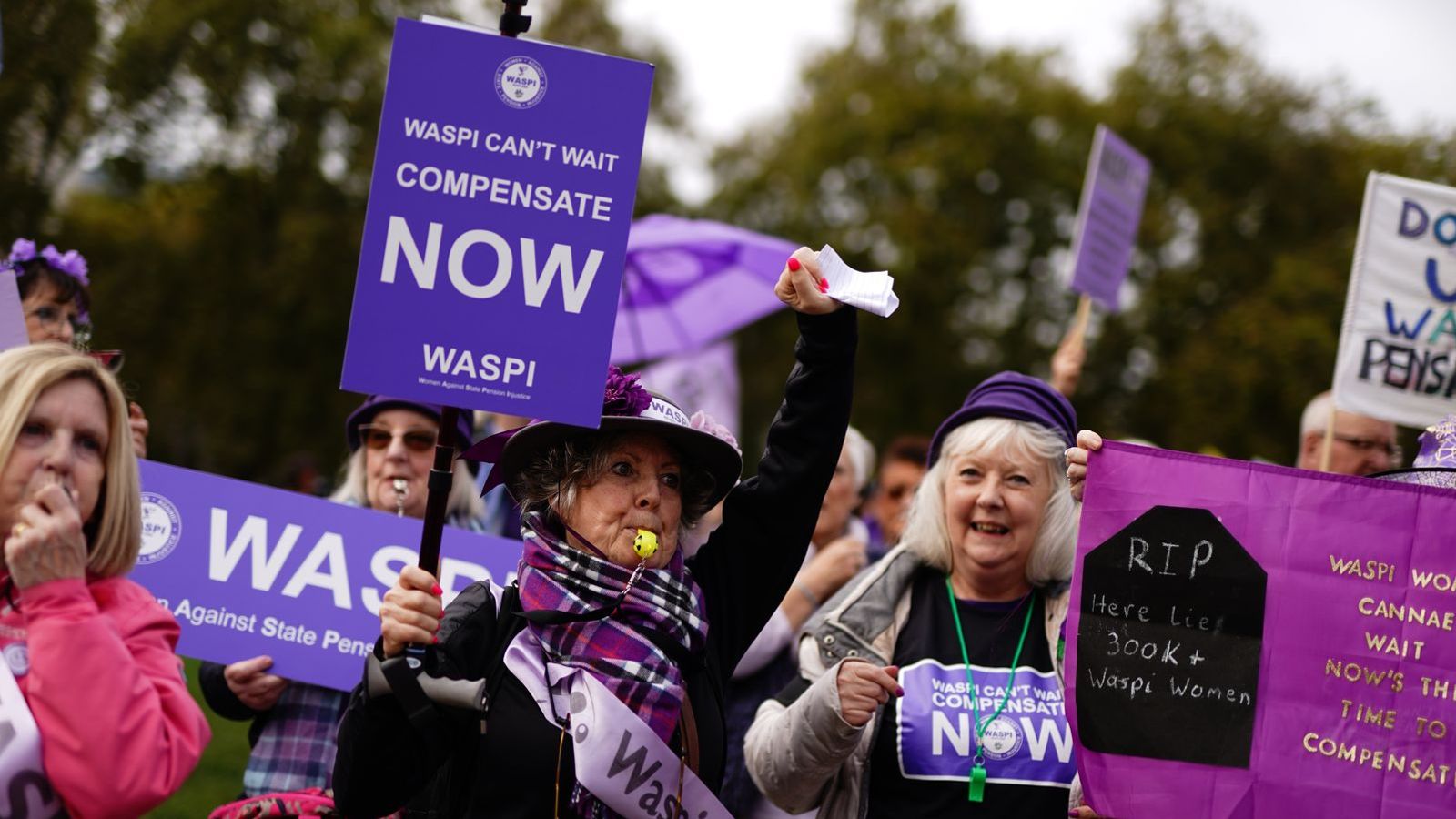

Government Stands Firm: No Compensation for WASPI Women Despite Review
A Decades-Long Battle Reaches Another Roadblock
The ongoing dispute between the UK government and millions of women affected by changes to the state pension age has taken another contentious turn. The Women Against State Pension Inequality (WASPI) campaign, which represents approximately 3.6 million women born between April 1951 and 1960, has been fighting for compensation after their retirement plans were upended by increases to the state pension age. These women have argued passionately that they weren’t given adequate notice when the government decided to raise the pension age for women to match that of men. Despite their persistent campaigning and lobbying efforts, the government has once again rejected their demands for financial compensation, reaffirming a decision originally made in December 2024 and maintaining this position even after conducting a review that considered fresh evidence presented by the campaigners.
The history of these pension changes stretches back nearly three decades. The 1995 Pensions Act first introduced plans to equalize the state pension age between men and women, setting a gradual timeline that would achieve this goal by 2020. However, in 2011, the coalition government made a controversial decision to accelerate this process, speeding up the timetable and adding further increases that would eventually raise the pension age to 66 for everyone. This acceleration caught many women off-guard, particularly those who were already in their fifties and had made financial plans based on retiring at 60, as previous generations of women had done. For some women, this meant waiting an additional five or six years beyond their expected retirement date to receive their state pension, leaving them scrambling to bridge the financial gap through continued employment, savings depletion, or reliance on partners and family members.
The Government’s Position and Recent Review
Work and Pensions Secretary Pat McFadden addressed the House of Commons on Thursday to deliver the government’s final decision following their review. He acknowledged that there are “legitimate and sincerely held views” about whether raising the state pension age was wise, particularly regarding the 2011 decision by the coalition government to speed up the equalization process. However, he emphasized that the recent review focused specifically on how the changes were communicated to affected women, not on whether the underlying policy decision itself was correct. This distinction proved crucial to the outcome, as it narrowed the scope of what the government was willing to reconsider.
McFadden conceded that the government could have handled communications better, stating: “We accept that individual letters about changes to the state pension age could have been sent earlier.” He offered an apology on behalf of the government, repeating sentiments previously expressed by former work and pensions secretary Liz Kendall, saying: “I am sorry that those letters were not sent sooner.” Despite this admission of administrative shortcomings, the minister stood by the government’s position that no compensation should be paid. The reasoning behind this decision rests on the government’s conclusion that while notification could have been improved, most women were generally aware that changes were coming, and therefore, according to the government’s assessment supported by the Parliamentary and Health Service ombudsman, women did not suffer direct financial loss from the delay in receiving individual letters.
The WASPI Campaign’s Furious Response
The reaction from WASPI campaigners was swift and scathing. Angela Madden, who chairs the organization, didn’t mince words in her condemnation of the government’s decision. “This is a disgraceful political choice by a small group of very powerful people who have decided the harm and injustice suffered by millions of ordinary women simply does not matter,” she declared. Her statement captured the frustration and anger felt by countless women who believe they’ve been treated unfairly by a system that changed the rules when many were too close to retirement to adequately adjust their plans.
Madden pointed out what campaigners see as a glaring inconsistency in the government’s approach to spending priorities. She noted that the parliamentary ombudsman has stated that economic circumstances shouldn’t be used as justification for denying compensation to those who deserve it. “The government has magically found billions to fund policies not made in their election manifesto, proving money can quickly become available when ministers consider something a priority,” she argued, highlighting what WASPI supporters view as selective concern for fiscal responsibility. The organization is now taking legal advice and considering all available options, with Madden emphasizing that “all options remain on the table” and that they’re prepared to “pursue every avenue in Parliament and in the courts to secure the justice that has been so shamefully denied.”
The Financial Stakes and Political Context
The financial implications of this dispute are substantial. The government has previously estimated that compensating all 3.6 million affected women could cost approximately £10.5 billion—a figure that represents a significant claim on public finances. This enormous potential cost likely plays a major role in the government’s determination to resist compensation demands, regardless of the political pressure and public sympathy that WASPI has generated. For context, this amount could fund numerous other government priorities or represent a meaningful portion of annual departmental budgets, making it a decision with far-reaching implications for public spending.
However, for the individual women affected, the issue isn’t about billions in aggregate—it’s about the thousands of pounds each woman lost when their expected retirement date suddenly shifted several years into the future. Many of these women had planned their finances carefully, expecting to retire at 60 as women of previous generations had done. Some left jobs or reduced their working hours in anticipation of receiving their pension, only to find themselves in financial difficulty when the expected income didn’t materialize. Others faced age discrimination in the job market when they tried to continue working, finding themselves stuck between being too young for their pension but too old for many employers to consider hiring. The human cost of these policy changes, campaigners argue, cannot be measured purely in spreadsheets and fiscal projections.
The Communication Failure at the Heart of the Dispute
At the center of this controversy lies a fundamental disagreement about what constitutes adequate notice of life-changing policy shifts. The government maintains that because the changes were announced in legislation passed in 1995, with further modifications in 2011, women had sufficient time and information to adjust their plans. They argue that these weren’t secret changes but publicly announced policies that received media coverage and parliamentary debate. From this perspective, the responsibility lay with individuals to stay informed about policies affecting their retirement.
WASPI and its supporters tell a very different story. They argue that general legislative announcements and media coverage don’t constitute proper individual notification of changes that would fundamentally alter someone’s retirement timeline. Many women report that they never received personal letters informing them of their new pension age until it was too late to make adequate financial preparations. Some learned about the changes only when they contacted the pension service to make retirement arrangements, discovering they had years longer to wait than they’d anticipated. The government’s admission that individual letters “could have been sent earlier” and the official apology for this delay represent a tacit acknowledgment that their communication approach was flawed, yet they stop short of accepting that this failure warrants financial compensation.
Looking Forward: What Happens Next?
The WASPI campaign now faces a critical decision about how to proceed. With the government’s position seemingly entrenched despite the review, campaigners must decide whether to pursue legal challenges, continue parliamentary lobbying, or both. Legal action carries its own risks and costs, with no guarantee of success, but may represent the best remaining option for women who feel the political process has failed them. The courts could potentially take a different view on whether the communication failures constituted maladministration deserving of remedy, though judicial review of government policy decisions faces high hurdles.
This dispute also raises broader questions about how governments manage major policy transitions affecting millions of people, particularly vulnerable groups who may lack the resources to easily adapt to sudden changes. The WASPI situation has become a cautionary tale about the importance of clear, timely, individualized communication when implementing policies with significant personal financial consequences. As populations age across developed nations and pension sustainability becomes increasingly challenging, the lessons from this controversy about trust, communication, and fairness in pension policy reform will likely resonate far beyond the UK. For now, 3.6 million women and their families await the next chapter in this ongoing battle for what they consider basic justice and recognition of the hardship they’ve endured.