


Remarkable Discovery: Rare Species Found Deep Within Cambodia’s Hidden Cave Systems
A Journey Into Uncharted Territory
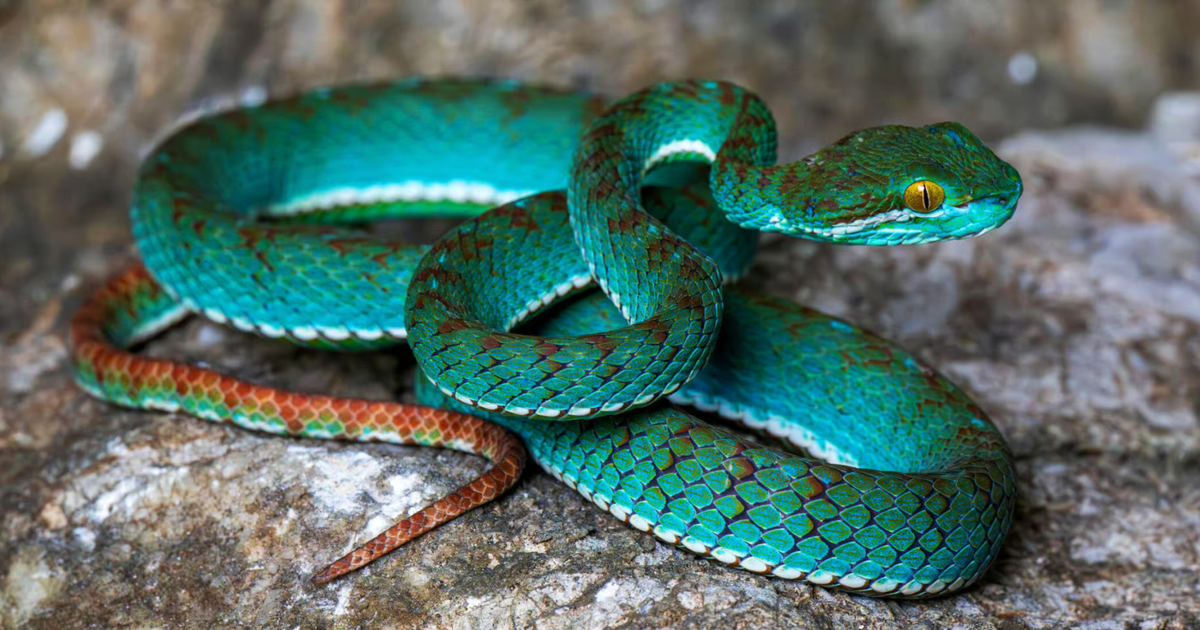
In what represents one of the most exciting biodiversity discoveries in recent years, scientists have unveiled the existence of numerous rare and previously unknown species hidden within the limestone caves of Cambodia’s Battambang province. This groundbreaking research, conducted over multiple years by Fauna & Flora Cambodia in partnership with the country’s ministry of environment, has shed light on ecosystems that have remained virtually untouched and unstudied for centuries. The expedition surveyed more than 60 limestone caves scattered across 10 different hills in western Cambodia, a region characterized by dramatic karst formations—towering limestone cliffs riddled with secretive caves and isolated ecosystems. Among the most spectacular finds were a stunning fluorescent-turquoise pit viper that represents an entirely new species, along with a graceful flying snake, cryptically camouflaged geckos, and brilliantly colored millipedes that likely pack a poisonous punch. The discovery has not only expanded our understanding of Cambodia’s rich biodiversity but has also highlighted the urgent need to protect these fragile ecosystems before they disappear forever.
The Challenge of Exploring Cambodia’s Forgotten Karsts
The limestone karst formations of Cambodia have long been among the least-studied geological features of their kind anywhere in the world, primarily due to their remote locations and the extreme difficulty of accessing them. These karsts function essentially as “small islands of habitat, each with its own collection of plants and animals,” according to Fauna & Flora’s comprehensive report. Over thousands of years, as human settlements and agriculture expanded around these limestone towers, the ecosystems within them became increasingly isolated from one another. This isolation created a unique evolutionary pressure cooker, where species developed in complete separation from their neighbors just a few miles away. Today, these creatures find themselves effectively trapped, surrounded by what the researchers described as “a sea of inhospitable, human-made landscapes.” Between November 2023 and July 2025, dedicated teams of scientists embarked on what can only be described as an extreme adventure, squeezing through narrow gaps in the limestone and navigating through pitch-black tunnels that frequently forced them to crawl on hands and knees. Dramatic photos and video footage from the expedition show researchers contorting their bodies through jagged crevices deep within the karsts, relying solely on flashlights to illuminate the otherwise completely dark maze of rocky passages, with bats occasionally swooping overhead as they ventured deeper into the unknown.
Extraordinary Creatures in an Isolated World
Beyond the web of claustrophobic passages, researchers discovered an untouched series of caverns teeming with life that has evolved in near-total isolation. The star of the show is undoubtedly the spectacular new species of pit viper, still undergoing formal scientific characterization, which displays an eye-catching fluorescent-turquoise coloration that makes it stand out dramatically against the dark cave environments. These pit vipers possess the characteristic triangular heads of their family and are highly venomous predators that hunt warm-blooded prey using specialized heat-sensitive pits located behind their nostrils, allowing them to “see” the body heat of potential meals even in complete darkness. Joining this remarkable serpent were numerous leaf-toed geckos, so expertly camouflaged against the limestone that they’re nearly impossible to spot until they move, as well as vividly colored millipedes whose bright warning colors likely signal their toxic nature to potential predators. Lee Grismer, a biology professor at La Sierra University in California who participated in the study, explained the phenomenon in fascinating terms: “Each of these isolated karst areas act as their own little laboratory—where nature is performing the same experiment over and over and over independently.” The result of these quarantined conditions is the development of species that exist nowhere else on Earth, with some creatures confined to a single cave system and facing extinction if that one habitat is destroyed.
A Diverse Cast of Cave Dwellers
While the new species grabbed headlines, the survey also documented an impressive range of other creatures, both rare and relatively common, sharing these underground worlds. Among the reptilian residents, researchers encountered a reticulated python—the world’s longest snake species, capable of reaching lengths of over 20 feet—coiled in the darkness. They also found the bright green flying snake, more formally known as the ornate flying snake or golden tree snake, a species native to South and Southeast Asia that has evolved the remarkable ability to glide between trees by flattening its body and undulating through the air. Despite its name, this “flying” snake doesn’t truly fly but rather performs controlled glides that can cover impressive distances. The caves also proved home to spot-legged tree frogs, with their distinctive markings, and technicolored agamid lizards, which painted splashes of color across the cave walls and surrounding vegetation. According to the report, while some of these species are more commonly seen throughout the region, finding them thriving in these cave ecosystems provides valuable data about their habitat preferences and survival strategies. The variety of life discovered reinforces the importance of these karst formations as biodiversity hotspots that support a complex web of interdependent species, from the smallest invertebrates to apex predators like the pit vipers and pythons.
A Critical Conservation Mission
The biodiversity study serves a purpose far beyond simply cataloging interesting creatures—it represents a crucial conservation effort aimed at protecting some of the world’s most vulnerable and least protected ecosystems. According to Fauna & Flora, karst habitats globally rank among the most threatened environments on the planet, with a shocking statistic revealing that only 1% of these formations receive any form of legal protection worldwide. These unique ecosystems face multiple existential threats from human activities, including poorly planned quarrying operations for cement production, which can literally blow apart entire karst formations; unmanaged tourism that disturbs sensitive cave environments and introduces invasive species; wildfires that sweep through surrounding vegetation; logging that destroys forest buffers; and hunting pressure that can quickly wipe out small, isolated populations. The researchers emphasize that the isolated nature of these karsts, while creating unique evolutionary opportunities, also makes the species within them extremely vulnerable to extinction. Because many of these creatures exist only within a single karst formation or even a single cave, the destruction of that one habitat means the permanent loss of species that took thousands or millions of years to evolve.
Racing Against Time to Document and Protect
Sothearen Thi, a biodiversity coordinator who worked extensively on the study, captured the urgency of the situation in stark terms: “Every time you destroy one of these hills, species might be at risk of extinction. Many species may vanish before they can be discovered.” This sobering reality drives the researchers’ efforts to not only document what exists within these caves but to advocate forcefully for their protection before it’s too late. The team’s work has already provided crucial data that can inform conservation policy and help establish protected areas around the most biodiverse karst formations. By revealing the extraordinary creatures living within these hidden worlds—from fluorescent vipers to camouflaged geckos—the researchers hope to capture public imagination and generate support for preservation efforts. The discoveries in Cambodia’s Battambang province demonstrate that even in our modern, heavily explored world, there are still frontier ecosystems waiting to be discovered, often hiding in plain sight in seemingly ordinary limestone hills. These findings remind us that biodiversity exists not just in far-flung rainforests or remote mountain peaks, but sometimes right beside human settlements, tucked away in the cracks and crevices we’ve simply never thought to explore. As development pressures continue to intensify across Southeast Asia, the race is on to document, understand, and protect these miniature worlds before they’re lost forever, taking with them species we never even knew existed.