

The Forgotten Americans: Former Iranian Detainees Speak Out About Current U.S. Prisoners
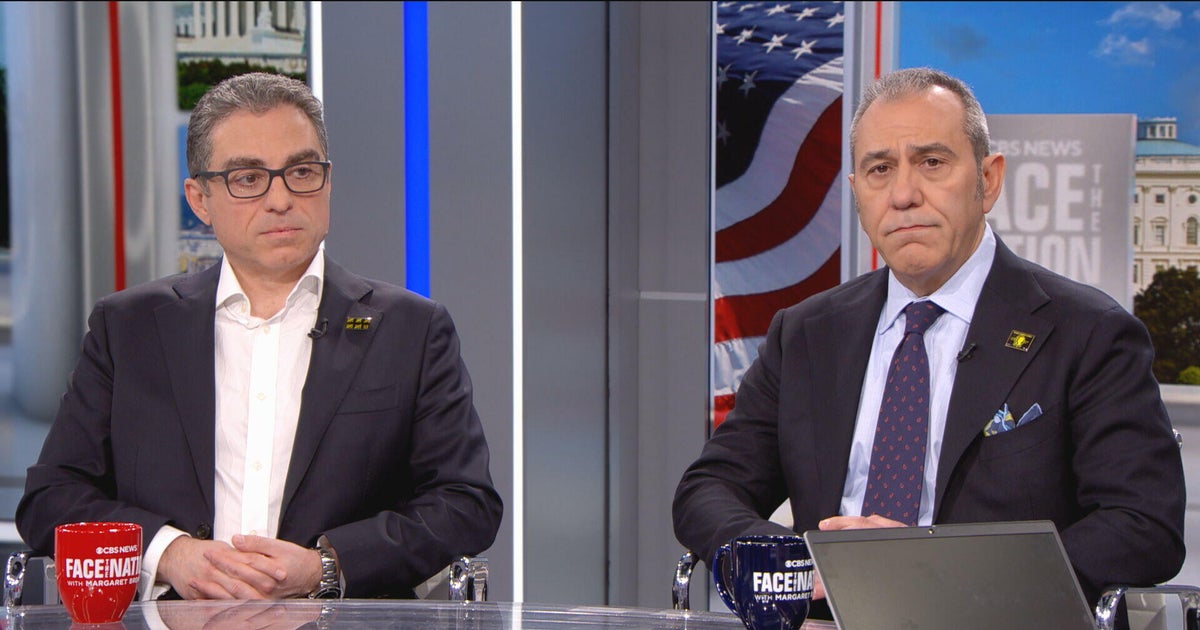
The voices of those who have survived the hellish conditions of Iranian detention are now rising in urgent concern for Americans still trapped behind bars as U.S.-Iran tensions escalate. Siamak Namazi and Emad Shargi, two former prisoners who endured years of captivity in Iran’s infamous Evin prison, are sounding the alarm about fellow Americans currently detained there. Their warnings come at a precarious moment, as military operations intensify and the diplomatic landscape shifts dramatically. These men understand better than most what it means to be caught in the crossfire of international politics, and their message is clear: time is running out for the Americans still imprisoned, and they cannot be forgotten in the fog of war.
Voices from the Darkness: Understanding Life Inside Evin Prison
Siamak Namazi knows the terror of Iranian imprisonment intimately—he spent nearly eight years in captivity, making him the longest-held American prisoner ever released from Iran. When he finally walked free in 2023, the State Department officially recognized that he had been wrongfully detained, a vindication that came far too late to erase the trauma of his ordeal. Now, as he watches tensions between the United States and Iran reach a boiling point, his thoughts turn immediately to those still trapped within Evin’s walls. “They are the easiest-to-grab punching bag right now in the hands of that rogue regime,” he explained during a recent panel discussion. His words carry the weight of lived experience, and his fear is palpable: “For a hostage or wrongfully detained citizen abroad, their biggest fear is to be forgotten, and this is a very dangerous time for them, with all that’s going on in Washington’s mind.”
Emad Shargi, who endured five years of imprisonment in Iran, offered his own chilling perspective on what happens inside Evin when the outside world erupts in chaos. He vividly recalled being trapped inside during the massive anti-government protests of October 2022, sparked by the death of 22-year-old Mahsa Amini, who died in police custody after being arrested for allegedly wearing her hijab incorrectly. While authorities claimed she suffered a heart attack, her family insisted she was beaten to death—a claim that ignited nationwide outrage. “Whenever there is an issue taking place in Iran, the walls of Evin are like an amplifier,” Shargi explained. “So, when there’s a ripple outside in the society, there’s a tidal wave inside.” The prison became a pressure cooker during those protests, with fires breaking out and a flood of new prisoners arriving, all political detainees swept up in the government’s crackdown. For Americans held inside during such turmoil, the situation becomes exponentially more dangerous as the regime seeks to demonstrate control and punish perceived enemies.
The Complex Dance of Diplomacy and Detention
The release of Namazi and Shargi in 2023 came through one of the most complicated diplomatic negotiations in recent memory, a high-stakes deal between Iran and the Biden administration that sparked considerable controversy. The agreement involved the transfer of $6 billion in previously frozen Iranian oil assets and the release of five Iranians facing charges in the United States, in exchange for the freedom of five American citizens. At the time, a senior administration official was careful to emphasize that “this does not change our relationship with Iran in any way. Iran is an adversary and a state sponsor of terrorism.” The statement highlighted the uncomfortable reality of such negotiations: sometimes, to save innocent lives, governments must engage with regimes they fundamentally oppose, creating transactions that feel morally complicated even when they achieve humanitarian goals.
Now, with military strikes intensifying and rhetoric heating up on both sides, both former prisoners are placing their hopes in President Trump’s administration to prioritize the Americans still detained. Namazi expressed confidence that if Trump and his team truly understood that “there are Americans sitting in Evin prison,” they would “put that on the agenda” amid the ongoing conflict. “I think it’s important that he hears that there are innocent Americans being held like we were—as political pawns,” Namazi urged. Shargi echoed this sentiment, saying he couldn’t “imagine if President Trump knew their names and knew these cases, they wouldn’t be one of the priorities.” Both men are banking on the possibility that personalizing these cases—making the detained Americans more than abstract statistics—might capture the president’s attention and move him to action. Shargi added a note of pragmatic optimism: “I personally think that there will be a time soon because all wars end with some form of diplomacy. So, I would implore President Trump to make sure that part of those negotiations that will be coming up is bringing our people home.”
The Americans Still Waiting for Freedom
The urgency of these appeals is underscored by the reality that at least four Americans are currently detained in Iran, with two of them—Reza Valizadeh and Kamran Hekmati—officially designated by the U.S. government as “wrongfully detained.” Both men are believed to be held in the same Evin prison that held Namazi and Shargi, facing the same brutal conditions and uncertain futures. These aren’t just names on a diplomatic ledger; they’re real people with families desperately waiting for their return, trapped in a geopolitical chess game where they serve as convenient bargaining chips. The panel discussion that brought these issues to light included Neda Sharghi, Emad’s sister, who has lived through the agonizing experience of having a loved one held hostage. Her perspective illuminated a crucial problem: “Our American hostages, whether they’re in Iran or in Venezuela, is that they always become a hostage to other bigger, broader political issues.” She argued passionately that Americans “need to convince our government to separate them from what’s going on and find a creative solution, like we did to get Emad and Siamak home.”
The timing of these discussions couldn’t be more critical. The panel took place on the same day that Defense Secretary Pete Hegseth announced that the “largest strike package yet” was being prepared for deployment against Iran. As military action escalates, the window for diplomatic solutions may be rapidly closing, or conversely, the pressure of conflict might create unexpected opportunities for negotiation. The unpredictability of the situation makes it all the more frightening for the families of those detained, who must watch helplessly as events unfold that are completely beyond their control. Each news report of military strikes or diplomatic tensions sends a fresh wave of terror through those waiting at home, wondering whether their loved ones will become casualties of political brinkmanship or whether they’ll be leveraged as bargaining chips in whatever negotiations eventually emerge from the conflict.
The Delicate Art of Separating Issues in Hostage Negotiations
Roger Carstens, who served as the U.S. special envoy for hostage affairs during both the first Trump administration and the Biden administration, provided valuable insider perspective on the complexities of negotiating for prisoners while simultaneously handling larger political issues like nuclear talks. He admitted he didn’t know whether the currently detained Americans were raised during the recent negotiations with Iran led by special envoy Steve Witkoff and the president’s son-in-law Jared Kushner. However, he offered insight into the strategic thinking that goes into such delicate negotiations, drawing from his own experience bringing Shargi and Namazi home. “We were very cognizant of the connection between the nuclear talks and that of the prisoner talks, because if the nuclear talks suddenly fail very horribly, the prisoner talks could be pulled down with it,” Carstens explained. The challenge, he noted, was to keep these issues connected enough to leverage progress on one front to advance the other, but separate enough that failure in one area wouldn’t automatically doom the other.
“We were very practical about how close those issues got together, and we wanted the flexibility to separate them if we wanted to,” Carstens said, describing the careful balancing act required. He acknowledged that from the Iranian regime’s perspective, nuclear issues and the detention of Americans are “much more married close together”—the regime sees these prisoners as valuable leverage precisely because of their connection to larger strategic questions. But Carstens suggested that the current negotiators might be taking a different approach: “If Witkoff and Kushner were trying to articulate an end to a nuclear issue, how close will they push it together? Practically, it may not be that close, depending on where they feel they are with the Iranians.” This uncertainty adds another layer of anxiety for families and advocates who are desperately trying to ensure that the detained Americans remain on the radar of decision-makers. The question becomes whether these prisoners will be integrated into whatever grand bargain might emerge from the current crisis, or whether they’ll be sidelined as negotiators focus on what they perceive as more pressing strategic concerns. For the families waiting at home and the former prisoners who understand what their fellow Americans are enduring, the answer to that question could mean the difference between freedom and indefinite captivity, or possibly even worse outcomes if the situation deteriorates further.