


Tragic End to Custody Battle: Former French Police Officer Arrested in Portugal for Double Murder
A Desperate Act of Violence
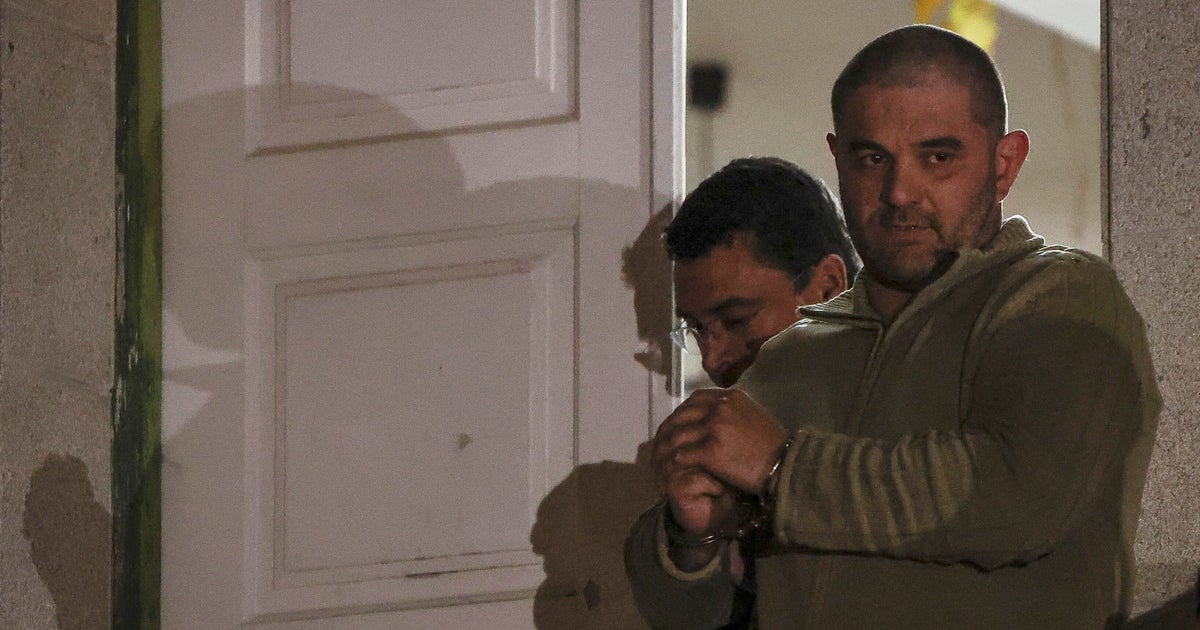
In a heartbreaking case that has shocked communities across France and Portugal, authorities have arrested Cedric Prizzon, a 42-year-old former Paris police officer and one-time rugby league youth international, on suspicion of murdering two women and kidnapping their children. Portuguese police made the arrest near the town of Meda in northern Portugal on Tuesday, discovering Prizzon traveling in a vehicle with two young children—a 12-year-old boy and an 18-month-old baby girl. The following day, in a grim discovery that confirmed investigators’ worst fears, officers located two bodies buried in an isolated location. While official identification procedures were still ongoing, French authorities identified the victims as Audry Cavalier, Prizzon’s former partner and mother of his son, and Angela Cadillac, his current partner and mother of his infant daughter. The case represents a tragic escalation of what had been an increasingly bitter and public custody dispute, one that friends and neighbors say they never imagined would end in such devastating violence.
A Troubled History and Escalating Conflict
Cedric Prizzon’s journey from respected law enforcement officer and promising athlete to murder suspect reveals a pattern of increasingly troubling behavior centered around custody disputes and fathers’ rights activism. His problems began to surface publicly in 2021 when he illegally took his son to Spain for several weeks without permission from the boy’s mother, an action that resulted in criminal harassment charges and ultimately cost him his custody rights. Rather than accept the court’s decision, Prizzon became deeply involved in fathers’ rights activism, joining other men who had lost custody of their children in public protests and mounting an aggressive social media campaign against his former partner. In his online posts, he accused Audry Cavalier of endangering their child, painting himself as a father fighting an unjust system that had wrongfully separated him from his son. This public battle became increasingly vitriolic over time, with Prizzon seemingly unable or unwilling to accept the legal boundaries that had been established. His involvement in the fathers’ rights movement connected him with others who shared similar grievances, but his case would ultimately serve as a stark reminder of how custody disputes can escalate into tragedy when anger and obsession override reason and respect for the law.
The Disappearances and Investigation
The nightmare began to unfold last Friday when 40-year-old Audry Cavalier failed to show up for her job at an insurance company, and her 12-year-old son was absent from school—immediate red flags that something was terribly wrong. Almost simultaneously, neighbors noticed that Prizzon, his 26-year-old current partner Angela Cadillac, and their 18-month-old daughter were also missing from their home in the nearby village of Savignac in the Aveyron area of south-central France. French police quickly connected the disappearances and launched an intensive search for Prizzon, whom detectives immediately suspected of abducting both women and the children. The investigation took on international dimensions as authorities traced Prizzon’s movements across the border into Portugal, coordinating with Portuguese law enforcement to track down the suspect. When Portuguese National Republican Guard officers finally located and stopped Prizzon’s vehicle near Meda on Tuesday, they made disturbing discoveries that painted a picture of a man who had carefully planned his actions. Inside the car, officers found not just the two frightened children, but also a pump-action shotgun, fake documents, counterfeit license plates, and approximately $20,000 in cash—evidence suggesting Prizzon had been preparing to disappear, possibly indefinitely.
The Arrest and Legal Proceedings
Following his arrest, Cedric Prizzon was transported to a court in Vila Nova de Foz Coa, not far from where he was detained, where he underwent several hours of intensive questioning on Thursday evening. The powerfully built former rugby prop forward, once celebrated for his athletic prowess on the field and his service in law enforcement, now faced the most serious charges imaginable: aggravated homicide, desecrating a corpse, and kidnapping. Portuguese judicial authorities ordered him remanded in custody as the investigation continues, with the court imposing strict conditions prohibiting any contact whatsoever with the two children. The judge’s order was comprehensive and explicit, barring Prizzon from reaching out to his son or daughter “including telephone, social media, email, written messages, or through third parties”—recognition that even from behind bars, a determined individual might attempt to manipulate or traumatize the young victims further. The children, who have endured unimaginable trauma, are scheduled to be returned to France where arrangements will be made for their care and protection. As Portuguese authorities work to complete the formal identification of the victims and consolidate evidence from the crime scenes, the legal process moves forward on both sides of the border, with French prosecutors also expected to bring charges related to the kidnappings and murders that originated in their jurisdiction.
Community Shock and Disbelief
In the small villages of Aveyron where the victims lived and where Prizzon had been known to many residents, the news of the murders sent shockwaves through tight-knit communities. Neighbors and acquaintances struggled to reconcile the Prizzon they thought they knew—a father passionate about his rights, vocal in his frustrations with the custody system—with the man now accused of such horrific violence. One woman in her 60s, speaking to journalists from Agence France-Presse, captured the sentiments of many when she admitted that while she had always thought Prizzon was “unhinged” in his obsessive focus on the custody battle, she “thought he would never go so far.” Her words reflect a common phenomenon in cases of domestic violence that escalate to murder: warning signs are often visible in retrospect, but few can truly imagine that anger and frustration will transform into lethal action. The community now grapples with questions about whether more could have been done to prevent this tragedy, whether the warning signs were clear enough, and whether the systems meant to protect vulnerable individuals from domestic violence functioned as they should have. For those who knew Audry Cavalier and Angela Cadillac, the shock is compounded by grief for two lives cut short and deep concern for the two children who have lost their mothers in the most traumatic circumstances imaginable.
Broader Implications and Lessons
This devastating case illuminates the dark potential of custody disputes when they become battlegrounds for individuals unable to accept legal decisions or respect boundaries. While fathers’ rights activism itself is a legitimate movement addressing real concerns about custody equity and parental access, Prizzon’s actions represent an extreme perversion of these principles, transforming advocacy into obsession and ultimately into violence. His case serves as a sobering reminder to family courts, law enforcement, and social services about the importance of recognizing and responding to escalating patterns of harassment and control, particularly when they involve individuals who have already demonstrated willingness to violate court orders, as Prizzon did when he took his son to Spain in 2021. The presence of weapons, false documents, and substantial cash suggests a degree of premeditation that should concern anyone involved in domestic violence prevention—this was not a spontaneous act of passion but a calculated series of actions. As the legal proceedings move forward, this case will likely prompt discussions about how to better protect individuals caught in bitter custody disputes, how to identify when a disgruntled parent crosses the line from frustration to danger, and how international cooperation can more effectively prevent those fleeing serious crimes from evading justice by crossing borders. For the two children at the center of this tragedy—a 12-year-old boy who has lost his mother and an 18-month-old girl who will never remember hers—the path forward will require extensive support, counseling, and care as they process trauma that no child should ever experience. Their story, and the lives lost, stand as a stark warning about the deadly consequences when grievance and rage eclipse reason and humanity.