


Italian Mafia Boss Captured at Lavish Coastal Hideaway After Decades on the Run
The Dramatic Arrest of a Notorious Crime Figure
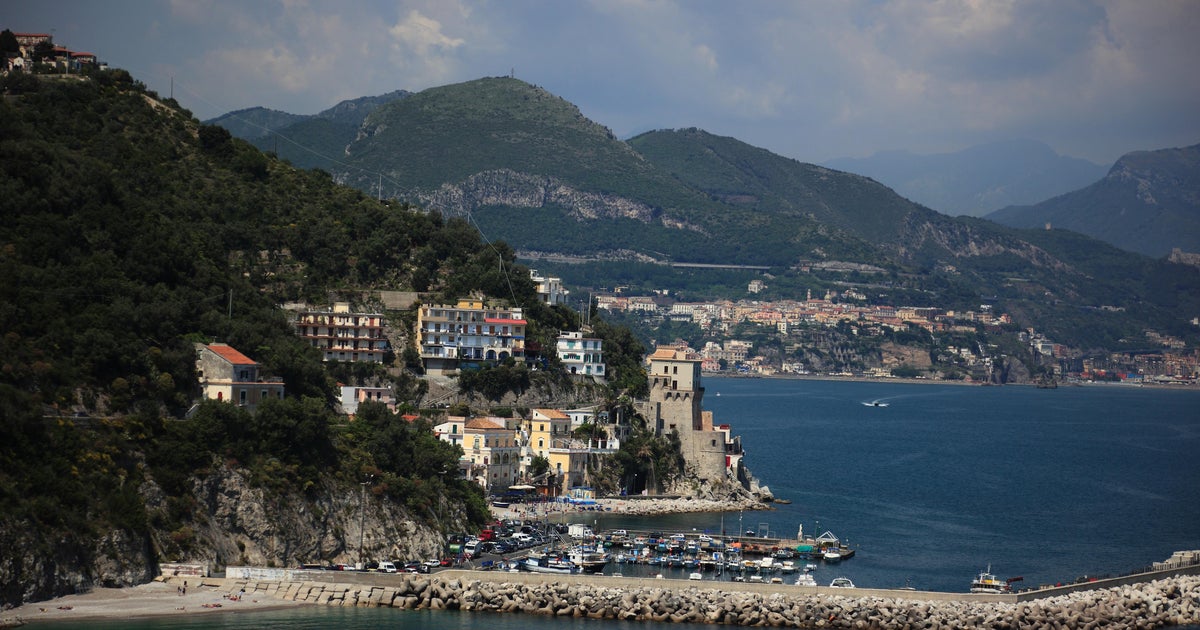
The picturesque Amalfi Coast, typically associated with breathtaking views and romantic getaways, became the scene of a major law enforcement operation this past weekend when Italian authorities apprehended Roberto Mazzarella, a high-ranking mafia boss who had evaded justice for decades. The 48-year-old leader of the Mazzarella clan, a powerful faction within the Camorra crime organization based in Naples, was discovered living in luxury at an upscale villa in the coastal town of Vietri sul Mare. According to Italian police statements, Mazzarella was peacefully taken into custody during a carefully orchestrated raid that involved heavily armed officers and even a patrol boat deployed along the coastline. At the time of his capture, the crime boss was surrounded by the trappings of domestic life – his wife and two children were present at the property, painting a stark contrast between his family man facade and his alleged violent criminal past.
What makes this arrest particularly significant is that Mazzarella had been classified as one of Italy’s most dangerous fugitives by the country’s interior ministry. He was wanted for aggravated homicide connected to organized crime activities, specifically linked to a fatal shooting that occurred at a delicatessen in central Naples back in 2000 – a quarter century ago. The charges against him described his involvement as part of “a criminal association of a mafia type,” the legal terminology Italy uses to prosecute organized crime figures. Remarkably, Mazzarella had only been officially on the run for a relatively short period, having gone into hiding on January 28, 2025, the very day he was supposed to be arrested on murder charges. This suggests that he had advance warning of his impending arrest and chose to flee rather than face justice, though he didn’t manage to stay hidden for long.
Inside the Raid: Luxury and Cash
The police operation itself was a display of coordinated force and strategic planning. Video footage released by authorities showed the dramatic moments of the raid, with heavily armed officers storming the seaside property while a patrol boat stood ready in the waters nearby, presumably to prevent any escape attempt by sea. The villa where Mazzarella had been hiding represented the kind of comfortable lifestyle that organized crime profits can afford – far removed from the violent streets where the Camorra typically operates. During their search of the premises, investigators discovered significant evidence of wealth, including approximately 20,000 euros (roughly $23,000) in cash and three luxury watches. These items serve as tangible proof of the financial rewards that come from organized criminal activity and will likely be seized as proceeds of crime.
What’s particularly noteworthy about the arrest is that Mazzarella “did not resist,” according to the police statement. This peaceful surrender might seem surprising for someone designated as one of the country’s most dangerous fugitives, but it’s not uncommon among high-level organized crime figures who understand that violent resistance would only worsen their legal situation and potentially endanger family members present at the scene. The presence of his wife and children may have also influenced his decision to surrender without incident, prioritizing their safety over any attempt at escape or confrontation with authorities.
Government Response and the Ongoing Fight Against Organized Crime
The successful capture of Roberto Mazzarella generated immediate praise from Italy’s highest political offices, underlining the symbolic importance of the arrest in the country’s ongoing battle against organized crime. Prime Minister Giorgia Meloni personally congratulated the police forces involved in the operation, taking to social media late Saturday evening to commend their work. Her statement carried a message that resonated beyond this single arrest: “This sends a clear message that the state will not back down.” This declaration reflects the Italian government’s commitment to combating the mafia organizations that have plagued the country for generations, often operating with seeming impunity and infiltrating legitimate businesses and political structures. Meloni’s public acknowledgment of the arrest also serves a political purpose, demonstrating her administration’s tough stance on organized crime to the Italian public.
Similarly, Chiara Colosimo, who serves as president of Italy’s Anti-Mafia Commission – a parliamentary body dedicated to investigating and combating organized crime – expressed her satisfaction with the operation through a post on social media platform X (formerly Twitter). She described it as a “brilliant operation,” adding to the chorus of official approval for the police work. These public statements from high-ranking government officials serve multiple purposes: they boost morale among law enforcement agencies, send a warning to other fugitive criminals that they’re not beyond the reach of justice, and reassure the Italian public that their government is actively working to dismantle criminal organizations that have historically wielded considerable power in certain regions of the country.
The Mazzarella Clan and the Camorra’s Criminal Empire
To understand the significance of this arrest, it’s essential to understand the organization Roberto Mazzarella allegedly led. The Mazzarella clan operates within the larger structure of the Camorra, the organized crime syndicate based in Naples and the surrounding Campania region. Unlike the more hierarchical Sicilian Mafia, the Camorra is organized into individual clans or families that often compete with each other while sharing similar criminal methods and cultural codes. The Mazzarella clan has specifically become notorious for its involvement in counterfeiting operations. Naples has a long and infamous history as a center for banknote forgery, and the Mazzarellas have been at the forefront of this particular criminal specialty, producing fake currency that circulates not just in Italy but across Europe and beyond.
However, counterfeiting is just one aspect of the Camorra’s criminal portfolio. These organizations are involved in a wide range of illegal activities including drug trafficking, extortion, illegal waste disposal, weapons trafficking, and money laundering. The 2000 murder for which Mazzarella is wanted – the fatal shooting at a Naples delicatessen – likely relates to territorial disputes, internal power struggles, or the enforcement of the clan’s criminal authority. Such violence, while less publicized than the spectacular massacres of past decades, remains a tool these organizations use to maintain control and eliminate rivals or those who refuse to cooperate with their demands.
Recent Crackdowns and International Connections
Mazzarella’s arrest is just the latest in a series of operations targeting the Camorra and specifically the Mazzarella clan. Just last month, Italian authorities detained sixteen individuals allegedly connected to the organization on cyber fraud charges, demonstrating how these traditional crime families have adapted to the digital age, expanding their operations into online criminal activities. This evolution shows the flexibility and business acumen of organized crime groups, which increasingly exploit technology for financial crimes while maintaining their traditional territorial control and violent methods.
The reach of the Camorra extends far beyond Italy’s borders, as demonstrated by several recent international arrests. Last year, Spanish police captured three suspected Camorra members wanted in Italy for serious crimes including attempted murder, weapons trafficking, and money laundering. While authorities didn’t release the names of the three men, they described them as “one of the heads of a dangerous family clan” of the Neapolitan Camorra, along with his son and son-in-law, indicating that these criminal organizations often operate as genuine family businesses passed down through generations. Even more striking was the October 2024 arrest in Colombia of Luigi Belvedere, a fugitive accused of serving as the critical intermediary between Latin American drug cartels and the Neapolitan mafia. Police released a photograph of Belvedere visiting the grave of Pablo Escobar, the legendary founder of the Medellin cartel who was killed by police in 1993. This image powerfully illustrates how the Camorra has established international connections with other major criminal organizations, facilitating the cocaine trade that flows from South America into Europe, where the Neapolitan clans control distribution networks. These international connections make the Camorra not just a regional Italian problem but a transnational criminal enterprise that requires international cooperation to combat effectively. The arrest of Roberto Mazzarella, therefore, represents more than just one man being brought to justice – it’s a disruption to a criminal network that spans continents and threatens the rule of law wherever it operates.