



The Tragic Journey of a Lost Gray Whale: A Story of Survival and Climate Crisis
A Remarkable Discovery Turns Tragic
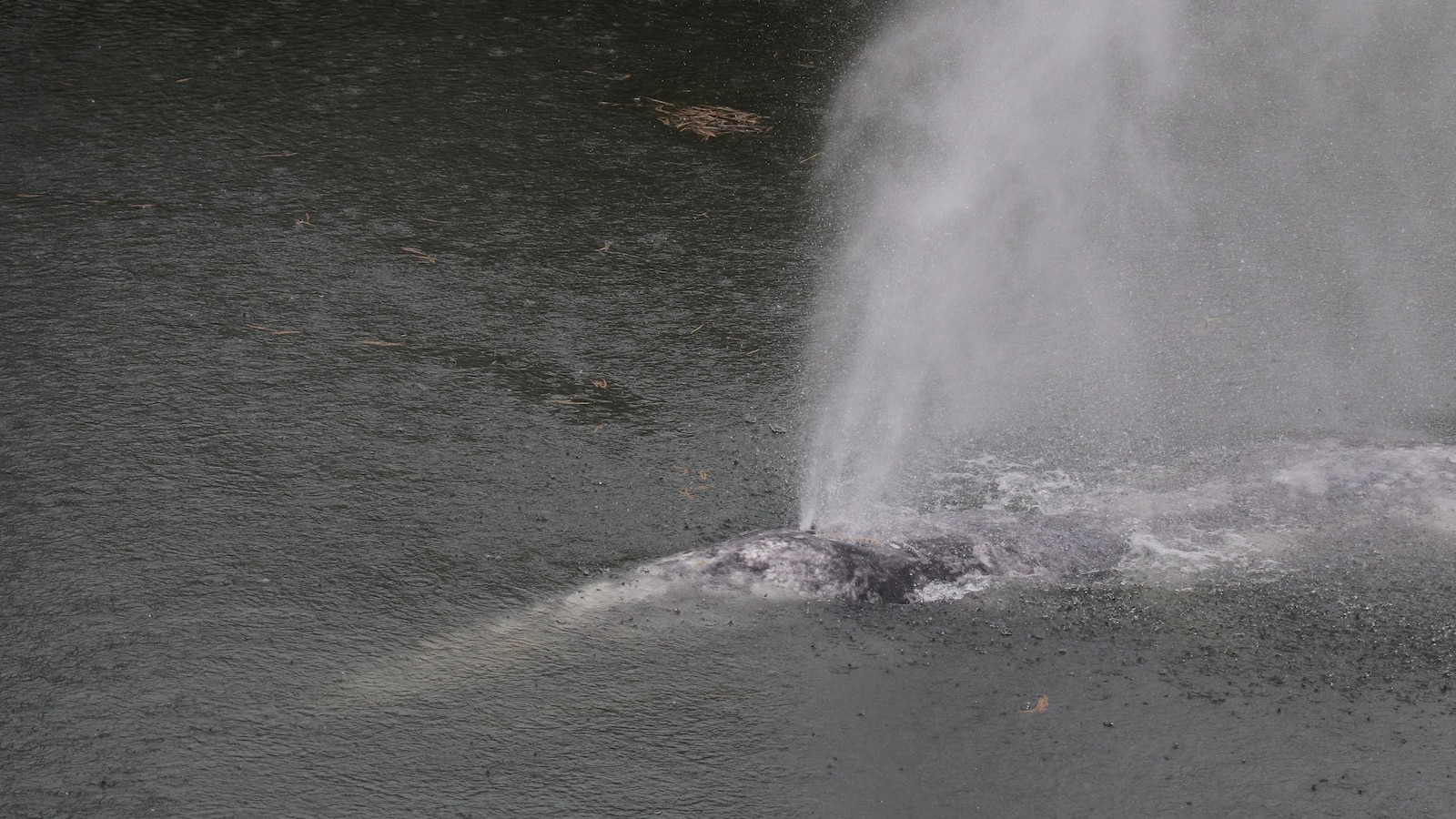
In what began as an extraordinary wildlife sighting that captured the hearts of Washington state residents, a juvenile gray whale’s unusual journey up a small river has ended in tragedy. The young whale, which had ventured an astounding 20 miles up the Willapa River near Raymond, Washington, was discovered dead over the weekend. What initially seemed like a curious adventure by a marine giant has turned into a sobering reminder of the larger environmental crisis facing these majestic creatures. For several days, local residents had gathered excitedly on bridges spanning the river, their cameras ready to capture glimpses of the massive mammal as it surfaced and expelled air through its blowhole. Social media platforms were flooded with photos and videos of the rare visitor, creating a buzz of excitement throughout the community. However, this remarkable occurrence, which should have been merely unusual, was actually a red flag signaling something far more concerning about the state of gray whale populations and their struggle for survival.
Understanding the Whale’s Unexpected Path
The Willapa River, which feeds into the ocean at Willapa Bay approximately 185 miles southwest of Seattle, became an unlikely temporary home for the juvenile whale when it entered the river’s north fork last Wednesday. This timing coincides with the peak of gray whale migration season, when numerous whales pass through the bay as part of their epic 5,000-mile spring journey from their birthing grounds in the warm waters of Baja California, Mexico, to their feeding areas in the cold, nutrient-rich waters off Alaska’s coast. While the presence of gray whales in Willapa Bay itself isn’t unusual during migration season, a whale swimming so far up a relatively small river certainly is. Initial observations by researchers from the non-profit Cascadia Research Collective suggested that while the whale appeared noticeably thin, it was behaving normally and showed no obvious signs of physical injury. The organization initially took a cautious approach, giving the whale time and space to find its own way back to the ocean, hoping it would navigate back downstream on its own. However, when researchers attempted to locate the animal on Friday, they discovered it had traveled even further upriver, into waters too shallow and narrow for their boats to navigate, making monitoring and potential intervention extremely difficult.
The Deeper Crisis: A Population in Peril
According to John Calambokidis, a research biologist with the Cascadia Research Collective, this individual whale’s tragic story is symptomatic of a much larger and more alarming crisis that has been unfolding since 2019. The eastern Pacific gray whale population has been experiencing dramatically reduced food availability in their primary feeding grounds—the northern Bering and Chukchi seas off the coast of Alaska. “Gray whales are facing a major crisis and the heart of it does seem to be feeding on their prey in the Arctic,” Calambokidis explained in an interview with The Associated Press. The severity of this situation prompted the National Oceanic and Atmospheric Administration (NOAA) Fisheries agency to declare an “unusual mortality event” for eastern gray whales, a designation that lasted from late 2018 to late 2023. During this five-year period, an alarming 690 gray whale strandings were documented across the entire eastern Pacific range, stretching from the icy waters of Alaska all the way down to Mexico. After extensive investigation, NOAA Fisheries researchers concluded that the preliminary cause of this mass mortality event was “localized ecosystem changes in the whales’ sub-Arctic and Arctic feeding areas that led to changes in food, malnutrition, decreased birth rates and increased mortality.” These findings paint a troubling picture of an ecosystem in flux, where the delicate balance that these whales depend upon for survival has been disrupted in ways that cascade through every aspect of their life cycle.
Alarming Population Decline and What It Means
The latest population data has dashed hopes that gray whales might be recovering from their recent struggles. While officials had been optimistic about a potential rebound, the most recent count from 2025 instead revealed a continuing and deeply concerning decline. Federal agencies now estimate the eastern Pacific gray whale population at approximately 13,000 individuals—the lowest count recorded since the 1970s. This represents a dramatic decrease for a population that had been considered a conservation success story after recovering from near-extinction due to commercial whaling. Calambokidis noted that many of the gray whales currently being observed share a disturbing characteristic: “A lot of these gray whales are looking very emaciated, very thin.” This physical condition tells a story of inadequate nutrition and depleted energy reserves. The spring migration north is typically the most nutritionally challenging period in a gray whale’s annual cycle, representing the longest stretch they go without feeding. During this time, the whales must rely entirely on the fat reserves they built up during their previous feeding season. When these reserves are already depleted due to poor feeding conditions in their Arctic grounds, the whales find themselves in a desperate situation, essentially running on empty during a marathon journey that requires enormous energy expenditure.
Desperate Searches for New Feeding Grounds
When gray whales find themselves in such dire nutritional straits, their behavior begins to change in observable ways. “When that happens, you often see gray whales in a more desperate search for new areas to feed,” Calambokidis explained, adding that “That’s the most likely context for this whale.” This desperate search for food likely explains why the juvenile whale ventured so far up the Willapa River—a highly unusual behavior that took it far from its normal migration route and into waters that, while they might have appeared to offer feeding opportunities, ultimately became a trap. The whale’s journey up the river can be understood as an act of desperation rather than curiosity, a young animal driven by hunger to explore areas that its species would not normally consider viable habitat. This behavior reflects the broader challenge facing the entire population: as their traditional feeding grounds fail to provide adequate nutrition, individual whales are forced to take risks and explore alternative areas, sometimes with fatal consequences. The incident also highlights how ecosystem changes can create what biologists call an “ecological trap”—situations where animals are drawn to areas that appear suitable but actually offer poor survival prospects.
Looking Forward: Research and Conservation Implications
In the wake of this tragedy, researchers are planning to conduct a thorough examination of the whale’s body, possibly as soon as the following Monday after its discovery. Such examinations, while difficult and somber work, provide invaluable data that can help scientists better understand the specific causes of death and the overall health status of the population. The necropsy will likely look for signs of starvation, disease, or other contributing factors, and may include analysis of stomach contents, blubber thickness, and overall body condition. This information becomes part of a larger dataset that helps researchers and conservationists understand the full scope of the crisis facing gray whales. The story of this individual whale serves as a powerful reminder of the interconnected nature of ocean ecosystems and the far-reaching impacts of environmental change. The localized ecosystem changes in Arctic feeding grounds—likely driven by warming ocean temperatures and shifting prey distributions—are creating ripple effects that manifest hundreds or thousands of miles away, in places like the Willapa River. As climate change continues to alter ocean conditions, we can expect more such incidents where marine mammals are pushed beyond their normal ranges and behaviors in the struggle to survive. The conservation challenge ahead is substantial, requiring not just local protection measures but addressing the global factors that are fundamentally changing Arctic marine ecosystems. For now, the communities along the Willapa River are left to mourn the loss of their brief visitor, a poignant symbol of a species struggling against the changing tides of environmental transformation.