

Hungary’s Election: How Fear-Mongering About Ukraine Became a Political Strategy
A Prime Minister’s Desperate Gambit
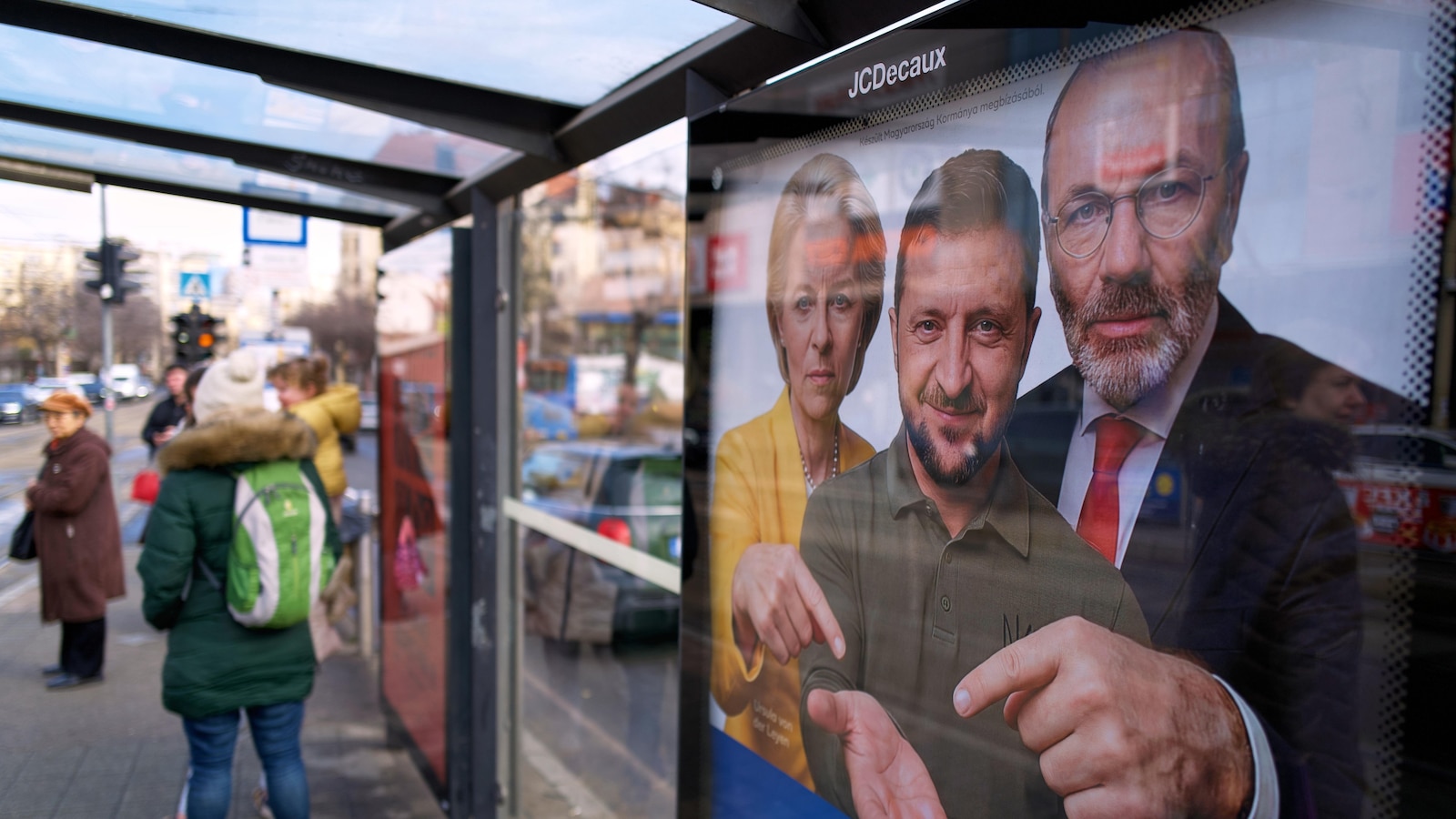
As Hungary prepares for its April 12 election, Prime Minister Viktor Orbán finds himself in unfamiliar territory—trailing in the polls and facing the most serious challenge to his power in over a decade. Rather than addressing the economic concerns that dominate everyday Hungarian life, Orbán has chosen a different path: portraying neighboring Ukraine, not economic stagnation, as the country’s greatest threat. His campaign has unleashed a torrent of disinformation suggesting that supporting Ukraine means bankrupting Hungary and sending its young people to die in a foreign war. Across the country, billboards feature AI-generated images of Ukrainian President Volodymyr Zelenskyy with his hand outstretched, seemingly demanding money from Hungarian taxpayers, while European officials stand beside him. The message is clear and confrontational: “Our message to Brussels: We won’t pay!” This publicly funded propaganda represents more than just campaign rhetoric—it’s a calculated attempt to redirect public attention away from domestic failures and toward an external enemy that Orbán himself has helped create in the minds of voters.
The Real-World Consequences of Anti-Ukraine Rhetoric
The implications of Orbán’s anti-Ukraine stance extend far beyond campaign billboards and political messaging. On Monday, Hungary demonstrated the practical consequences of this position by blocking a new package of European Union sanctions against Russia, citing interruptions in Russian oil supplies that pass through Ukraine. Orbán has vowed to continue vetoing pro-Ukraine policies until oil flows resume, holding the entire European Union hostage to his demands. This move solidified what many already knew: Orbán is the Kremlin’s strongest and most reliable ally within the EU. While the bloc’s other 26 member nations have distanced themselves from Russia since the invasion began on February 24, 2022, Hungary has moved in the opposite direction, deepening cooperation with Moscow. The prime minister frames this relationship as pragmatic, pointing to Hungary’s dependence on Russian oil and gas. However, critics see something more sinister—a ideological alignment with Putin’s authoritarian model, evidenced by Orbán’s anti-LGBTQ+ policies, his crackdowns on media and civil society organizations, and his practice of labeling critics as “foreign agents,” directly from Putin’s playbook.
The Challenge from Within
The reason for Orbán’s increasingly desperate tactics becomes clear when examining the political landscape. Péter Magyar, a 44-year-old lawyer and former Fidesz insider who broke with the party in 2024, has emerged as a formidable challenger. Magyar’s Tisza party leads in most independent polls, focusing on issues that actually matter to ordinary Hungarians: rising costs of living, deteriorating social services, and rampant corruption. Magyar promises to restore Hungary’s Western orientation and rebuild the democratic institutions that have crumbled during Orbán’s 16 years in power. His rise has been accelerated by scandals that have damaged Fidesz’s credibility, most notably a presidential pardon granted to an accomplice in a child sexual abuse case, which sparked public outrage and forced both the president and justice minister to resign. Losing ground to this unexpected challenger, Orbán and his party have abandoned substantive policy debates in favor of fear-mongering. They’ve saturated the country with taxpayer-funded propaganda—billboards, radio spots, television ads, and social media campaigns—all warning that the EU’s financial support for Ukraine will bring economic ruin to Hungary. Shadow organizations with Fidesz ties have produced ads depicting Magyar as a puppet of Zelenskyy and the EU, someone who would betray Hungarian interests and drag the nation into war.
The Propaganda Machine in Full Force
The sophistication and pervasiveness of Orbán’s propaganda campaign reveals the extent of his control over Hungary’s information ecosystem. Public media, along with numerous private outlets loyal to the government, faithfully amplify the narrative that Ukraine—not Russia—is the aggressor, deliberately prolonging a bloody conflict in conspiracy with the EU. Orbán himself has recently declared that the European Union poses a greater threat to Hungary than Russia, pointing to rising defense spending across Europe as evidence that Brussels is preparing for war with Moscow and planning to forcibly conscript Hungarian youth. Perhaps most disturbing is an AI-generated video released by Fidesz showing a little girl asking her mother when daddy will come home, followed by a scene of the father—bound, blindfolded, and kneeling on a muddy battlefield—being shot in the head by a soldier. “We won’t allow others to decide on the fates of our families,” a narrator intones. “Let’s not take a risk. Fidesz is the safe choice.” The emotional manipulation is obvious, yet the claims are entirely false. While some EU countries have proposed sending troops to monitor any future ceasefire in Ukraine, such missions would not involve combat and participation would be entirely voluntary, according to experts like András Rácz of the German Council on Foreign Relations.
A Proven Strategy of Manufacturing Enemies
Despite the transparently false premises underlying much of this messaging, it would be foolish to dismiss its potential effectiveness. Orbán has successfully deployed this exact strategy before, winning two previous elections by raising fears that his opponents would drag Hungary into war. As Rácz explains, “They are trying to max this out. They have nothing else. Populists often try to define an enemy, often an imaginary one, and then offer protection to the society from that enemy. Ukraine has been ideal from this perspective.” For years, Orbán has worked to obstruct EU efforts to support Ukraine financially and militarily, vigorously opposing sanctions on Russian oil and officials. Tensions escalated recently when Russian oil shipments to Hungary were interrupted—Ukraine blamed a Russian drone strike in late January that damaged a pipeline, while Orbán called it blackmail. His government retaliated by halting diesel shipments to Ukraine and threatening to veto a 90-billion-euro EU loan designated for Kyiv. Monday’s blocking of the 20th round of EU sanctions against Russia was the latest escalation in this confrontation. This anti-Ukraine campaign has found receptive ears among many Fidesz loyalists, meaning that despite Tisza’s polling advantage, Magyar’s victory is far from certain.
Voices of Resistance and Hope
Yet not all Hungarians have succumbed to Orbán’s fear-mongering. On Sunday, hundreds of Hungarians and Ukrainians, including many refugees, gathered in central Budapest to mark the four-year anniversary of Russia’s invasion. Marching toward the Russian embassy, participants waved Ukrainian and Hungarian flags while chanting, “Stop Putin, stop the war!” Budapest’s liberal mayor, Gergely Karácsony, told reporters that Orbán’s messaging and policies represent “a betrayal not only of Ukraine, but of Hungary’s national interest,” expressing hope that “this will go into history as a failed policy, but that history will also remember that there were some who stood up for what is right.” Among the marchers was Ester Zhivatovska, a 19-year-old veterinary medicine student from the Ukrainian port city of Odesa now studying in Budapest. She found the billboards depicting her country’s president laughable rather than threatening. “The main message of these billboards is that Ukraine will steal Hungarian money,” she observed. “But come on, you’re using these AI images from the Hungarian budget to do what? To win elections.” Her words cut to the heart of the matter—Orbán is spending taxpayer money not to improve Hungarian lives but to manipulate them through fear, hoping to cling to power by manufacturing an enemy where none exists. As Hungary approaches this critical election, the world watches to see whether voters will choose fear or hope, isolation or integration, authoritarianism or democracy.