


UN Nuclear Chief Warns: Iran’s Nuclear Program Survives Despite Military Strikes
The Challenge of Dismantling Iran’s Nuclear Capabilities
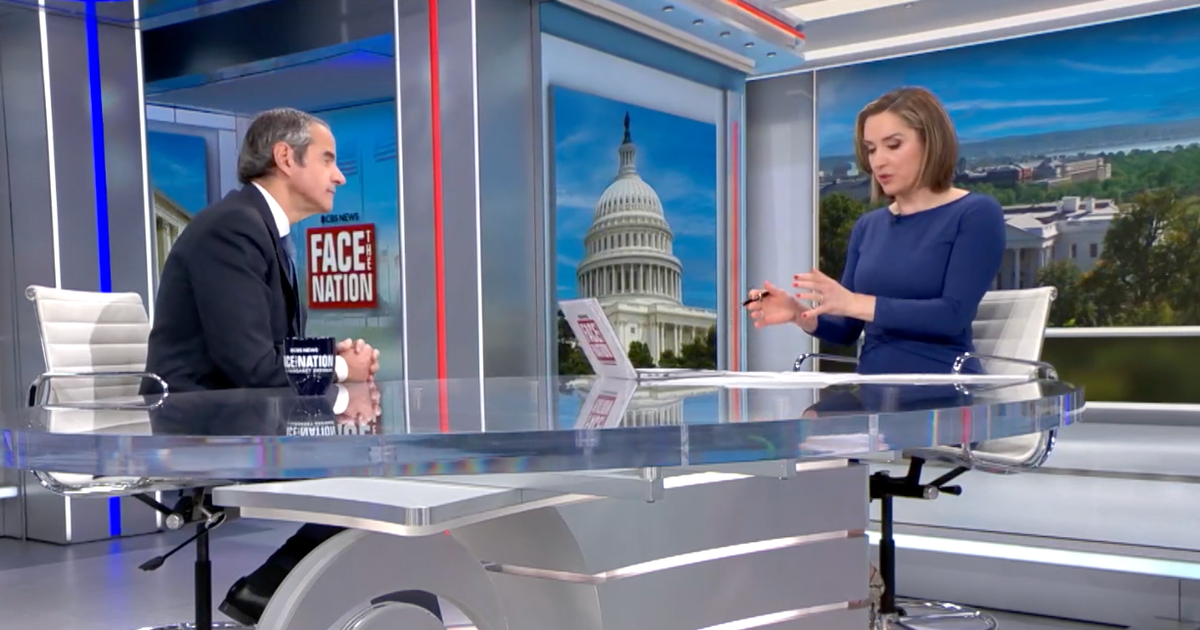
In a revealing interview with CBS News’ “Face the Nation,” Rafael Grossi, the Director-General of the International Atomic Energy Agency (IAEA), painted a complex picture of Iran’s nuclear program following weeks of intensive military strikes by the United States and Israel. While acknowledging that bombing campaigns have significantly damaged Iran’s nuclear infrastructure, Grossi emphasized that the fundamental problem remains far from solved. The Iranian regime still possesses both the technical expertise and industrial capacity to resume uranium enrichment, even if much of their physical equipment has been destroyed. This sobering assessment comes as President Trump continues to cite Iran’s nuclear ambitions as a primary justification for ongoing military action, despite Tehran’s consistent denials that it seeks to develop nuclear weapons. Grossi’s comments highlight a difficult reality: military force alone cannot erase the knowledge and capabilities that Iran has accumulated over decades of nuclear development. The interview, conducted as the conflict approaches its third week, underscores the enormous challenges that will face international diplomacy once the fighting ends, with lingering issues including substantial stockpiles of highly enriched uranium and surviving nuclear facilities that could potentially be reactivated.
The Stubborn Reality of Iran’s Uranium Stockpile
One of the most pressing concerns Grossi identified is Iran’s existing stockpile of uranium enriched to 60% purity—a concentration that sits dangerously close to the 90% threshold required for weapons-grade material. Before last June’s U.S. bombing campaign targeted three major Iranian nuclear sites—the Fordo and Natanz enrichment facilities and the Isfahan research center—the IAEA had assessed that Iran possessed approximately 972 pounds of this highly enriched uranium. To put this in perspective, the agency’s calculations suggest that just 92.5 pounds of uranium enriched to 90% would theoretically be sufficient to construct a single nuclear weapon. Much of this material, Grossi noted, likely remains buried beneath the rubble of bombed facilities, creating both a security concern and a practical challenge. The material exists in the form of uranium hexafluoride gas stored in specialized cylinders, making it extremely hazardous to handle and difficult to secure or remove. This reality has prompted discussions within the Trump administration about the possibility of sending U.S. ground forces into Iran specifically to seize this material—an operation that would undoubtedly be fraught with danger and complexity. White House press secretary Karoline Leavitt acknowledged that such a ground operation remains “an option on the table,” though President Trump has not yet made a final decision on this extraordinarily risky course of action.
Why Recovering Nuclear Material Would Be Nearly Impossible
When asked about the feasibility of a military operation to recover Iran’s highly enriched uranium, Grossi didn’t mince words about the technical difficulties such an endeavor would entail. The nuclear material isn’t sitting in easily transportable containers waiting to be loaded onto trucks; instead, it’s stored as uranium hexafluoride gas at 60% enrichment inside specialized cylinders that are highly contaminated and dangerous to handle even under ideal conditions. Add to this the fact that these cylinders are likely buried under collapsed buildings and surrounded by other hazardous materials, and the complexity multiplies exponentially. Grossi acknowledged that while he wouldn’t say such an operation is completely impossible—recognizing that U.S. military forces possess extraordinary capabilities—it would certainly represent one of the most challenging recovery operations imaginable. The dangers would include not only potential armed resistance from Iranian forces but also the risk of accidental release of radioactive materials, potential contamination of American troops, and the logistical nightmare of safely transporting such hazardous materials out of a hostile country. Grossi mentioned that before the current war, when U.S. and Iranian negotiators were holding indirect peace talks, one of the options under discussion was “downblending” Iran’s highly enriched uranium to lower concentrations that would be much safer and easier to handle. Such downblending would have diluted the material to levels that couldn’t be readily used in weapons, effectively neutralizing the immediate threat while keeping the material within Iran under international supervision.
The Knowledge Problem: You Can’t Bomb Away Expertise
Perhaps the most troubling aspect of Grossi’s assessment is what he characterized as the fundamental limitation of military strikes against nuclear programs: the impossibility of destroying knowledge itself. Even if every centrifuge in Iran has been reduced to twisted metal, even if every nuclear facility has been bombed to rubble, the Iranian scientists and engineers who designed and built these systems still possess the expertise to recreate them. “You cannot unlearn what you’ve learned,” Grossi stated plainly, cutting to the heart of why military action alone cannot permanently solve the Iranian nuclear challenge. He described uranium enrichment centrifuges as essentially “sophisticated washing machines”—complex pieces of equipment, certainly, but ultimately mechanical devices that can be rebuilt by anyone with the proper knowledge and industrial base. Furthermore, Iran’s centrifuge technology has advanced considerably since the 2015 nuclear deal, which was negotiated based on Iran having “very primitive” centrifuges. In the years since, Iranian engineers have developed what Grossi described as “the most sophisticated, fast and efficient machine that exists,” and critically, they know how to manufacture these advanced centrifuges. Director of National Intelligence Tulsi Gabbard confirmed to lawmakers this week that Iran has not yet attempted to rebuild its uranium enrichment capabilities following the June strikes, and the IAEA similarly has not observed any reconstruction activity. However, Grossi emphasized that “a lot still has survived” and that Iran maintains both the capabilities and the industrial infrastructure to resume enrichment operations whenever it chooses to do so.
The Peace Deal That Almost Was
In the weeks leading up to the current military conflict, there were genuine efforts underway to reach a diplomatic solution that might have averted war entirely. U.S. and Iranian negotiators held several rounds of indirect talks focused specifically on Iran’s nuclear program, with Oman serving as the intermediary. Just hours before the massive U.S. and Israeli bombing campaign began in late February, Omani Foreign Minister Badr Albusaidi told CBS News optimistically that “a peace deal is within our reach.” The broad outlines of this potential agreement, as described by Albusaidi, included an Iranian commitment to “never, ever have nuclear material that will create a bomb” and a plan to blend down Iran’s existing stockpiles of highly enriched uranium to lower, safer concentrations. Technical talks were scheduled to take place in Vienna, home to the IAEA’s headquarters, where the details of verification and implementation would have been hammered out. Grossi confirmed that these negotiations were substantive and serious, describing them as “very frank and very deep discussions.” However, he was careful to note that no final agreement had been reached before hostilities commenced. One significant sticking point appears to have been the Tehran Research Reactor, a facility dating back to the 1960s that was originally supplied by the United States before Iran’s Islamic Revolution. This reactor, used for producing medical isotopes, runs on 20%-enriched uranium—far above the 3.67% limit established in the 2015 nuclear deal but well below weapons-grade material. President Trump had reportedly pushed for Iran to end all uranium enrichment, which would have prevented the reactor from operating unless Iran purchased fuel from abroad. After the war started, Trump administration officials alleged that Iran was actually stockpiling excess uranium at the research facility under the false pretense of medical needs, claims they said were supported by IAEA data showing more fuel stored there than operationally necessary.
Lingering Questions About Iran’s Nuclear Intentions
Throughout the interview, Grossi walked a careful line between providing technical expertise and avoiding political judgments about Iran’s ultimate intentions. The U.S. intelligence community assessed last spring that Iran was not actively constructing nuclear weapons and that a previous weaponization program had been suspended back in 2003. Iran has consistently maintained that its nuclear program is entirely peaceful and that it has no interest in developing nuclear weapons, citing religious prohibitions against such weapons. However, actions speak louder than words, and Iran’s decision to enrich uranium to 60%—far beyond what’s needed for civilian nuclear power or even research reactors—has raised serious questions about the true purpose of the program. When asked directly about Iran’s nuclear weapons intentions, Grossi stated that the IAEA hasn’t observed “a systematic program” comparable to the alleged weapons development effort that existed before 2003. Nevertheless, he emphasized that “there were many, many concerning things, many unanswered questions.” After becoming director-general in 2019, Grossi said the agency “started seeing new stuff” that gave rise to concerns, including the discovery of uranium particles at locations Iran had not officially declared as nuclear sites. These unexplained findings led the IAEA to formally declare in 2024 that it could not verify that nuclear material hadn’t been diverted to weapons development. As the current military campaign continues and diplomatic channels remain closed, Grossi’s central message is clear: whatever damage has been inflicted on Iran’s nuclear infrastructure, the fundamental challenges will persist long after the bombs stop falling. The technical knowledge exists, some facilities have survived, dangerous materials remain in uncertain conditions, and the political will in Tehran to maintain nuclear capabilities appears undiminished. Whether through renewed diplomacy or continued military pressure, the international community will be grappling with Iran’s nuclear program for years to come.