



Global Markets Tumble as Iran Crisis Shakes Investor Confidence
European and Asian Markets Face Widespread Declines
Friday brought another challenging day for global financial markets as shares fell across major exchanges and oil prices climbed once again. This came on the heels of Wall Street’s worst trading session since the Iran conflict began, with investors growing increasingly skeptical about the prospects for a peaceful resolution to the crisis. European markets opened in negative territory, reflecting the anxiety that has gripped traders worldwide. Britain’s benchmark FTSE 100 index slipped 0.3% to settle at 9,939.96, while France’s CAC 40 experienced a more significant drop of 0.7%, closing at 7,718.97. Germany’s DAX suffered the steepest decline among major European indices, falling 1.3% to 22,314.28, signaling deep concern among European investors about the escalating geopolitical tensions and their potential impact on the global economy.
The situation in Asian markets presented a mixed but generally pessimistic picture. Japan’s Nikkei 225 closed down 0.4% at 53,373.07, while South Korea’s Kospi also lost 0.4% to finish at 5,438.87. Notably, South Korean stocks managed to narrow what had been a much sharper drop earlier in the trading day, suggesting some resilience or last-minute buying interest among investors. Hong Kong’s Hang Seng index managed to buck the downward trend, finishing up 0.4% at 24,951.88 after dipping into negative territory earlier in the session. Similarly, mainland China’s Shanghai Composite index showed strength, trading 0.6% higher at 3,913.72. However, other regional markets weren’t as fortunate—Australia’s S&P/ASX 200 edged down 0.1% to 8,516.30, Taiwan’s Taiex fell 0.7%, and India’s Sensex suffered a significant loss of 2.1%, reflecting the widespread uncertainty gripping investors across the Asia-Pacific region.
Wall Street Suffers Its Worst Session Since Conflict Began
The backdrop to Friday’s global market turbulence was Thursday’s dramatic sell-off on Wall Street, which delivered the worst single-day performance for U.S. stocks since the Iran war started. The broad-based S&P 500 index plummeted 1.7%, marking its worst day since January as it closed at 6,477.16. This decline wasn’t isolated to one sector or type of stock—it represented a broad retreat by investors across the market. The Dow Jones Industrial Average, which tracks 30 major American companies, fell 1% to close at 45,960.11. Perhaps most concerning was the performance of the technology-heavy Nasdaq composite, which slumped 2.4% to 21,408.08. This decline pushed the Nasdaq to a point that is now 10% below its recent all-time high—a threshold that market analysts formally classify as a “correction,” indicating a significant shift in market sentiment and potentially the start of a more prolonged period of weakness.
The severity of Thursday’s losses reflected deep uncertainty among investors about the direction of the Iran crisis and its potential economic consequences. When markets face geopolitical instability of this magnitude, investors typically move toward safer assets, pulling money out of stocks and potentially driving up prices for commodities like oil and gold. The fact that all three major U.S. indices suffered substantial losses on the same day demonstrates how widespread the concern has become. Technology stocks, which had been among the market’s strongest performers in recent years, appeared particularly vulnerable, as evidenced by the Nasdaq’s outsized decline. This suggests that investors are becoming more risk-averse, moving away from growth-oriented technology companies toward more defensive positions or simply holding cash while they wait for greater clarity about the geopolitical landscape.
Shifting Expectations Around U.S.-Iran De-escalation
At the heart of the market turmoil lies the rapidly changing expectations surrounding potential negotiations between the United States and Iran. Throughout the week, speculation about possible de-escalation talks between Washington and Tehran had sent markets on a roller-coaster ride, with investors struggling to assess the likelihood of a peaceful resolution to the conflict. The uncertainty itself has proven as damaging to market confidence as the conflict itself, as traders find themselves unable to make informed decisions about the future direction of key assets. When geopolitical situations remain fluid and unpredictable, even experienced investors often choose to step back from markets, reducing overall trading volumes and potentially amplifying price swings in either direction.
The confusion intensified shortly after Wall Street closed on Thursday when President Donald Trump made a significant announcement regarding U.S. strategy toward Iran. Trump revealed that he was postponing a threatened attack on Iran’s energy facilities, a move that might initially seem like positive news for market stability. However, he also extended until April 6 a deadline he had previously set for Iran to reopen the Strait of Hormuz, one of the world’s most critical waterways for oil and natural gas transportation. This combination of delay and deadline extension left investors in a state of continued uncertainty. While the postponement of military action might reduce immediate risks, it doesn’t resolve the underlying conflict, and the extended deadline means the situation will continue to hang over markets for weeks to come. This kind of prolonged uncertainty is particularly challenging for markets, as it makes it difficult for businesses to plan, for investors to commit capital, and for the global economy to function with confidence.
Oil Markets Respond to Strait of Hormuz Concerns
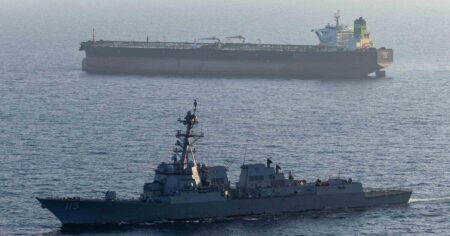
The Strait of Hormuz situation has particular significance for global energy markets and represents a major factor in the current market instability. This narrow waterway between the Persian Gulf and the Gulf of Oman serves as a chokepoint through which approximately one-fifth of the world’s oil supply passes. Any disruption to shipping through the strait would have immediate and severe consequences for global energy supplies, potentially driving oil and gas prices sharply higher and creating supply shortages in regions dependent on Middle Eastern energy exports. The fact that this critical passage remains at the center of tensions between the United States and Iran explains why oil prices have continued to gain even as other assets decline. Traders in energy markets are pricing in the risk that the strait could be closed or that shipping through it could become dangerous or impossible, scenarios that would fundamentally reshape global energy flows.
The rising oil prices present a double-edged sword for the global economy. On one hand, higher energy costs act as a tax on consumers and businesses, reducing spending power and potentially slowing economic growth. Manufacturing becomes more expensive, transportation costs rise, and households face higher bills for heating, cooling, and gasoline. On the other hand, energy-producing nations and companies benefit from higher prices, potentially offsetting some of the negative economic effects. However, the balance typically tilts toward net negative effects, particularly for major energy-importing economies in Europe and Asia. The continued gains in oil prices despite falling stock markets suggest that traders believe the risks surrounding the Strait of Hormuz remain very real and that the potential for supply disruptions continues to grow rather than diminish.
Looking Ahead: Uncertainty Remains the Dominant Theme
As Friday’s trading unfolded, U.S. futures markets showed little change, suggesting that American investors were taking a wait-and-see approach after Thursday’s significant losses. This pause in volatility doesn’t necessarily indicate that markets have found stable footing; rather, it may reflect exhaustion after a week of dramatic swings and uncertainty about what new developments might emerge. The coming days and weeks will likely prove critical for determining whether markets can stabilize or whether further declines lie ahead. Much will depend on developments in the Iran situation, including whether diplomatic efforts gain traction, whether the April 6 deadline passes without incident, or whether new escalations occur that push the crisis into even more dangerous territory.
For everyday investors and retirement savers watching their portfolios decline, these kinds of geopolitically-driven market corrections serve as an uncomfortable reminder that global events can have immediate impacts on personal wealth. The 10% correction in the Nasdaq is particularly concerning for those heavily invested in technology stocks, which have become a staple of many retirement and investment accounts. Financial advisors typically counsel patience during periods of geopolitical uncertainty, noting that markets have historically recovered from similar shocks once clarity emerges. However, the unique nature of each crisis means that past performance doesn’t guarantee future results, and the current situation involving critical energy infrastructure and major military powers presents risks that could prove more lasting than some previous geopolitical episodes. As the April 6 deadline approaches, markets will likely remain volatile, responding to each new development in the crisis with swift price movements that reflect both the high stakes involved and the deep uncertainty about how the situation will ultimately be resolved.