



French-Linked Vessel Successfully Navigates Iran-Controlled Strait of Hormuz
A Breakthrough in the Maritime Standoff
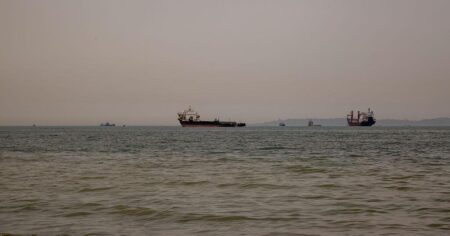
In what marks a potentially significant development in the ongoing tensions surrounding one of the world’s most critical shipping routes, a cargo vessel with connections to France has successfully made its way through the Strait of Hormuz. The CMA CGM Kribi, flying under a Malta flag but operated by the prominent French shipping company CMA CGM, appears to be the first French-linked vessel to complete this treacherous journey since Iran effectively shut down regular traffic through this vital waterway. According to maritime tracking data from MarineTraffic, the vessel departed from waters near Dubai on Thursday and safely reached the coast of Muscat, Oman, by Friday. This crossing represents more than just a routine shipping operation—it’s a noteworthy event in the context of dramatically reduced maritime traffic through one of the world’s most strategically important chokepoints for global trade and energy supplies.
The Challenging Route Through Iranian Waters
The path taken by the CMA CGM Kribi tells a story of careful navigation through politically sensitive waters. According to detailed tracking information provided by MarineTraffic, the vessel didn’t follow the traditional, more open southern route through the strait. Instead, it took a northerly path, squeezing through a narrow passage between two Iranian islands—Qeshm and Larak. This routing decision is particularly significant because maritime security analysts have indicated that Iran has been essentially using Larak Island as a checkpoint or “toll booth” for vessels seeking safe passage. Reports suggest that Iran has been demanding substantial fees—as high as $2 million per vessel—to guarantee ships can pass through without incident. This arrangement has transformed what was once a freely navigable international waterway into a controlled passage where Iran exercises de facto authority, despite international maritime law principles regarding freedom of navigation through strategic straits.
The Shipping Industry’s Cautious Response
When approached by the Associated Press for comment on this significant transit, CMA CGM—which ranks as the world’s third-largest container shipping company—chose to remain silent, declining to provide any statement about the voyage. This reticence is understandable given the delicate political and commercial implications involved. CMA CGM operates a massive fleet that moves goods around the world, and any public comments about negotiations with Iran or payment of passage fees could have complex ramifications for the company’s operations, relationships with various governments, and future ability to navigate these contested waters. The company’s silence reflects the difficult position that international shipping companies find themselves in as they try to maintain global supply chains while navigating the geopolitical minefield created by the conflict. For these companies, every statement is carefully weighed against potential consequences for their vessels, crews, and commercial interests in multiple countries.
The Dramatic Collapse of Maritime Traffic
The successful passage of the CMA CGM Kribi stands out precisely because it’s become such a rare occurrence. The statistics paint a stark picture of how dramatically the conflict has disrupted one of the world’s most important trade arteries. Traffic through the Strait of Hormuz has plummeted by approximately 90% since the beginning of the Iran war—a staggering decline that has rippled through global supply chains and energy markets. According to data compiled by Lloyd’s List Intelligence, a respected maritime data firm, only around 150 vessels have managed to transit the strait since March 1st. These ships have included both tankers carrying oil and liquefied natural gas, as well as container ships laden with consumer goods. The vessels that have made the crossing represent a narrow slice of international shipping: most have been either Iranian ships or vessels linked to countries like China, India, and Pakistan—nations that have maintained more complex or neutral positions regarding the conflict, rather than aligning strongly with Western sanctions or positions.
Japan’s First Successful Crossing
Friday also brought news of another breakthrough transit, this one involving a Japanese-owned vessel. A liquefied natural gas tanker successfully navigated the strait, marking what appears to be the first time a Japanese ship has completed this crossing since the conflict began. The vessel in question, the “SOHAR LNG,” sailing under a Panama flag, made it through the strait safely with its entire crew intact and was confirmed to be positioned off the coast of Oman, east of the strait, on Friday. Mitsui O.S.K. Lines, the Japanese company that jointly owns the ship, confirmed the safe passage to Reuters news agency. However, like CMA CGM, the Japanese logistics company chose to be circumspect about the details, declining to specify exactly when the transit occurred or whether any negotiations, arrangements, or payments to Iran were necessary to secure the vessel’s safe passage. Japan’s Asahi newspaper characterized this crossing as historic—the first Japanese-owned vessel to successfully navigate these waters since the United States and Israel launched their military operations against Iran, marking an escalation in regional tensions.
Implications for Global Trade and Energy Security
These successful transits by French-linked and Japanese vessels, while encouraging for the individual companies and countries involved, underscore the broader challenges facing global commerce and energy security. The Strait of Hormuz has long been recognized as one of the world’s most critical maritime chokepoints, with roughly a third of all seaborne-traded oil and substantial volumes of liquefied natural gas traditionally passing through its narrow waters. The 90% reduction in traffic represents not just a statistical curiosity but a fundamental disruption to established global supply chains that have operated relatively smoothly for decades. The apparent establishment of a payment system for passage raises complex questions about sovereignty, international maritime law, and the precedents being set for how nations might control strategic waterways in the future. For shipping companies worldwide, the situation presents an agonizing dilemma: accept Iranian conditions and pay substantial fees to maintain some level of service, or avoid the route entirely and face massive detours around Africa, adding weeks to voyage times and substantially increasing costs that ultimately get passed on to consumers. As these first few vessels from major trading nations begin successfully navigating the strait again, the international community watches closely to see whether this represents the beginning of a new, uneasy equilibrium in the region, or merely isolated exceptions to what remains a substantially closed shipping lane.